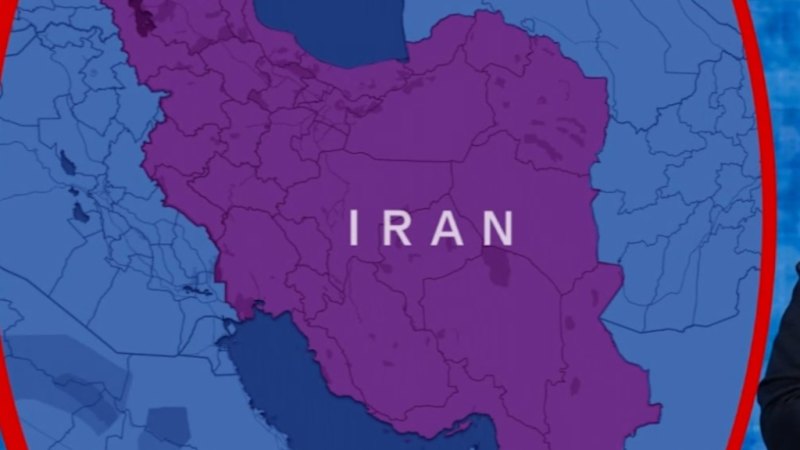
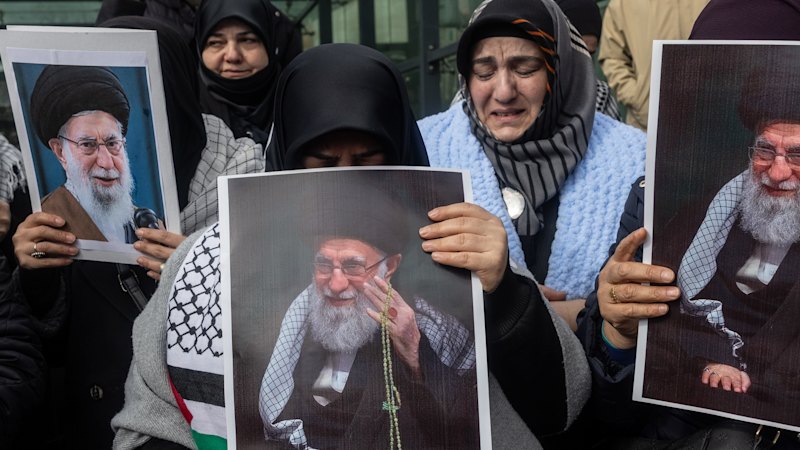
The prevailing narrative suggests that Iranians are simply waiting for a spark to dismantle the Islamic Republic. When regional strikes intensify or economic sanctions tighten, observers in the West often mistake the resulting silence for a precursor to a roar. It isn't. Iranians are not waiting for a spark; they are calculating the cost of a fire they cannot yet contain. This isn't a story of apathy. It is a story of a sophisticated population navigating a survival strategy against a security apparatus that has turned the nation into a laboratory for digital and kinetic repression.
For the average citizen in Tehran or Isfahan, the primary deterrent to regime change is no longer just the threat of the Basij militia on a street corner. It is the realization that the state has integrated its survival into the very infrastructure of daily life. To understand why the current cycle of regional conflict hasn't triggered a domestic explosion, one must look past the headlines of "cautious hope" and into the mechanics of how the Iranian state has successfully decoupled economic misery from political mobilization.
The Architecture of Managed Despair
The Iranian economy is a wreck by every standard metric, yet the regime has mastered the art of "subsistence-level stability." While the rial tumbles, the state maintains a complex web of subsidies and digital tracking that ensures the most vulnerable segments of the population—the very ones who would traditionally fuel a revolution—are kept in a state of perpetual, managed struggle.
They are not starving, but they are never satiated. This creates a psychological ceiling on dissent. When a citizen's entire day is spent calculating how to afford a kilo of meat or a tank of gas using state-issued digital coupons, the bandwidth for organizing a democratic movement disappears. The regime doesn't need to win hearts; it only needs to dominate every second of a citizen's cognitive load.
The middle class, meanwhile, faces a different set of handcuffs. Unlike the ideological hardliners or the rural poor, the urban professional class in Iran is tethered to a globalized digital economy that the state can sever at a moment's notice. The "National Information Network," or the Iranian Intranet, is a masterpiece of technical isolation. It allows the state to shut off the world while keeping internal bank transfers, food delivery apps, and logistics running. This is the ultimate kill switch. It doesn't just stop protesters from tweeting; it stops them from eating, working, and moving.
The Myth of the Silver Bullet Strike
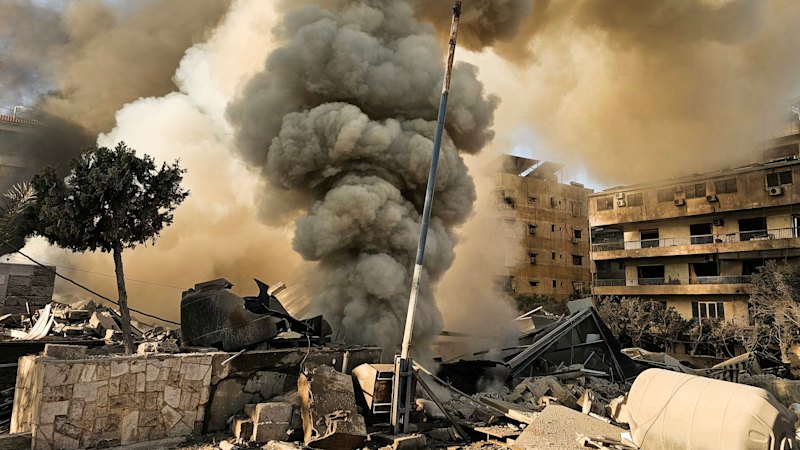
A common misconception among external analysts is that a significant strike on Iranian military or oil infrastructure would be the "black swan" event that triggers a popular uprising. This assumes a linear relationship between regime weakness and public boldness. History suggests the opposite. In the face of external kinetic threats, the Iranian security apparatus—specifically the IRGC—tightens its grip on internal dissent under the guise of national security.
When the state feels threatened from the outside, it doesn't loosen its hold. It contracts. The result is a paradox: the more the regime is pressured by regional adversaries, the more dangerous the streets become for an Iranian citizen with a protest sign. The "caution" noted by observers isn't a lack of desire for change; it is a tactical assessment of a zero-sum game.
The Digital Panopticon and the Death of Anonymity
The 2022 "Woman, Life, Freedom" protests were a turning point, but not in the way many hoped. They provided the state with a massive dataset of dissent. Using facial recognition technology—much of it imported and then refined locally—the Iranian authorities moved from mass arrests to targeted, delayed consequences.
This is the "why" behind the current quiet. If you protest today, you might not be arrested on the street. You might be arrested three weeks later after an algorithm identifies you from a CCTV feed near a metro station. The state has effectively eliminated the "safety in numbers" that once defined urban uprisings. This shift from physical policing to algorithmic surveillance has shattered the horizontal trust required to build a movement.
The Invisible Chains of the Bonyads
Behind the IRGC lies a shadow economy controlled by the "Bonyads," or religious foundations. These massive conglomerates control everything from construction to telecommunications. They are the true centers of power, and they function as a patronage network that makes the state's survival a matter of financial life and death for millions.
If the regime falls, the Bonyads fall. If the Bonyads fall, the primary employers of a massive portion of the workforce vanish. This creates a terrifying "day after" scenario for the average Iranian. They want the mullahs gone, but they are terrified of the economic vacuum that would follow. The regime has effectively held the nation's 401(k) hostage. To dismantle the state is to dismantle the very mechanism of survival for many families.
The Shadow of Regional Proxy Wars
The IRGC's regional strategy isn't just about projecting power; it’s about creating a buffer. By engaging in "gray zone" conflicts across the Middle East, the regime ensures that any internal dissent is framed as a betrayal during a time of war. This is a classic authoritarian playbook, but with a modern twist. The regime uses its proxy network to justify the militarization of its own domestic police force.
When drones or missiles are fired, the internal rhetoric shifts to one of existential survival. This silences the nuanced critique of the economy or civil liberties. It forces the public into a binary choice: support the state or risk a Syrian-style collapse. The average Iranian citizen, looking at the wreckage of neighboring nations, often chooses the status quo over the abyss.
The Strategy of Forced Exhaustion
The most effective tool in the Iranian government's arsenal isn't the bullet. It is exhaustion. By creating a cycle of high-intensity protest followed by brutal crackdowns and then periods of relative "calm," the state induces a form of political fatigue. Each wave of protest costs the movement its bravest, most organized leaders through imprisonment, exile, or death.
The people who remain are left with the trauma of loss and the reality of a state that seems immovable. This is why the response to current regional tensions is muted. It is not that the desire for change has vanished; it’s that the energy required to pursue it has been depleted by a decade of failed attempts and rising costs.
The Failure of Western Messaging
For years, Western policy has focused on "supporting the Iranian people" through rhetoric and sanctions. But sanctions often play into the regime's hands by destroying the very middle class that would lead a democratic transition. A starving population doesn't revolt; it scrambles for bread.
The Iranian people see the West's inconsistency. They see the focus on nuclear deals one year and human rights the next. This perceived lack of a coherent long-term strategy from the international community makes the risk of a domestic uprising feel like a lonely suicide mission. Iranians are asking: if we rise up and the state starts shooting, who is actually coming to help? The answer, historically, has been "no one."
The Infrastructure of the Next Uprising
If change is to come, it won't be sparked by a foreign missile or a sudden drop in the exchange rate. It will be built in the dark, away from the digital eyes of the state. The current "caution" is actually a period of adaptation. Iranians are learning to communicate through mesh networks that don't rely on the state's internet. They are building local mutual-aid societies that bypass the Bonyads.
This is a slow, grinding process. It lacks the cinematic appeal of a million-person march in Azadi Square, but it is the only way to build a foundation that can survive the state's eventual, inevitable reaction. The regime knows this. They are in a race to automate their repression faster than the population can decentralize its resistance.
The Role of Labor Unions
The real threat to the Islamic Republic doesn't come from student activists or liberal intellectuals. It comes from the oil workers, the truck drivers, and the bazaar merchants. These are the groups that can actually stop the heart of the state. In recent months, we have seen a quiet but persistent increase in localized strikes. These aren't political protests—they are demands for wages and safety.
However, the state treats every labor strike as a national security threat. They know that if the oil workers walk off the job, the regime's foreign currency reserves—the lifeblood of their regional proxies—will dry up in weeks. The "caution" we see today is the careful positioning of these labor groups, waiting for the moment when a strike won't just be an inconvenience, but a killing blow.
A New Generation of Refusal
The youth of Iran, those born long after the 1979 revolution, have no ideological ties to the state. For them, the regime is not a revolutionary force but a corrupt landlord. Their dissent is not about reform; it is about a fundamental rejection of the state's right to exist. This generational divide is the regime's greatest long-term liability. You can imprison a leader, but you cannot imprison a demographic reality.
They are using tools like decentralized VPNs and encrypted messaging to maintain a subterranean culture that the state cannot touch. This is the new front line. It is a war of attrition played out in the gigabytes of data flowing under the streets of Tehran.
The Cost of the Wait
The current stillness in Iran is not the peace of a stable society. It is the tense silence of a structural collapse in progress. The state is brittle, relying on a shrinking circle of loyalists and an increasingly expensive security apparatus. Every regional strike, every new sanction, and every executed protester adds a layer of stress to the system.
The "caution" of the Iranian people is a strategic choice. They are waiting for the moment when the state's cost of repression exceeds its capacity to pay. That moment is coming, but it won't be televised until it is already over. The math of revolution is brutal and slow, and for now, the Iranian people are simply waiting for the numbers to add up.
If the goal of the international community is to see a different Iran, the focus must shift from waiting for a "collapse" to supporting the resilience of the civil society that will have to rebuild it. The streets are quiet because the stakes are total. When they speak again, it won't be to ask for reform; it will be to announce an ending.
Would you like me to analyze the specific technological tools being used by the Iranian "Z-Generation" to bypass the National Information Network?