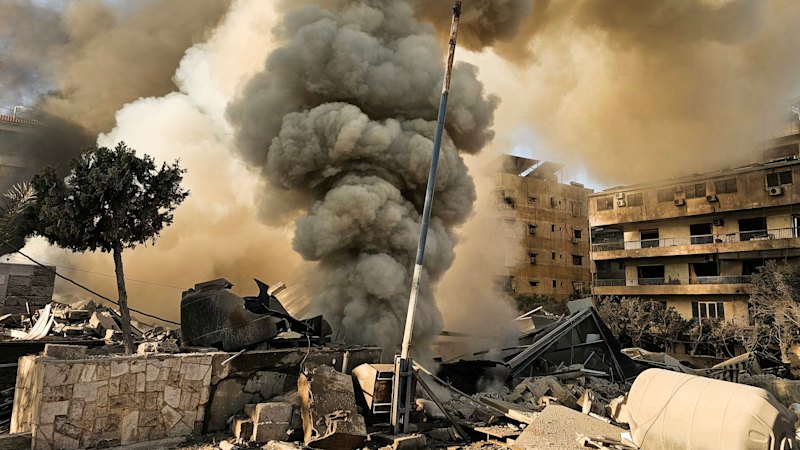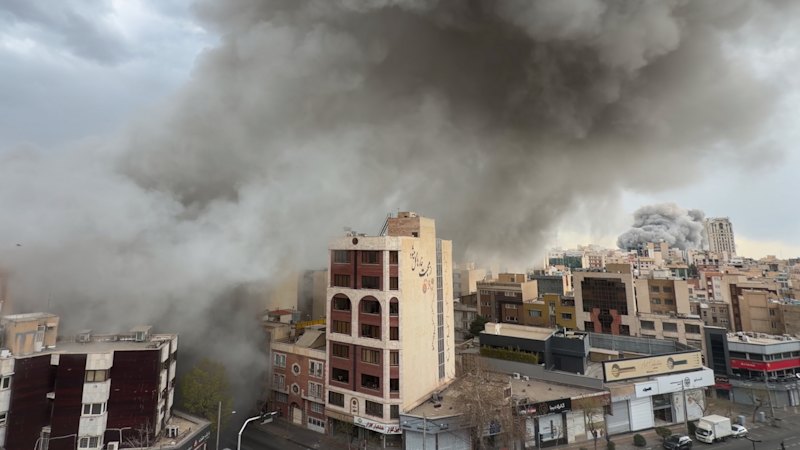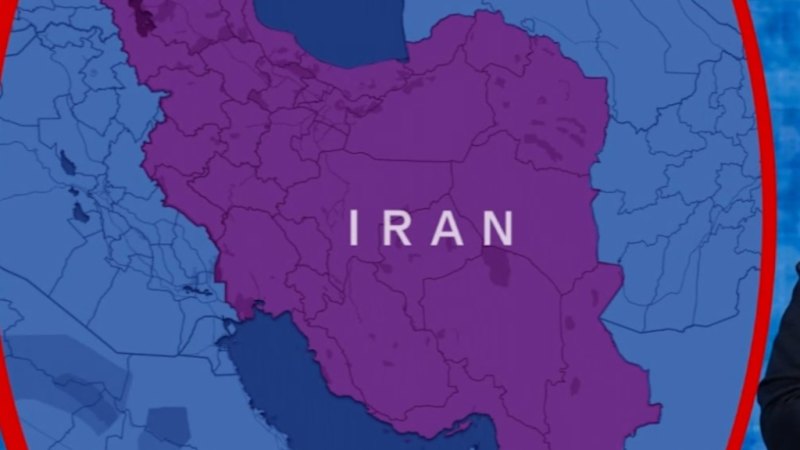
Iranian kinetic and cyber operations against regional adversaries function as a stress test for global supply chain resilience and the current limits of integrated air defense systems. To view an escalation between Tehran and its neighbors as a localized conflict ignores the structural dependencies of the global energy market and the interconnected nature of maritime insurance and telecommunications infrastructure. The strategic logic of Iranian retaliation is not found in a single strike, but in the deliberate activation of a multi-vector threat model designed to overwhelm defensive bandwidth and increase the global cost of containment.
The Tri-Vector Escalation Framework
Iranian military doctrine relies on a "Tri-Vector" approach to asymmetric warfare. This framework maximizes the psychological and economic impact of a strike while minimizing the likelihood of a total conventional war that would threaten the survival of the clerical administration.
- Kinetic Saturation via Proxy: Utilizing non-state actors in Lebanon, Yemen, and Iraq to launch low-cost, high-volume munitions. This forces the defender to expend high-cost interceptors (e.g., SM-2 or Patriot missiles) against cheap, mass-produced drones.
- Maritime Chokepoint Interdiction: Leveraging the geography of the Strait of Hormuz and the Bab al-Mandab to disrupt the flow of 20% of the world's daily oil consumption. Even the threat of "grey-zone" activities—such as sea-mining or vessel seizures—triggers a spike in hull insurance premiums that ripples through global shipping rates.
- Critical Infrastructure Cyber-Offensives: Deploying wiper malware or ransomware against industrial control systems (ICS). Unlike kinetic strikes, cyber operations provide plausible deniability while targeting the "soft underbelly" of Western-aligned states: water desalination plants, electrical grids, and financial clearinghouses.
The Cost-Exchange Ratio of Air Defense
A critical failure in standard analysis is the focus on "intercept rates" rather than the "cost-exchange ratio." If Iran launches a swarm of Shahed-136 loitering munitions, each costing approximately $20,000, and a defending coalition uses $2 million interceptors to down them, Iran achieves a tactical victory through economic attrition.
The defensive math is currently skewed. To maintain a 99% intercept rate, a defender must maintain a massive inventory of interceptors. Iran’s strategy aims to induce "magazine depth depletion." Once a defender's inventory of sophisticated interceptors is exhausted, the remaining 1% of incoming fire—which may carry more lethal payloads or target high-value assets like refineries—is almost guaranteed to hit its mark. This creates a tipping point where the cost of defense becomes unsustainable for regional partners without direct, continuous U.S. financial and logistical replenishment.
Global Energy Volatility and the Risk Premium
Energy markets do not react to the physical destruction of oil alone; they react to the "perceived risk of future unavailability." Iranian retaliation strategies target the psychological stability of the Brent and WTI benchmarks.
- Refinery Vulnerability: Saudi Arabia’s Abqaiq-Khurais attack in 2019 demonstrated that a surgical strike on stabilization towers can take half of a country's production offline in hours.
- Transit Delays: If tankers are forced to reroute around the Cape of Good Hope to avoid the Red Sea or the Gulf, the transit time for oil to reach European markets increases by approximately 10 to 14 days. This delay creates a "supply gap" that triggers immediate price surges in the spot market.
- Insurance Contraction: When Lloyd’s of London or other major insurers declare a region a "War Risk Area," the added premiums can make certain routes economically unviable for smaller operators, concentrating the market and reducing overall global transport capacity.
The Silicon Silk Road: Fiber Optic Fragility
The most overlooked aspect of an Iranian retaliatory cycle is the physical security of subsea data cables. The Red Sea is the primary corridor for data traffic between Europe and Asia. Over 90% of all internet traffic between these two continents passes through a handful of cables laid on the seabed of the Bab al-Mandab.
Iran’s maritime capabilities, specifically its midget submarine fleet and specialized dive units, possess the technical capacity to sabotage these cables. A coordinated severance of three to four key cable systems would not just slow down Netflix; it would cripple the high-frequency trading systems of London and Singapore and disrupt the cloud-based operations of multinational corporations. This is the "Digital Chokepoint" that provides Iran with a tool of global leverage that does not require a single missile to leave its launch tube.
The Mechanics of Proxy Synchronization
The Iranian "Axis of Resistance" is not a loose confederation; it is a synchronized military ecosystem. In an escalation scenario, the timing of attacks is calibrated to create a "cascading dilemma" for Western commanders.
- Phase A: Harassment fire from the Houthi movement in the south draws naval assets away from the Persian Gulf.
- Phase B: Low-intensity skirmishes on the Lebanese border force the redeployment of ground-based air defense systems like Iron Dome and David’s Sling.
- Phase C: A direct Iranian strike from the East targets hardened military infrastructure while the defender's attention and assets are distributed across multiple fronts.
This synchronization forces the United States and its allies into a "Whack-a-Mole" posture, where they are constantly reactive and never proactive. The goal is to prove that the U.S. security umbrella is porous and that the cost of maintaining it exceeds the value of the regional alliances it protects.
Cognitive Warfare and Internal Stability
Beyond the physical theater, Iranian retaliation includes a sophisticated "information operation" component. By publicizing its missile capabilities and releasing footage of "underground missile cities," Tehran aims to influence the domestic politics of its adversaries.
In democratic states, the prospect of a "forever war" in the Middle East or a 25% increase in gas prices can lead to significant political pressure to decouple from regional security agreements. Iran uses its retaliatory potential as a tool of "deterrence through exhaustion," betting that the Western public’s appetite for conflict is significantly lower than the Iranian government’s appetite for endurance.
Structural Limitations of the Iranian Threat
While the threat is significant, it is not without constraints. Iran’s conventional air force is largely composed of 1970s-era airframes, making it incapable of sustaining a long-term air superiority campaign. Its economy remains brittle under the weight of sanctions, and a total war would likely lead to internal civil unrest as resources are diverted from social services to the military.
Furthermore, Iran’s reliance on proxies is a double-edged sword. If a proxy group acts without explicit orders and triggers a catastrophic Western response, Iran may find itself dragged into a conflict it intended to only "manage" at a low simmer. The risk of miscalculation is the primary friction point in the Iranian strategy.
Strategic Realignment Requirements
To counter this multi-vector threat, a fundamental shift in defensive strategy is required.
- Shift to Asymmetric Defense: Investing in directed-energy weapons (lasers) and high-powered microwave (HPM) systems to change the cost-exchange ratio of drone defense. A laser shot costs cents, not millions of dollars, neutralizing the "magazine depth" problem.
- Infrastructure Redundancy: Developing terrestrial data links through Saudi Arabia and Jordan to bypass the Red Sea subsea cable bottleneck.
- Energy Decoupling: Accelerating the buildup of Strategic Petroleum Reserves (SPR) and increasing domestic production in non-volatile regions to dampen the "fear premium" associated with Gulf instability.
The effective defense against Iranian retaliation is not found in more missiles, but in reducing the global system's sensitivity to regional shocks. The goal is to make the Iranian "retaliation menu" so expensive for Tehran and so ineffective against the global economy that the strategic utility of escalation disappears.
The immediate move for regional players is to harden "point-of-failure" infrastructure—specifically water desalination and electricity distribution—while establishing a unified, automated sensor net that shares real-time tracking data across borders. This removes the "surprise" element of the Tri-Vector approach and forces Tehran to either escalate beyond its comfort zone or retreat into a posture of rhetorical rather than kinetic aggression.