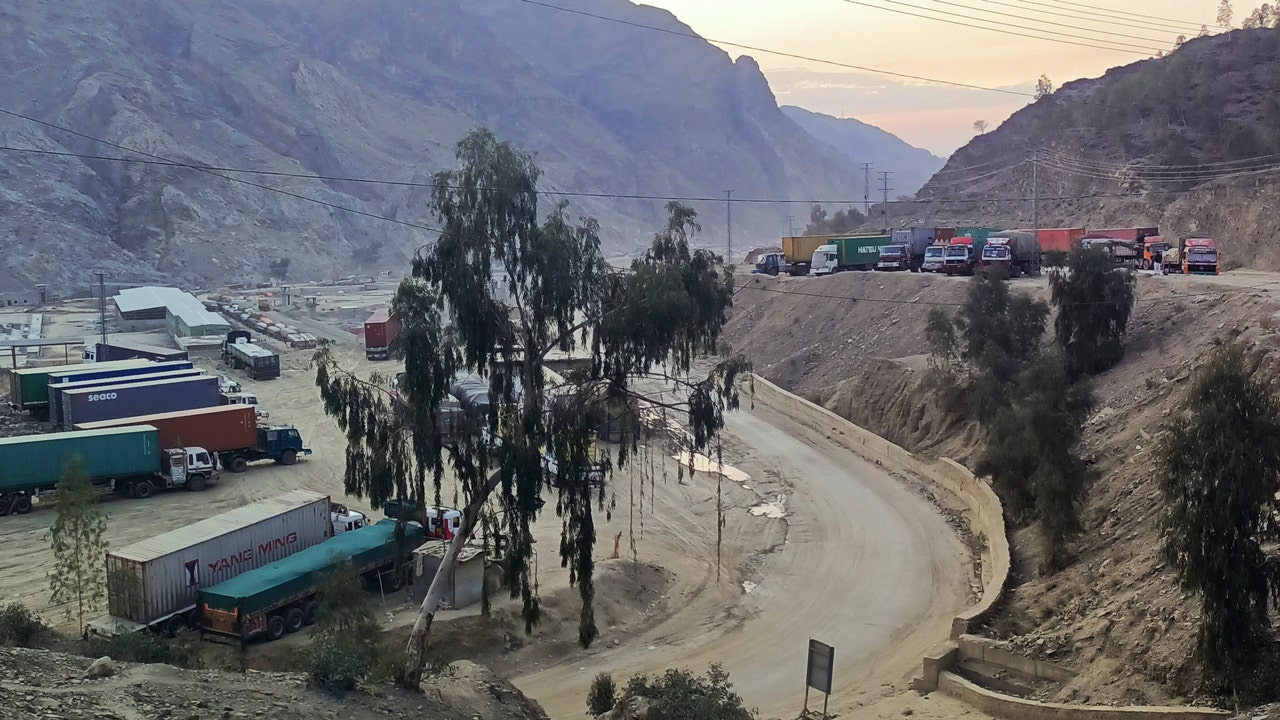
The dust in the Khyber Pass doesn't just settle; it stains. It gets into the pores of the skin and the fabric of the soul, a fine, ochre grit that carries the scent of diesel, dry earth, and old gunpowder. For the families living in the jagged shadows of the Durand Line, the border is not a line on a map. It is a living, breathing entity that decides who eats, who sleeps, and who dies.
Lately, that entity has been screaming.
When the news broke that the United States had publicly backed Pakistan’s "right to defend" itself against the rising tide of the Pakistani Taliban (TTP), it felt like a cold wind blowing through the mountain passes. To a policy analyst in Washington, it’s a calculated geopolitical realignment. To the shopkeeper in Peshawar or the farmer in the Khost province of Afghanistan, it’s the sound of a fuse being lit.
Relations between Islamabad and the Taliban government in Kabul have curdled into a bitter, dangerous standoff. This isn't just about diplomacy. It’s about the fact that the mountains have begun to talk again in the language of mortars and midnight raids.
The Invisible Wall
Consider a hypothetical man named Aman. He lives in a village where his front door technically faces Pakistan, but his grazing lands—the only way he feeds his children—lie across an invisible meridian in Afghanistan. For generations, the border was a porous thing, a suggestion rather than a command.
Now, that suggestion has become a wall of steel and suspicion.
When the Taliban swept back into power in Kabul in 2021, there was a brief, flickering hope in Islamabad that the "strategic depth" they had chased for decades had finally been achieved. They expected a grateful neighbor. Instead, they got a mirror image of their own worst nightmare. The TTP, the ideological brothers of the Afghan Taliban, found a sanctuary. They didn't just hide; they reorganized. They began reaching across the border with long, bloody fingers, striking at Pakistani police stations and markets with renewed ferocity.
The numbers tell a story that the heart struggles to process. Terrorism in Pakistan has spiked by over 70% in certain border regions. These aren't just statistics. They are funerals. They are the empty chairs at dinner tables in North Waziristan.
A Surprising Handshake
In the midst of this escalating fire, a voice from the West added fuel to the hearth. Donald Trump, a man whose relationship with Pakistan has historically swung between blistering condemnation and effusive praise, recently signaled a shift. He praised the Pakistani leadership. He spoke of strength.
It was a moment of tectonic irony.
During his first term, Trump famously accused Pakistan of "lies and deceit." Now, as the regional security architecture crumbles, the rhetoric has shifted toward a pragmatic, if uneasy, embrace. The United States needs a stable Pakistan to prevent the entire region from becoming a black hole of extremist exports. By validating Pakistan's right to defend its territory, the U.S. is effectively giving a green light for cross-border operations.
That green light is a terrifying thing for those caught in the middle.
When a nation "defends" itself by firing rockets into a neighboring country to hit a militant camp, the rockets don't always find the militants. Sometimes they find the mud-brick homes of people like Aman. The geopolitical "right to defend" sounds noble in a press briefing; it sounds like a thunderclap of glass and screams when it arrives at 3:00 AM.
The Weight of History
We often get this story backward. We treat the friction between Afghanistan and Pakistan as a new phenomenon, a byproduct of the failed "War on Terror."
The truth is older.
The Durand Line was drawn by a British civil servant in 1893 with a pen that bled through the maps of ethnic Pashtun lands. It split families, tribes, and identities in half. This historical wound has never been allowed to scab over. Every time a drone hums overhead or a suicide vest detonates in a crowded bazaar, the wound is ripped open again.
The current tension is a toxic cocktail of this old history and new desperation. Pakistan is currently grappling with a staggering economic crisis. Inflation is a predatory beast, eating the savings of the middle class and the hopes of the poor. A country on the brink of financial collapse cannot afford a perpetual war on its doorstep. Yet, it cannot afford to ignore the men coming through the passes with Kalashnikovs and a desire to dismantle the state.
The Human Currency
What is the cost of a "right to defend"?
It is measured in the displacement of thousands. When the Pakistani military launches operations, the people move. They pack their lives into the back of colorful, jingling Bedford trucks—bedding, copper pots, a few goats—and they head toward the cities. They become "IDPs," Internally Displaced Persons. A clinical term for a person who has lost everything but their name.
The irony of the current situation is that the Taliban in Kabul, once the proteges of the Pakistani intelligence apparatus, are now the primary source of Islamabad's migraines. They refuse to hand over TTP leaders. They claim they are "guests." In the Pashtun code of Pashtunwali, a guest is sacred. In the world of modern counter-terrorism, a guest is a target.
This is where the logic of the West meets the ancient codes of the East, and the result is a stalemate written in blood.
The Sound of the Silence
There is a specific kind of silence that falls over a border town when the rhetoric reaches a certain pitch. It’s the silence of a market that closes an hour early. It’s the silence of children who are told to play inside, away from the windows.
The U.S. backing of Pakistan's military stance is a signal to Kabul: the patience of the international community has reached its floor. If the Taliban cannot or will not restrain the militants using their soil as a launchpad, they will have to deal with the consequences of a neighbor that has been told it has the moral and legal authority to strike back.
But who pays for that authority?
It is the young soldier at a checkpoint who hasn't seen his mother in six months. It is the Afghan refugee who fled the drought and the hunger of his homeland only to find himself in a Pakistani detention center, caught in the gears of a "repatriation" drive designed to pressure the Kabul government.
The stakes are invisible until they are undeniable. We talk about "security interests" as if they are abstract chess pieces. They aren't. They are the thickness of the walls in a schoolhouse. They are the price of flour in a border town. They are the ability to walk to a mosque without looking over your shoulder.
The endorsement from Washington and the unexpected warmth from Trump provide Pakistan with a shield of legitimacy. It allows the generals to say they are part of a global effort against terror, rather than just a local power in a grudge match.
The tragedy is that every time the "right to defend" is exercised, the line between the defender and the aggressor becomes a little more blurred in the eyes of those living in the dust. The border doesn't just divide two countries; it divides the past from the future, and right now, the future looks like a long, dark tunnel with no light at the end.
As the sun sets over the Spin Boldak crossing, the long shadows of the trucks stretch out like fingers reaching for a peace that remains just out of grasp. The dust continues to fall. It covers the soldiers, the smugglers, and the children alike. It doesn't care about rights or defenses. It only knows that in this part of the world, the earth has a long memory, and it hasn't forgotten the taste of salt and iron.
The rhetoric has been sharpened. The alliances have been inked. The only thing left is to wait for the next sound to break the silence of the pass.
One thing is certain. When it comes, no one will be able to say they didn't hear it.
Would you like me to look into the specific economic impact this border tension is having on local trade and the price of essential goods in the region?