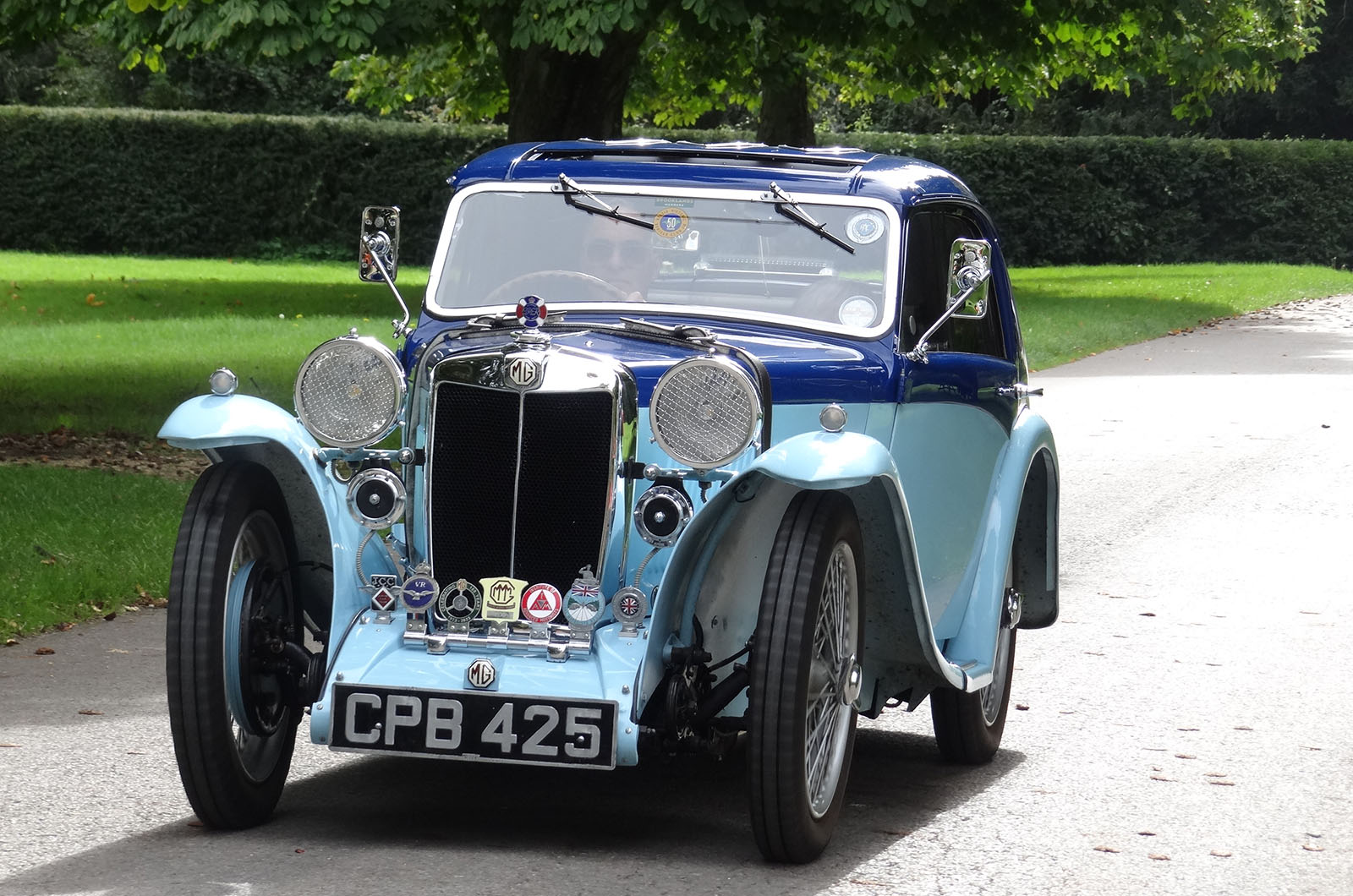
The classic car market entering 2026 is defined not by a broad "recovery" but by a fundamental shift in the liquidity profiles of specific asset classes. While the previous twenty-four months saw a contraction in mid-market volume, the current environment is driven by a stabilization in the cost of capital and a generational handover of institutional-grade vehicles. High-net-worth collectors have shifted from speculative acquisition toward a "flight to quality," where provenance and mechanical transparency are the primary drivers of alpha.
The Three Pillars of Value Retention in 2026
To understand why certain segments are outperforming others, one must analyze the market through three distinct lenses: Scarcity-Adjusted Utility, Preservation Cost-to-Value Ratios, and the Analog Premium.
1. Scarcity-Adjusted Utility
In previous cycles, rarity was often equated with low production numbers. In 2026, rarity is being redefined by "survivor" status. The market is placing a massive premium on vehicles that have escaped the "restoration trap"—the process where original components are replaced by modern reproductions, thereby stripping the asset of its historical DNA.
2. Preservation Cost-to-Value Ratios
A significant bottleneck in the 2026 market is the skyrocketing cost of specialized labor. As the pool of master technicians capable of servicing pre-war or complex 1960s V12 engines shrinks, the carrying cost of these assets increases. We see a divergence where:
- Tier 1 Assets: (e.g., Ferrari 250 series, Mercedes-Benz 300SL) retain value because the appreciation outpaces the $250+ hourly rates of top-tier restoration shops.
- Tier 3 Assets: (e.g., mass-produced 1970s British roadsters) face "economic total loss" scenarios where a required engine rebuild exceeds 50% of the vehicle’s market value.
3. The Analog Premium
As daily-driver technology becomes increasingly homogenized through electrification and autonomous driving features, the demand for "tactile engagement" has moved from a hobbyist preference to a measurable financial metric. Manual transmissions and unassisted steering racks are now treated as "hedonic features" that command a 20% to 35% premium over their automated counterparts in the same model line.
Demographic Succession and the 1990-2005 Super-Cycle
The most potent force in the 2026 market is the "Millennial Peak." Buyers born between 1980 and 1995 are entering their peak earning years and are aggressively targeting the "poster cars" of their childhood. This has created a structural supply-demand imbalance for Japanese Domestic Market (JDM) icons and European "Youngtimers."
The Displacement of the Pre-War Segment
The demand for Brass Era and pre-war vehicles is facing a structural decline. As the generation that viewed these vehicles as aspirational exits the market, the buyer pool is narrowing to institutional museums and a very small group of specialized connoisseurs. This creates a liquidity trap; while the "book value" of these cars may remain high, the "time-to-exit" at auction has increased by 40% over the last three years.
The Rise of the Analog Supercar
The 1990–2005 window represents the "Goldilocks Zone" of automotive engineering. These vehicles offer modern reliability and performance (0–60 mph in under 4 seconds) without the digital interference of modern traction control or drive-by-wire systems. Assets like the Porsche 993, the Ferrari F430 manual, and the BMW E46 M3 are no longer seen as used cars but as "functional art" with a finite supply.
Macroeconomic Drivers: Interest Rates and the "Safe Haven" Illusion
The narrative that classic cars are a hedge against inflation is a dangerous oversimplification. Unlike gold or T-bills, classic cars carry significant "friction costs," including insurance, climate-controlled storage, and specialized transport.
The 2026 market health is actually a byproduct of interest rate stabilization. When rates were at 0%, the market was flooded with "tourist capital"—investors looking for any yield who drove up prices for mediocre examples. With rates stabilized at a higher "new normal," the tourist capital has exited, leaving a market composed of "conviction buyers." This has lowered the ceiling on prices but significantly raised the floor for high-quality, documented vehicles.
The Quantitative Value of Provenance
In a data-rich environment, the "story" of a car is now being quantified. A vehicle’s value function can be expressed as:
$$V_{total} = V_{base} + (P_{f} \cdot S_{q}) - R_{c}$$
Where:
- $V_{base}$: The baseline market value for the make and model.
- $P_{f}$: Provenance Factor (historical significance, celebrity ownership, race history).
- $S_{q}$: Scarcity Quotient (number of surviving examples in similar condition).
- $R_{c}$: Restoration/Maintenance Cost required to reach Concours condition.
The $P_{f}$ variable is seeing the highest volatility. A car with a "documented" history of a single-family ownership since new can command a 50% premium over an identical car with four or more owners and "gap years" in its service history.
Technological Disruptions in Transaction Models
The traditional auction house model (physical events with 10%–12% buyer premiums) is facing an existential threat from high-transparency digital platforms. However, in 2026, we are seeing a "hybridization" of these models.
Physical auctions are pivoting to become "lifestyle marketing events" for the $5M+ asset class, while the $50k–$500k market has moved almost entirely to digital-only platforms that provide 200+ high-resolution photos and cold-start videos. This transparency has compressed the "information asymmetry" that dealers used to exploit. The result is a more efficient market where "lemon" cars are identified and devalued almost instantly by the community.
The Role of Synthetic Fuels
A significant headwind for the classic car market has been the threat of internal combustion engine (ICE) bans in urban centers. In 2026, the emergence of commercially viable synthetic fuels (e-fuels) has neutralized this risk. Collectors are no longer buying with the fear that their assets will be "bricked" by environmental legislation. This has restored long-term confidence in the asset class, particularly in European markets.
Risk Vectors and Market Vulnerabilities
Investors must account for several structural risks that could derail the 2026 momentum:
- The Restoration Labor Shortage: If the generational gap in mechanical skills is not bridged, the cost to keep these machines running will eventually exceed the utility value for all but the top 1% of cars.
- Fractional Ownership Dilution: The rise of platforms allowing "shares" of cars has increased the paper value of certain assets, but it has not been tested in a sustained downturn. There is a risk of "forced liquidation" if these platforms face a mass exit of retail shareholders.
- Authentication Sophistication: As values rise, the quality of "clones" and "fakes" (particularly in the Shelby and Ferrari markets) has improved. Buyers now require forensic-level verification, including metallurgical testing and factory archive cross-referencing, which adds to the transaction friction.
Strategic Execution for 2026
The optimal strategy for the current market cycle is a "Barbell Approach."
On one end of the barbell, allocate capital toward Blue Chip Preservation. These are vehicles with ironclad provenance in the $1M+ category that have already survived multiple economic cycles. On the other end, target High-Engagement Youngtimers (1990–2010) that feature manual transmissions and limited electronic intervention.
Avoid the "Muddled Middle"—cars from the 1970s and 1980s that were produced in high volumes and lack the performance of newer classics or the aesthetic purity of older ones. These assets are likely to stagnate as maintenance costs rise.
Identify vehicles where the "cost to build" (restoration) is significantly higher than the "cost to buy" a finished example. In 2026, the market is severely underpricing the value of "time-saved." Buying a car that is already "done" is the most effective way to arbitrage the current labor shortage in the restoration industry. Focus on cars with documented service histories from recognized marque specialists; in this market, the invoice is as valuable as the engine.
Would you like me to analyze the specific valuation delta between original-paint survivors and 100-point Concours restorations for the 2026 season?