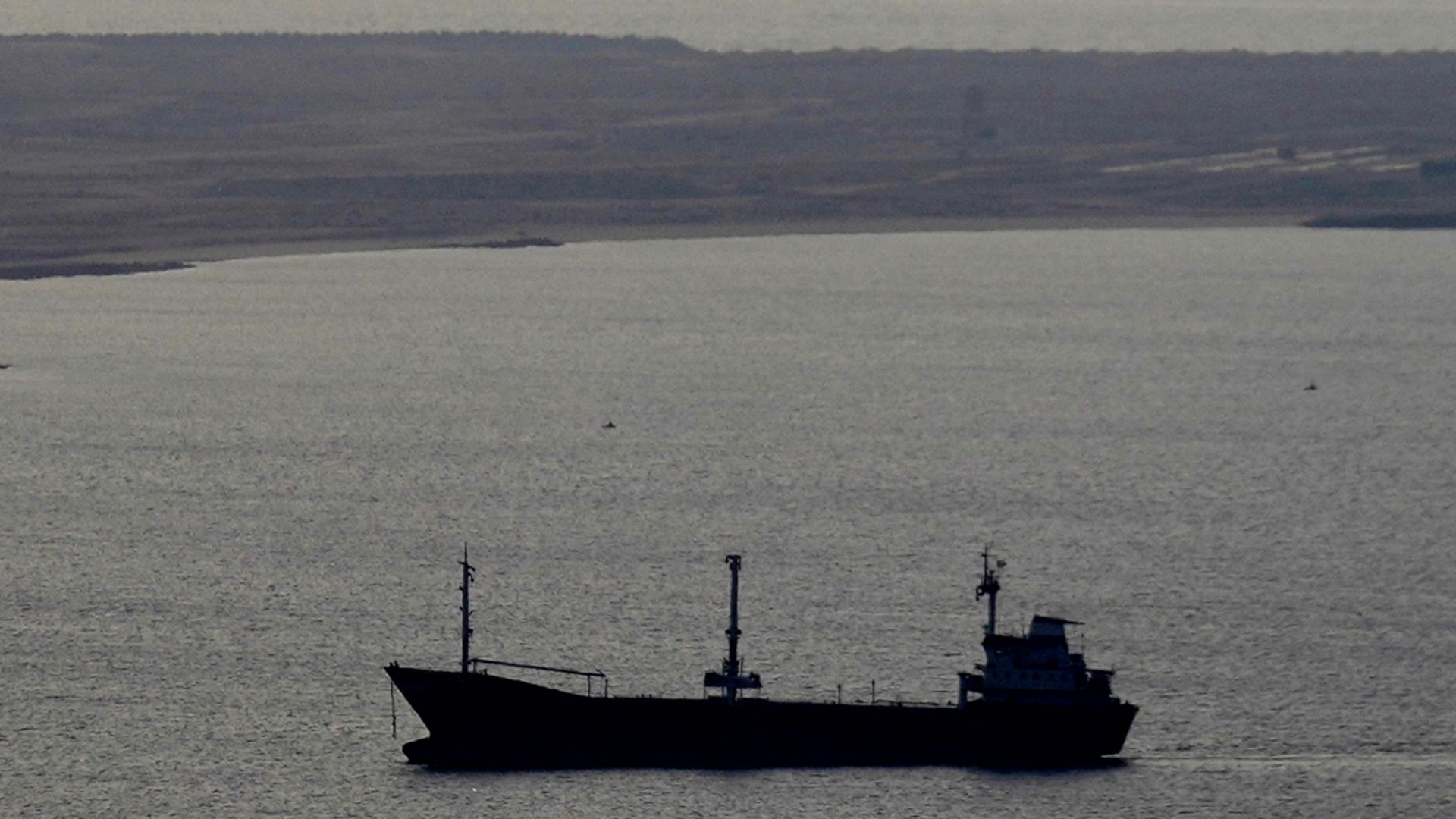
The captain of an Aframax tanker doesn’t look at the horizon for beauty. He looks for a wake that moves too fast to be a merchant ship. He looks for the glint of sun on a rocket-propelled grenade launcher. But lately, the men standing on the bridges of these steel giants—vessels carrying enough crude oil to heat a small city for a month—are looking at something far more invisible and arguably more dangerous: a spreadsheet in a London office.
In the mahogany-rowed offices of Lloyd’s of London, the atmosphere is currently one of polite, icy skepticism. The news from Washington is bold. The rhetoric is sharp. The promise from the Trump administration is simple in theory: we will choke off the Iranian threat, secure the shipping lanes, and the world’s energy will flow without a hitch.
It sounds like a victory. To an underwriter, it sounds like a fantasy.
The Math of Fear
Insurance is the secret oxygen of global trade. Without it, the ships stop. A single modern tanker can be valued at $100 million, and its cargo can easily match that figure. If a ship is hit by a drone or seized by the Iranian Revolutionary Guard, someone has to pay.
When a government promises "solutions" to maritime threats, the insurance sector doesn't cheer. They calculate. They know that political promises don't patch holes in hulls.
Consider a hypothetical owner named Elias. Elias runs a modest fleet out of Piraeus. He is not a politician. He is a man who worries about "War Risk" premiums. For Elias, the current American strategy—a mix of maximum pressure sanctions and the threat of kinetic force—doesn't necessarily make the Persian Gulf safer. It makes it more volatile.
In the insurance world, volatility is the most expensive word in the English language.
The administration’s plan involves tighter enforcement of "shadow fleet" sanctions and a more aggressive naval posture. To a casual observer, a bigger stick should mean fewer bullies. But the maritime insurance market operates on the "Reaction Principle." If the U.S. squeezes the Iranian oil spigot tighter, Iran typically responds by squeezing the Strait of Hormuz.
Every time a headline hits about a new round of sanctions or a carrier strike group moving into position, the "Additional Premium" for a single transit through the Gulf can spike by tens of thousands of dollars. For Elias, the "solution" is actually a line item that threatens to bankrupt his quarterly earnings.
The Ghost Fleet and the Great Disconnect
There is a fundamental disconnect between the way a politician views a "threat" and the way a surveyor views a "risk."
The Trump administration's focus on dismantling the "shadow fleet"—the aging, under-the-radar tankers used to transport sanctioned Iranian and Russian oil—is framed as a security win. The logic is that by removing these unregulated vessels, you remove the financial lifeblood of the Iranian regime.
However, the insurance sector sees a different butterfly effect.
When you push trade into the shadows, it doesn't disappear. It just becomes uninsurable. We are currently seeing a massive rise in "dark" shipping. These are ships with switched-off transponders, dubious registries, and, most importantly, no legitimate P&I (Protection and Indemnity) insurance.
If two of these "ghost ships" collide in the Strait of Hormuz, or if one leaks a million barrels of oil onto the coast of the Emirates, there is no insurance company to call. There is no recovery fund. The "solution" of aggressive sanctions has inadvertently created a massive environmental and financial liability that the legitimate insurance market refuses to touch.
The underwriters in London aren't "unimpressed" because they dislike the politics. They are unimpressed because the math doesn't square. You cannot stabilize a market by increasing the number of wildcards in the deck.
The Invisible Shield
To understand why the industry remains cold to these overtures, you have to understand the sheer scale of what is being asked.
Naval escorts are often cited as the ultimate fix. "We will protect the ships," the briefings say. But the U.S. Navy, as vast as it is, cannot be everywhere. There are roughly 2,000 tankers operating in the Persian Gulf region at any given time.
A naval presence is a deterrent, but it is not a guarantee. From an insurance perspective, a ship in a convoy is still a ship that can be hit by a "loitering munition"—the technical term for those cheap, buzzing kamikaze drones that have redefined modern warfare.
A drone that costs $20,000 can cause $10 million in damage. Even if the Navy shoots down 19 out of 20, that one successful hit is enough to keep insurance rates in the stratosphere.
The industry is looking for something the administration hasn't provided: a de-escalation roadmap.
Instead, the rhetoric suggests a cycle of escalation. We sanction, they harass. We deploy, they mine. We threaten, they seize. In this loop, the insurance companies aren't just spectators; they are the ones providing the collateral for the entire experiment.
The Human Cost of High Premiums
We often talk about these issues as if they are abstract movements of capital. They aren't.
When insurance premiums for Iranian-adjacent shipping lanes rise, the cost of bread in Egypt goes up. The cost of heating a home in a cold European winter climbs. The cost of trucking goods across the American Midwest shifts.
The shipping industry operates on razor-thin margins. When the "War Risk" premium jumps from 0.01% of a ship's value to 0.5% for a single seven-day voyage, that cost is never absorbed by the shipowner. It is passed down, hand to hand, until it reaches the person buying a gallon of milk.
This is the hidden tax of geopolitical instability.
The insurance sector’s lack of enthusiasm is a warning. They are the "canaries in the coal mine" for global stability. If they won't lower their rates, it's because they don't believe the world is getting safer, regardless of what the press releases from the State Department claim.
The Ledger of Reality
Trust is a currency that is hard to mint and easy to devalue.
The insurance markets grew up in a world of rules, treaties, and predictable outcomes. The current "solution" set relies on unpredictability as a weapon. While "strategic ambiguity" might be a powerful tool for a Commander-in-Chief, it is a nightmare for a Chief Risk Officer.
Imagine the room where these decisions are made. It isn't filled with generals. It’s filled with people in their sixties wearing reading glasses, staring at satellite imagery and historical loss tables.
They remember the "Tanker War" of the 1980s. They remember the burning hulls of the Bridgeton and the vessels that followed. They know that once the genies of maritime harassment are out of the bottle, they don't go back in just because a new leader takes the podium.
The skeptics in the insurance world aren't looking for a "tough" policy. They are looking for a "durable" one.
They see the current proposals as a series of short-term tactical wins that ignore the long-term structural decay of maritime law. By weaponizing the financial system so thoroughly, the administration may be inadvertently encouraging the creation of an entirely parallel, unregulated global trade network—one that exists beyond the reach of London, New York, or the rule of law.
When that happens, the insurance sector doesn't just lose business. The world loses its ability to manage the risks of being an interconnected species.
The sun sets over the Persian Gulf, turning the water the color of bruised plums. On the bridge of a tanker, the captain checks his radar again. He knows that his safety doesn't depend on the flag on his stern or the promises made five thousand miles away. It depends on the silence of the sea and the cold, hard calculations of a man in a London office who has decided, for today at least, that the risk is just barely worth the reward.
The gamble continues, but the house is starting to doubt the players.