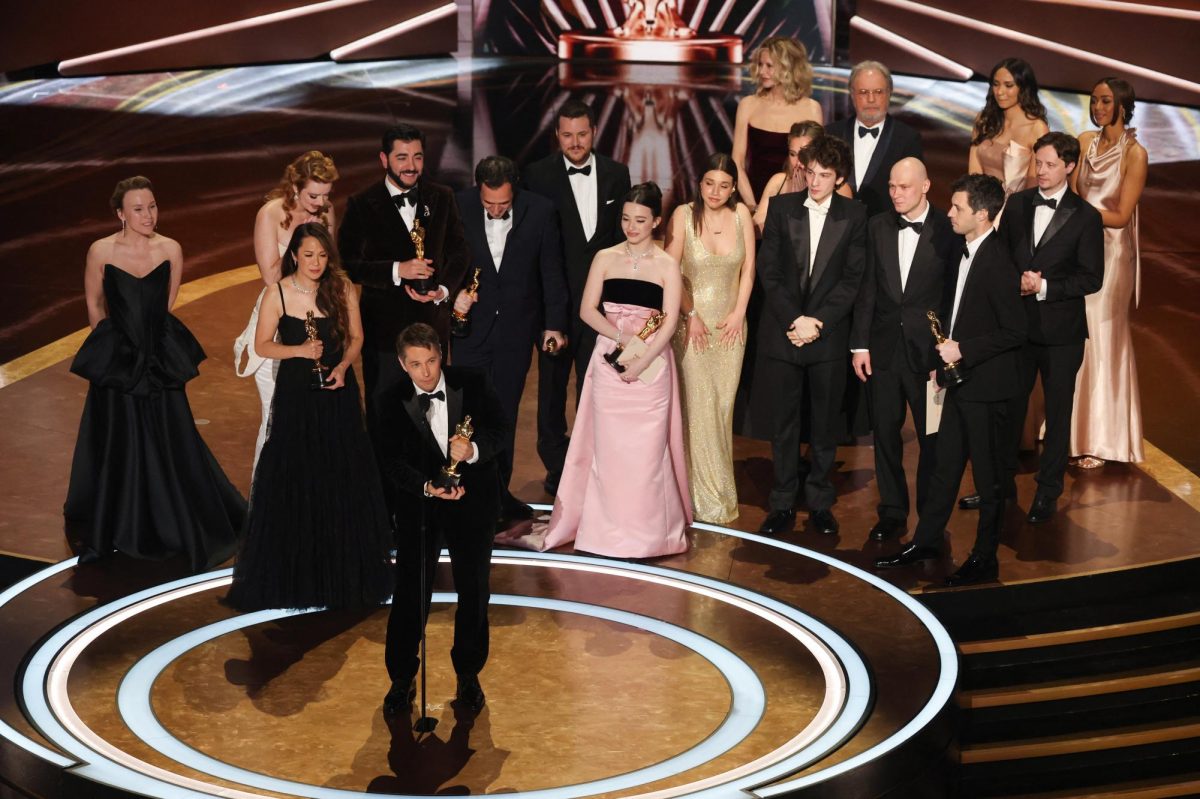
The 18% year-over-year decline in global box office revenue for Academy Award Best Picture nominees is not a statistical anomaly, but a signal of structural misalignment between prestige curation and mass-market consumption. This revenue compression reveals a widening gap between the "Critical Consensus" and "Commercial Velocity." To understand this decay, we must deconstruct the financial mechanics of the current slate, the shift in distribution windows, and the diminishing "Oscar Bump" as a marketing lever.
The Three Pillars of Revenue Erosion
The decline in aggregate box office for the 2026 nominees compared to the previous cycle can be traced to three specific structural shifts.
1. The Absence of "Tentpole Prestige"
In previous cycles, the Best Picture category often included at least one "Critical Blockbuster"—a film that achieves both 90th-percentile critical acclaim and 90th-percentile commercial reach (e.g., Oppenheimer or Top Gun: Maverick). The current cohort lacks a high-floor financial anchor. When the highest-grossing film in the set represents a lower ceiling than the previous year's leader, the aggregate total collapses regardless of the performance of mid-budget indies.
2. The Compressed Window Effect
The "Oscar Bump"—the historical surge in ticket sales following a nomination—has been cannibalized by Day-and-Date or near-instant streaming availability.
- The Valuation Gap: Theater owners lose leverage when a film moves to SVOD (Subscription Video on Demand) within 21 to 45 days.
- Consumer Inertia: Once a prestige title is perceived as "available soon" on a platform already paid for by the consumer, the perceived marginal utility of a $15 cinema ticket drops to near zero.
3. Genre Narrowing
The current nomination list skews heavily toward insular, dialogue-driven dramas and experimental narratives. While artistically significant, these genres lack "Global Exportability." Action and spectacle translate across language barriers via visual grammar; high-concept prestige drama requires localized marketing and cultural nuance, which increases the Cost per Acquisition (CPA) for international audiences.
The Cost Function of Prestige Marketing
A film’s presence in the Oscar race is often a defensive financial maneuver rather than an offensive one. The "Awards Campaign Spend" acts as a capital expenditure aimed at increasing the lifetime value (LTV) of the asset across secondary windows.
The Diminishing ROI on Campaign Capital
Distributors often spend between $5 million and $20 million on "For Your Consideration" (FYC) campaigns. If the global box office is down 18%, the internal rate of return (IRR) on these campaigns becomes questionable.
- Fixed Costs: Talent travel, private screenings, and trade publication advertisements remain static or inflate with the cost of media.
- Variable Returns: If the nomination does not translate into a theatrical "second wind," the distributor is essentially spending millions to subsidize a streaming service's acquisition cost.
Cultural Fragmenting and the Audience Funnel
The marketing funnel for Best Picture nominees has narrowed. Historically, the Academy acted as a "Discovery Engine" for the general public. In the current algorithmic era, the Academy serves more as a "Validation Stamp" for an existing niche. This shifts the revenue model from broad-based theatrical attendance to high-intent streaming retention.
The Global Distribution Bottleneck
The 18% drop is particularly acute in international territories. This is not merely a matter of taste, but of logistical friction.
The Currency and Inflation Variable
While domestic figures are reported in USD, international performance is subject to currency volatility. Stronger domestic currency impacts the reported "Global Box Office" even if ticket volume remains steady in local markets. However, the current data suggests a genuine volume decline.
Competition for Screen Density
Theatrical real estate is a zero-sum game. During the critical "Awards Season" (Q4 and Q1), prestige films are competing for screen density against franchise IP.
- Exhibitor Preference: Theater chains prioritize films with high "Concession Attachment Rates." High-intensity blockbusters drive popcorn and soda sales; two-and-a-half-hour somber dramas do not.
- Turnover Rate: A 90-minute horror film can be screened six times a day per screen. A 160-minute prestige epic can only be screened three to four times. The opportunity cost for exhibitors to carry Oscar nominees is rising, leading to shorter theatrical runs and lower aggregate grosses.
Identifying the "Prestige Debt"
Many of the current nominees were greenlit during a period of "Low-Interest Rate Creativity," where streaming platforms and studios prioritized prestige over immediate theatrical profitability to build brand equity. We are now seeing the "Prestige Debt" come due.
The 18% revenue contraction is the market's way of correcting for over-investment in content that lacks a clear path to theatrical solvency. This creates a bottleneck where high-quality cinema is produced but lacks the distribution infrastructure to reach the "Casual Viewer" who used to be the backbone of the Best Picture box office.
The Signal vs. Noise Ratio
The Academy has expanded its voting body to be more international and diverse. While this improves the representative quality of the awards, it often results in the selection of films that lack "Domestic Familiarity." There is a quantifiable lag between a film being "important" and a film being "watchable" for the average consumer in a high-inflation environment where discretionary spending is scrutinized.
Strategic Recalibration for Producers and Distributors
To mitigate further revenue decay in future cycles, the industry must pivot from "Awards-First" to "Audience-First" prestige.
- The Hybrid Theatrical-Event Model: Distributors must treat the theatrical window not as a revenue generator, but as a "Prestige Branding Event." By limiting the number of screens but maximizing the "Event" status (Q&As, 70mm screenings), they can drive higher per-screen averages, which fuels the narrative of success before the film hits streaming.
- Budgetary Realism: The "Mid-Budget Dead Zone" (films costing $30M–$60M) is the primary driver of the 18% decline. These films are too expensive to be "indie" and too small to be "events." Future prestige titles must either be produced under $15 million or designed with "Spectacle-Grade" visuals that justify the theatrical price point.
- Cross-Platform Synergy: Studios should stop viewing streaming as the "death" of the Oscar bump and start using algorithmic targeting to identify potential theatrical viewers. Using data from a film’s teaser performance on a platform to dictate a staggered theatrical rollout can optimize the spend-to-revenue ratio.
The 18% drop is a terminal warning for the current "Prestige Industrial Complex." If the Academy Award Best Picture remains a metric of artistic merit divorced from economic viability, the "Global Box Office" for these films will continue to trend toward the baseline of niche arthouse cinema, permanently losing the "Mass Market" audience that once defined the ceremony’s cultural and financial power.