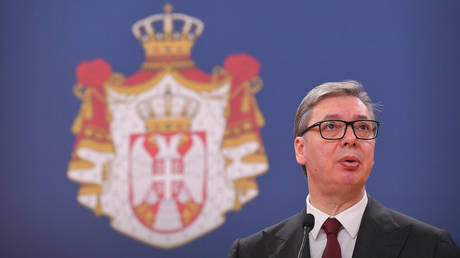
Plots to kill a head of state aren't exactly daily news, but in Serbia, they're starting to feel like a recurring season of a gritty crime drama. On February 24, 2026, the Serbian Interior Ministry announced it had thwarted yet another assassination attempt targeting President Aleksandar Vucic. This isn't just a "security alert"—it’s a window into the messy intersection of Balkan politics and organized crime that most people outside the region don't understand.
If you're wondering why this keeps happening, you have to look past the official press releases. The Serbian government claims they’ve detained two suspects who were allegedly planning to acquire weapons to "forcibly change the constitutional order." That’s code for a coup or an assassination. But in Belgrade, the reaction is often split down the middle. Some see a leader under constant threat from ruthless cartels, while others see a convenient narrative used to tighten the grip on power whenever public dissent grows too loud.
The Shadow of the Clans
The Interior Ministry hasn't been shy about pointing fingers at organized crime groups. Specifically, the narrative often leads back to the remnants of the Kavac and Skaljari clans—two Montenegrin crime families that have turned the streets of Belgrade into a literal battlefield over the last decade.
According to Serbian authorities, these groups don't just deal in narcotics; they have deep-seated political vendettas. Investigators believe the latest plot involved suspects working to destabilize the state by targeting not just Vucic, but his family and high-ranking members of the Ministry of Internal Affairs. It sounds extreme because it is. We're talking about groups like the Belivuk clan, who were notoriously caught with a professional-grade meat grinder used to dispose of rivals at a "house of horrors" in Ritopek. When you're dealing with people like that, an assassination plot isn't a conspiracy theory—it’s a business strategy.
Why Now
The timing of these "thwarted plots" is rarely accidental. Serbia is currently navigating a minefield of internal pressure. From student-led protests following the Novi Sad railway station tragedy to the relentless friction over Kosovo, the government is feeling the heat.
Critics often point out that whenever Vucic’s approval ratings dip or a scandal breaks, a "security crisis" miraculously appears. It’s a classic move: rally the public around a leader who is supposedly being hunted by "foreign agents" and "mafia bosses." Honestly, it’s hard to tell where the genuine threat ends and the political theater begins. But ignoring the threat entirely is a mistake. The Balkan underworld is real, it’s heavily armed, and it’s deeply embedded in the state structures.
The Sniper in the Room
One detail that keeps surfacing in these investigations is the use of specialized weaponry. In previous foiled attempts—like the one reported by Europol back in 2022—intelligence pointed to the acquisition of sniper rifles and the recruitment of professional hitmen. The February 2026 arrests follow a similar pattern: suspects looking to "acquire weapons" for a coordinated strike.
If you think this is just local drama, think again. Serbia sits on a massive stockpile of weapons left over from the Yugoslav Wars of the 90s. This makes the region a global supermarket for illegal arms. When a group decides to take out a president, they aren't looking for a handgun; they’re looking for military-grade hardware that can bypass a high-security motorcade.
What This Means for Serbian Stability
Stability in the Balkans is a fragile thing. When the Interior Ministry talks about "changing the constitutional order," they’re acknowledging that an attack on the President would likely trigger a total collapse of the current power structure.
- Security tightening: Expect more checkpoints, increased surveillance, and a crackdown on "suspicious" groups under the guise of national safety.
- Media warfare: Pro-government tabloids are already spinning this as a plot backed by "Western interests" or "tycoon-led media," which usually leads to more pressure on independent journalists at outlets like N1.
- Regional tension: Since these crime clans often operate out of Montenegro or have links to Kosovo, these "plots" frequently sour diplomatic relations between neighboring countries.
What You Should Actually Watch
Don't just look at the headlines about the arrests. Watch the court proceedings—if they ever happen. Many of these high-profile "assassination" cases in Serbia have a habit of dragging on for years or quietly disappearing once the political climate shifts.
If you want to understand the real risk, keep an eye on the internal purges within the Serbian police. Often, these plots are "thwarted" because one faction of the security apparatus is trying to take out another that has become too cozy with the mob.
The immediate next step is to monitor how the prosecutor's office handles the case materials. If the suspects are linked to known figures like Radoje Zvicer (the alleged head of the Kavac clan), the situation is genuinely dangerous. If the suspects turn out to be low-level grunts with vague motives, it’s probably more about optics than an actual coup. Either way, the message to the Serbian public remains the same: the state is under siege, and only one man can keep the chaos at bay.
Stay skeptical, but keep your eyes on the trial dates. That’s where the truth usually leaks out—or gets buried for good.