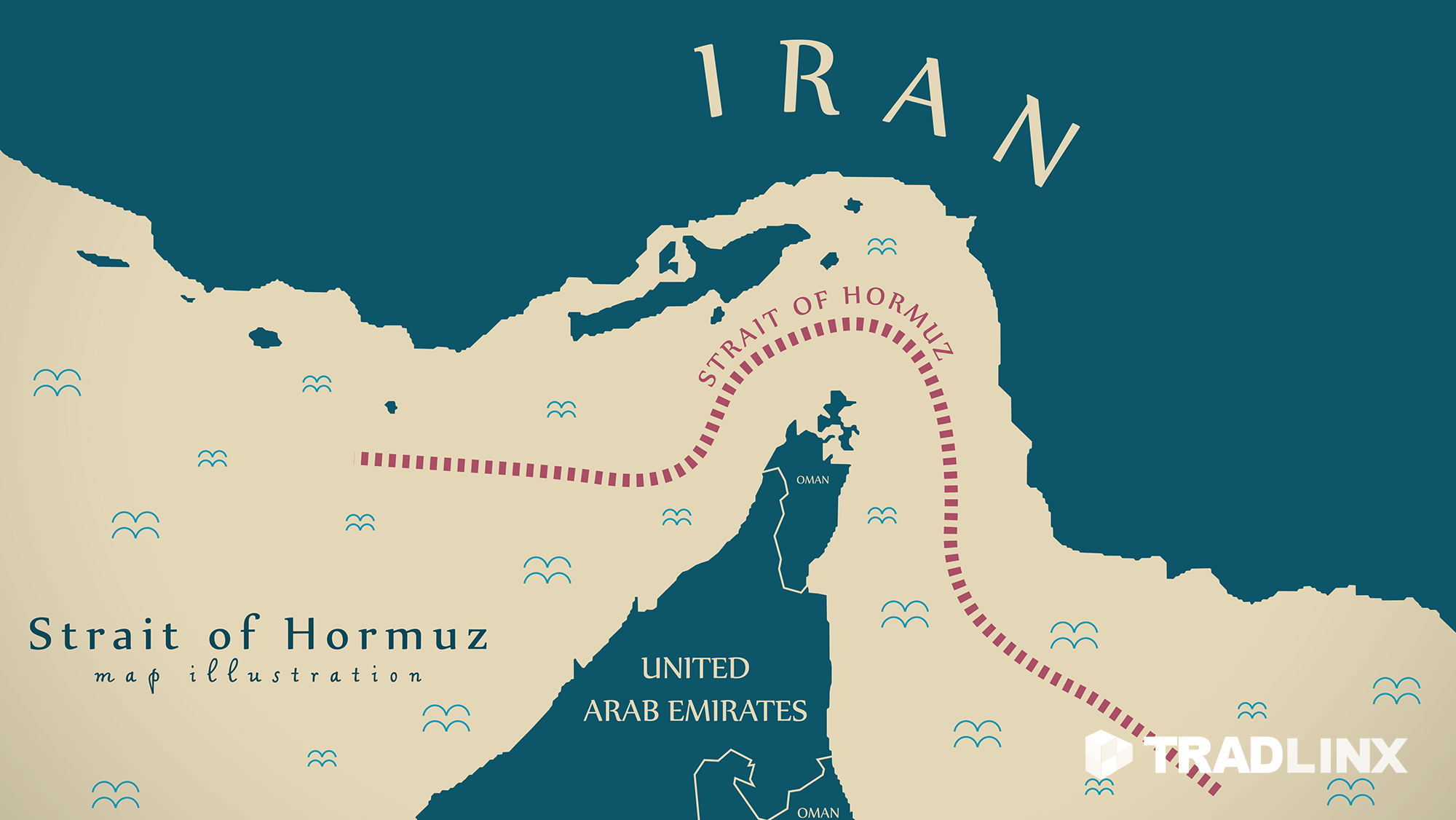
The United States has effectively initiated a maritime containment strategy around the Strait of Hormuz, signaling a departure from decades of "freedom of navigation" rhetoric toward a policy of active economic strangulation. While the White House maintains that it remains indifferent to whether Tehran returns to the negotiating table, the tactical deployment of naval assets and the implementation of aggressive boarding protocols suggest a more permanent shift in Persian Gulf power dynamics. This is no longer about forcing a deal; it is about physically seizing the levers of Iranian commerce.
The Strait of Hormuz represents the world's most sensitive energy chokepoint. Approximately 20% of the world's liquid petroleum passes through this narrow strip of water daily. By shifting from a defensive posture to a proactive blockade-style surveillance and interdiction program, the U.S. is betting that it can survive the resulting global price volatility more effectively than Iran can survive the loss of its remaining oil revenue. This maneuver bypasses the traditional diplomatic dance, replacing the carrot of sanctions relief with the stick of physical containment.
The Mechanics of Maritime Interdiction
A blockade in the modern era does not always look like a line of battleships anchored across a channel. Instead, it manifests as a sophisticated grid of sensor arrays, unmanned surface vessels, and rapid-response boarding teams. The U.S. Fifth Fleet, stationed in Bahrain, has integrated AI-driven maritime domain awareness to track every vessel larger than a fishing boat moving through the region.
When a tanker suspected of carrying "ghost" oil—crude sold outside the bounds of international sanctions—enters the designated corridor, it is no longer just monitored. It is intercepted. The legal framework used for these actions often cites maritime safety or environmental risks, but the underlying intent is purely geopolitical. By forcing ship captains to choose between a U.S. inspection or a total loss of insurance coverage, Washington has created a "soft" blockade that is as effective as a physical wall.
This approach targets the dark fleet, a network of aging tankers with obscured ownership that Iran uses to move oil to Asian markets. These vessels often turn off their transponders, a practice known as "going dark." The new U.S. directive treats any vessel with a disabled transponder in the Strait of Hormuz as a potential security threat, providing a convenient pretext for boarding and redirection.
Why Negotiation Is No Longer the Priority
The stated indifference from the executive branch regarding peace talks marks a fundamental change in American foreign policy logic. For years, the goal of sanctions was to bring Iran to the "meaningful" negotiation of a nuclear framework. That era has ended. The current administration has calculated that the political cost of a flawed deal is higher than the economic cost of a prolonged standoff.
This calculation relies on the shale revolution within the United States. Because the U.S. is now a net exporter of crude oil, it possesses a buffer against the price shocks that historically kept American presidents from messing with the Strait. While a spike in Brent crude prices still hurts at the gas pump, the U.S. economy as a whole is better positioned to absorb the blow than the economies of Europe or China, both of which rely heavily on Middle Eastern imports.
Washington is essentially weaponizing the global energy market against its rivals. If the Strait of Hormuz becomes a zone of high tension, the "risk premium" on oil increases. This hurts China, Iran's primary customer, far more than it hurts North America. The blockade is, in many ways, an indirect economic strike against Beijing as much as it is a direct strike against Tehran.
The Global Supply Chain Ripple Effect
The immediate impact of these naval operations is felt in the insurance markets. Lloyds of London and other major maritime insurers have already begun reclassifying the Persian Gulf as a high-risk zone. When insurance premiums for a single tanker transit jump by six figures, the cost is passed down through the entire supply chain.
We are seeing a shift in how global trade routes are evaluated. Logistics companies are now pricing in the "Hormuz Hazard." This leads to:
- Diversification of supply: Increased demand for West African and Latin American crude.
- Pipeline reliance: A rush to utilize the Habshan–Fujairah pipeline, which bypasses the Strait, though its capacity is limited.
- Strategic stockpiling: European and Asian nations are being forced to draw from their strategic petroleum reserves earlier than planned.
The reality is that even if not a single shot is fired, the mere presence of an interdiction force changes the math for global trade. It turns a predictable commodity market into a volatile geopolitical arena.
Iranian Countermoves and the Asymmetric Threat
Tehran is not a passive observer in this scenario. Their naval strategy has long focused on asymmetric warfare. They cannot match the U.S. Navy ship-for-ship, but they don't have to. The Islamic Revolutionary Guard Corps (IRGC) utilizes swarms of fast-attack boats, sea mines, and shore-based anti-ship missiles to create what military planners call Anti-Access/Area Denial (A2/AD) bubbles.
The danger of the current U.S. posture is that it invites a "gray zone" escalation. If the U.S. seizes a tanker, Iran may respond by seizing a merchant vessel from a U.S. ally, such as the UK or South Korea. This cycle of retaliation can quickly spiral out of control, even if neither side wants a full-scale war.
Furthermore, Iran has mastered the art of ship-to-ship transfers in international waters. By moving oil between three or four different vessels before it reaches its final destination, they make it nearly impossible for naval forces to prove the origin of the cargo without a physical boarding. The U.S. is now betting that its sensor technology can cut through this obfuscation, but the sea is a very large place to hide.
The Economic Burden on the American Consumer
While the U.S. energy sector provides a hedge, the average American voter remains sensitive to gas prices. Any sustained blockade or disruption in the Strait eventually hits the domestic market. The administration is gambling that it can manage these price increases through domestic policy or by leaning on other producers like Saudi Arabia and the UAE to increase output.
However, the relationship with Riyadh is not what it used to be. The Saudis have shown an increasing willingness to act in their own self-interest, often coordinating with Russia through the OPEC+ framework to keep prices high. If the U.S. moves to block the Strait and Saudi Arabia refuses to fill the supply gap, the resulting price spike could become a significant domestic political liability.
This creates a paradox. To successfully block Iran, the U.S. needs the cooperation of the very oil-producing nations that benefit most from the high prices a blockade creates. It is a delicate balancing act that requires constant diplomatic maintenance, even as the President claims he "doesn't care" about the diplomatic side of the Iranian problem.
Strategic Realignment in the Middle East
The blockade also forces regional players to choose sides. Countries like Qatar, which shares a massive gas field with Iran, are in an impossible position. They rely on U.S. security guarantees but cannot afford a total breakdown in relations with their neighbor.
We are seeing the emergence of a bifurcated Middle East. On one side, a U.S.-backed maritime coalition focused on containment. On the other, a loose alignment of states and non-state actors that see American intervention as the primary source of instability. This divide is no longer just about religion or local politics; it is about who controls the flow of energy and the wealth that comes with it.
The U.S. Navy’s increased presence in the Strait is also a test of the "Integrated Maritime Force" concept. This involves using drones and remote sensors to do the work that previously required dozens of destroyers. If this model works in the Persian Gulf, it will likely be exported to other flashpoints, such as the South China Sea.
The Legal Gray Zone of High Seas Boardings
International law is notoriously murky when it comes to interdicting vessels in international waters. The UN Convention on the Law of the Sea (UNCLOS) generally protects the right of "innocent passage." The U.S. argues that tankers carrying sanctioned oil for the purpose of funding regional instability do not qualify for such protections.
Critics argue that this sets a dangerous precedent. If the U.S. can unilaterally decide which commercial vessels are allowed to pass through an international strait, other nations may feel empowered to do the same. This erodes the very rules-based order that the U.S. has spent the last seventy years defending.
The tactical success of a blockade must be weighed against this long-term erosion of international norms. If the Strait of Hormuz becomes a "might makes right" zone, the stability of global maritime trade everywhere is at risk.
The Limits of Naval Power
Ultimately, a naval force can stop a ship, but it cannot stop a nation's underlying motivations. Iran has lived under various forms of blockade and sanction since 1979. Their economy has developed a high degree of "resistance" to external pressure. While the current U.S. actions are the most aggressive to date, there is no guarantee they will lead to the desired behavioral change in Tehran.
The U.S. is using a 20th-century tool—naval containment—to solve a 21st-century problem of proxy warfare and ideological conflict. The success of this mission will not be measured by how many tankers are turned back, but by whether the U.S. can sustain the pressure without triggering a broader conflict that it is currently ill-prepared to manage.
Companies operating in the region must now treat the Strait of Hormuz not as a standard transit point, but as a contested military zone. Every shipment requires a contingency plan, and every contract must account for the possibility of sudden, state-led seizure. The era of predictable passage is over.
Move your assets to safer corridors or prepare for the overhead of a permanent crisis.