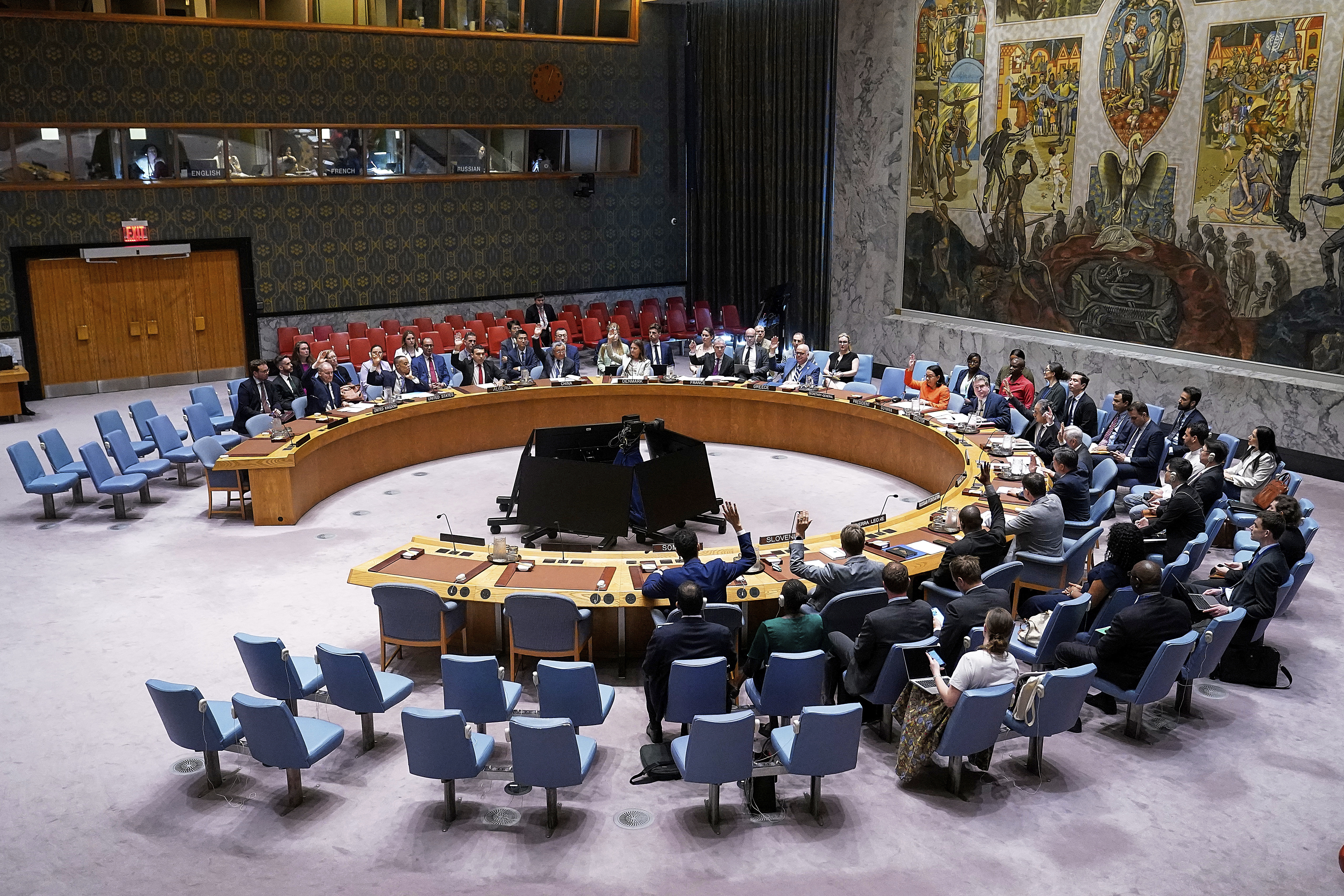
The sirens in Tehran weren't just a local alarm. They signaled a fundamental shift in how global powers handle the Middle East. When the news broke that the U.S. and Israel launched coordinated strikes against Iranian targets, the collective gasp from the international community was audible. Now, as the UN Security Council prepares for an emergency meeting, we have to look past the standard diplomatic jargon. This isn't just another session of finger-pointing in a sterile New York chamber. It's a high-stakes scramble to prevent a localized conflict from turning into a global conflagration.
Most people think these UN meetings are just theater. Usually, they're right. But this time, the variables have changed. You've got two nuclear-capable interests—if we're being honest about Israel's capabilities—and a U.S. administration that has finally decided to pull the trigger on a direct kinetic response. The "shadow war" is over. It's just a war now.
The Strategy Behind the Coordinated Strikes
The sheer scale of the operation suggests months of planning. This wasn't a "proportional response" to a single drone strike. Reports indicate that the targets included advanced missile production facilities and command centers specifically linked to regional proxy networks. By hitting these sites simultaneously, the U.S. and Israel sent a clear message: the era of strategic patience is dead.
Military analysts often talk about "deterrence." It’s a fancy word for making the other guy too scared to move. For years, the U.S. tried to achieve this through sanctions and back-channel threats. That failed. Iran continued to expand its influence, pushing the envelope until the envelope tore. These strikes are an attempt to physically remove the tools Iran uses to project power, rather than just asking them nicely to stop.
What the UN Security Council Can Actually Do
Don't expect a unified resolution. That's a pipe dream. The Security Council is structurally designed to be a stalemate machine when the big players disagree. Since Russia and China hold veto power, any attempt by the U.S., UK, or France to formally condemn Iran—or even to justify the strikes—will hit a brick wall.
The real action happens in the hallways and the side rooms. This emergency meeting serves as a pressure valve. It allows diplomats to scream at each other in a controlled environment so they don't start screaming through their militaries. We'll likely see a lot of talk about "sovereignty" and "international law." These terms are used as weapons, not as rules. Russia will call the strikes an act of aggression. The U.S. will call them pre-emptive self-defense under Article 51 of the UN Charter. Both sides will be technically right and practically wrong at the same time.
Why This Meeting Is Different from Previous Escalations
In the past, these meetings were about proxy battles in Yemen or Lebanon. This is different because the strikes hit Iranian soil directly. That's a massive red line that has been crossed. When you hit the mainland, the political math changes for the Iranian leadership. They can't just hide behind a militia group anymore. They have to respond to their own public and their own hardliners.
The Security Council knows this. The goal of the emergency session isn't to solve the conflict—nobody is that naive. The goal is to establish the "rules of the road" for the next 72 hours. They're trying to figure out if Iran's retaliation will be symbolic or if it will be a full-scale launch. If it's the latter, the UN building might as well be a museum, because the diplomacy will be effectively finished.
The Role of Non Permanent Members
While the "Big Five" grab the headlines, the ten non-permanent members are the ones to watch. Countries like Brazil, Japan, or Switzerland often act as the "bridge" during these crises. They're the ones drafting the compromise language that nobody likes but everyone can live with. Their primary concern is oil prices and shipping lanes. If the Strait of Hormuz gets closed, a diplomatic spat in New York becomes an economic catastrophe in Tokyo and Berlin.
The Misconception of International Law in 2026
We love to talk about international law like it’s a set of traffic rules. It’s not. It’s a collection of precedents that powerful countries follow when it’s convenient. The U.S. justification for these strikes relies heavily on the "unwilling or unable" doctrine. Basically, if a state is unwilling or unable to prevent its territory from being used for attacks, other states have a right to intervene.
Iran, of course, rejects this. They see it as a violation of the UN Charter's core principle of territorial integrity. This legal debate will dominate the emergency meeting, but it's mostly noise. The real law being applied is the law of physics: if you launch a drone at a target, expect a missile to come back at the launch site.
Economic Fallout and the Human Cost
While diplomats argue, the markets are already reacting. Oil futures spiked the moment the first explosions were confirmed. This is why the UN meeting matters to you, even if you don't care about geopolitics. The stability of the global energy supply is tied directly to whether this meeting can produce even a glimmer of de-escalation.
The human cost is often buried in these reports. We talk about "targets" and "assets," but these are places where people work. The collateral damage from these strikes—and the inevitable Iranian response—will be felt by civilians who have no say in the IRGC's regional ambitions or the Pentagon's strategic shifts.
The Failure of Previous Diplomatic Efforts
We have to admit that the current situation is a result of years of failed diplomacy. The JCPOA is a ghost. The various "de-confliction" channels are clogged. When diplomacy fails, the military takes over. The UN is now trying to claw back some relevance in a situation where they've been sidelined for a long time.
I've seen this play out before. A crisis hits, everyone rushes to the chamber, and a lot of grandstanding occurs for the cameras. But the real question is whether the Secretary-General can convince the parties to stop the cycle before the second wave of strikes begins. If the U.S. and Israel have a "Phase Two" ready to go, the Security Council meeting is just a formality before more fire.
Immediate Steps for Observation
If you're following this, don't just watch the speeches. Look at the body language of the delegates. Watch for who leaves the room together. The most important thing to monitor is whether a "Presidential Statement" is issued. Unlike a resolution, a statement requires consensus from all 15 members. If they can't even agree on a statement that says "we're concerned," you know we're in deep trouble.
Stay focused on the following developments:
- The specific language used by the U.S. regarding "ongoing threats." This usually hints at more strikes to come.
- Whether Iran's UN representative threatens to withdraw from the Non-Proliferation Treaty. That's the ultimate nuclear card.
- The tone of the "middle powers" like India or Turkey, who often have the best intelligence on what's actually happening on the ground.
The window for a diplomatic "off-ramp" is closing fast. The next few hours in New York will determine if we're looking at a tense month of skirmishes or the start of a regional war that redefines the 21st century.
Keep an eye on the official UN Web TV feed for the live session. Pay attention to the French and UK statements; they often signal whether the European allies are fully on board or if they're trying to pull the U.S. back from the ledge. Check the latest oil market reports to see if the "fear premium" is holding or expanding.