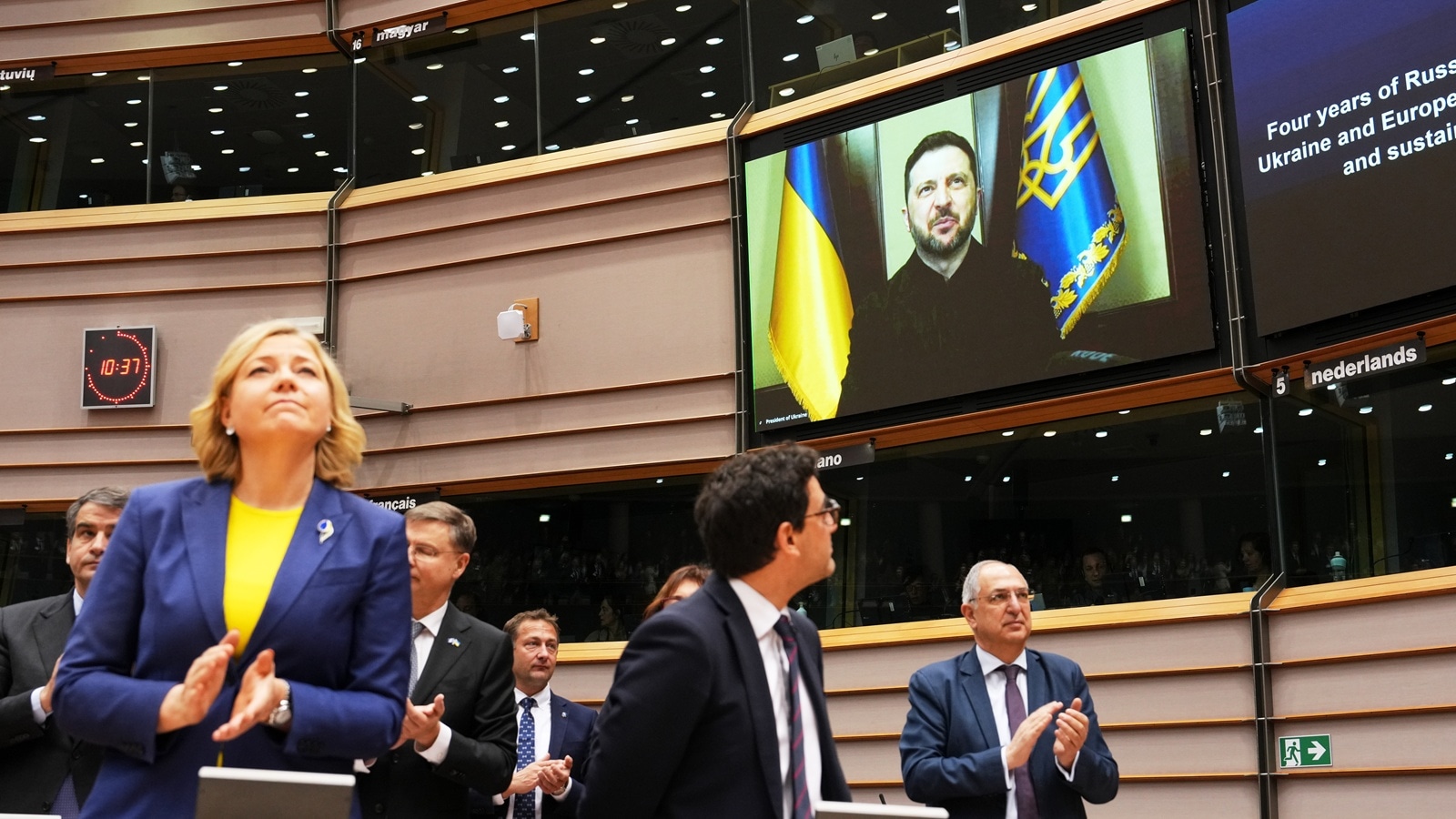
Four years into a conflict that was supposed to end in days, Volodymyr Zelenskyy isn't just standing—he’s defiant. Marking the fourth anniversary of Russia’s full-scale invasion this week, the Ukrainian president made it clear that Vladimir Putin hasn't broken his people. It's a bold claim when you look at the map, but the numbers tell a story of a superpower that's remarkably stuck.
Russia currently occupies about 20% of Ukraine. That sounds like a lot until you realize they only managed to grab an extra 0.79% of territory over the last twelve months. For a military that dwarfs its neighbor in every traditional metric, that’s not a victory. It’s a quagmire. Zelenskyy’s message wasn't just for his own citizens; it was a direct challenge to the West and a specific invitation to Donald Trump to see the reality on the ground for himself.
The Reality of Four Years under Fire
Life in Ukraine right now is a brutal exercise in endurance. This past winter was the hardest yet. Russian strikes have systematically dismantled the power grid, leaving the country with only 11 GW of generation capacity when it needs 18 GW just to keep the lights on during peak cold. In Kyiv alone, over 1,100 high-rise buildings lost central heating in January 2026.
Despite this, the "broken" narrative hasn't taken hold. Honestly, it’s hard to wrap your head around the scale of the loss. Estimates suggest combined casualties—killed, wounded, or missing—could hit 2 million by this spring. Russia has likely lost over 1.2 million personnel, a figure that exceeds any major power's losses since World War II. Yet, the Kremlin keeps pushing, preparing for another massive offensive in the Donbas this summer.
Why the Trump Invitation Matters
Zelenskyy’s plea for Donald Trump to visit Kyiv isn't just a PR stunt. It’s a strategic move to cut through the noise of American domestic politics. Trump has famously claimed he could end the war in 24 hours. Zelenskyy's response is basically: "Come see what 24 hours here actually looks like."
By inviting the former (and potentially future) U.S. president, Zelenskyy is trying to show that this isn't a simple border dispute or a "street fight." It’s an existential struggle. He’s betting that seeing the makeshift memorials at Maidan Square—carpets of small flags and portraits of the fallen—will change the "negotiate at any cost" perspective.
The Stalemate by the Numbers
To understand why Zelenskyy feels confident saying Putin hasn't won, you have to look at the attrition.
- Territorial Gains: Russia took less than 1% of Ukraine in 2025.
- Equipment Losses: Open-source data shows Russia has lost over 24,000 military vehicles, including nearly 14,000 tanks and armored units.
- Economic Strain: While Russia has pivoted to a war economy, its growth slowed to 0.6% in 2025. It's a hollowed-out machine.
- Human Cost: Over 15,000 civilians are confirmed dead, though the actual number is likely much higher since we can't see what's happening in occupied cities like Mariupol.
The 2026 Military Outlook
The "Fortress Belt" in Donetsk is the next big target. Russian forces have started using tube artillery on Kramatorsk and its suburbs for the first time in this phase of the war. They're softening up the defenses for a ground assault expected between spring and summer.
Ukraine is leaning heavily on its "Coalition of the Willing." The Nordic and Baltic states just pledged another €12.5 billion for 2026. The EU is working through a €90 billion loan. This isn't just charity; these countries see their own borders as the next potential frontline if Ukraine folds. They're terrified of a scenario where aggression is rewarded with territorial concessions.
Peace Talks and the Red Lines
There’s talk of U.S.-brokered negotiations in Geneva, but don't hold your breath. The sticking points are massive. Putin wants Ukraine to ditch NATO ambitions, slash its army, and hand over huge chunks of land. Zelenskyy’s red line is sovereignty. He’s told his negotiators not to "devalue" the four years of struggle by giving away what’s been defended with so much blood.
It’s easy to get cynical about "unwavering support" when the frontlines barely move. But for the people in Kyiv or Kharkiv, resilience isn't a buzzword. It's the only way they survive the night. Zelenskyy’s defiance isn't just for show—it's the only currency he has left to keep the world's attention.
If you want to support the ongoing humanitarian efforts, look into organizations like United24 or the Red Cross that are actively working to restore the energy infrastructure before the next cold snap. Staying informed on the specific military aid packages being debated in your own country is the best way to understand where this conflict goes next.


