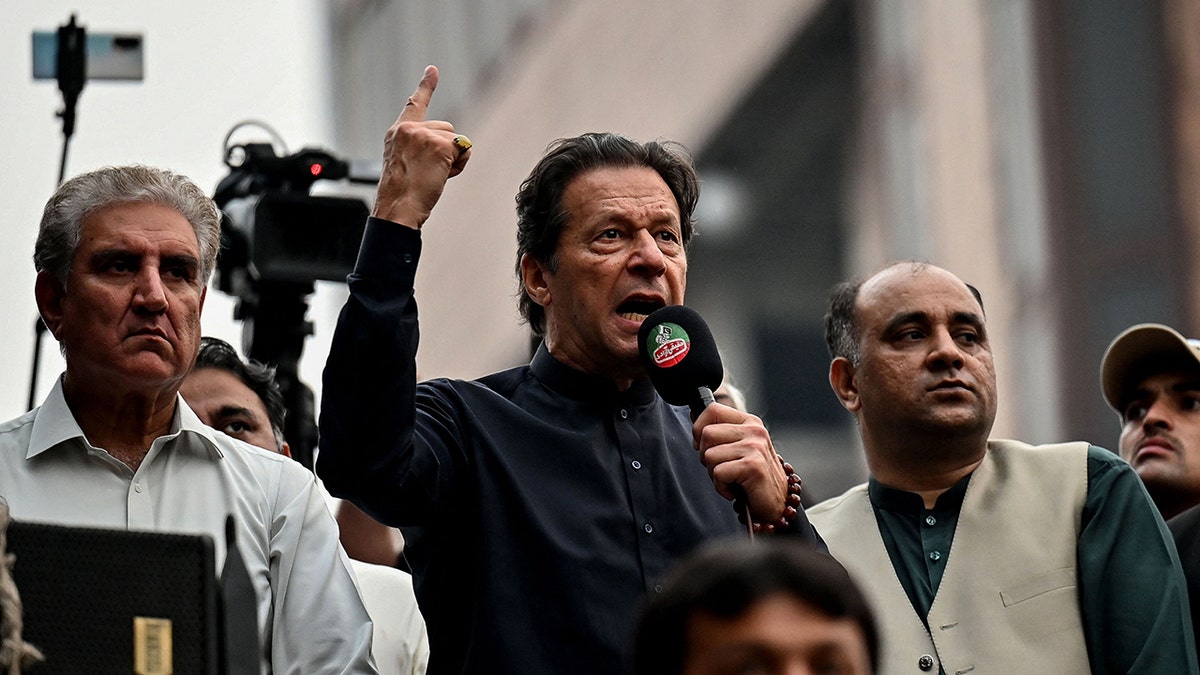
Imran Khan can see just fine. In fact, he apparently has "6/6 vision." That's the official word from Pakistan’s Law Minister, Azam Nazeer Tarar, who recently took to the floor of the National Assembly to shut down a whirlwind of speculation regarding the former Prime Minister’s health. If you’ve been following the chaotic spiral of Pakistani politics lately, you know that a medical report isn't just a document. It’s a political weapon.
For weeks, the air was thick with claims that the PTI founder was losing his sight or being denied basic medical care in Rawalpindi’s Adiala Jail. His supporters were worried. His legal team was sounding the alarm. Then came the government’s rebuttal, delivered with a flourish that bordered on the theatrical. Tarar didn't just say Khan was okay. He called his perfect vision a "miracle" considering his age.
Let's look at what's actually happening behind the prison walls and why a simple eye exam has become the latest flashpoint in a national power struggle.
The Anatomy of a Medical Rumor
Rumors in Pakistan don't just happen. They're manufactured, curated, and then unleashed. The narrative that Imran Khan was going blind didn't emerge from nowhere. It started with reports of poor lighting in his cell and limited access to sunlight. From there, it’s a short leap for a dedicated fanbase to imagine the worst-case scenario.
When a high-profile prisoner is kept in solitary or restricted conditions, their physical state becomes the primary currency for their political party. If Khan is suffering, he’s a martyr. If he’s healthy, the government is "justly" detaining a convict.
Tarar’s "6/6" statement was a calculated move to strip the PTI of that martyr status. By claiming Khan’s health is not just stable but "miraculous," the state is trying to paint the opposition’s concerns as pure fiction.
Why 6/6 Vision Matters in Adiala Jail
In clinical terms, 6/6 vision is the metric equivalent of 20/20. It means you can see at six meters what a "normal" person sees at six meters. For a man in his early 70s, maintaining that level of visual acuity is impressive. It’s also a very specific detail for a Law Minister to mention.
Why get so granular? Because vagueness leaves room for doubt. If the government simply said "he's fine," nobody would believe them. By quoting a specific medical finding, they're daring the opposition to prove them wrong.
The Law Minister also noted that Khan has access to exercise equipment, including a gallery for walking and a "cycling machine." The image the government wants to project is one of a man in a high-end retreat rather than a cold cell. They're trying to neutralize the "inhumane conditions" argument that Khan’s lawyers have been pushing in the courts.
The Battle of Medical Reports
We’ve seen this movie before. Nawaz Sharif’s "platelet count" was the obsession of the national media for months before he was allowed to leave for London. Now, it’s Khan’s eyes and exercise habits.
The problem is trust. In a polarized environment, PTI supporters won't trust a government-sanctioned medical team. Conversely, the government won't trust a private doctor chosen by Khan. This creates a vacuum where "miracles" and "conspiracies" thrive.
The Law Minister’s remarks also touched on a sensitive point. He claimed Khan is being provided with meals of his choice, prepared in a dedicated kitchen. This is a direct response to allegations that the former PM was being fed substandard food or, worse, being slowly poisoned.
What the Law Minister Actually Said
- Khan’s eyesight is 6/6.
- He has a dedicated cook and a private kitchen.
- He has access to three rooms, not just a single cell.
- Medical check-ups are conducted regularly by PIMS (Pakistan Institute of Medical Sciences) doctors.
If you believe the state, Khan is living better than the average Pakistani citizen. If you believe the PTI, he’s being subjected to psychological and physical "slow-burning" torture. The truth likely sits somewhere in the boring middle, but the middle doesn't sell newspapers or win elections.
The Politics of Age and Vitality
Imran Khan has always built his brand on fitness. The world-class athlete turned politician. Even in his 70s, his "alpha" persona is central to his appeal. By calling his health a miracle, the government is ironically reinforcing his image as a "superman," even while trying to debunk the idea that he’s being mistreated.
But there’s a darker side to this. By focusing on his 6/6 vision, the government is distracting from the legal complexities of his incarceration. It’s easier to talk about eye exams than it is to talk about the merits of the multiple cases stacked against him.
It’s a classic bait-and-switch. You argue about the bike in his cell so you don't have to argue about the fairness of his trial.
Beyond the Eye Test
While the vision debate grabbed the headlines, the broader issue is the transparency of prisoner treatment in Pakistan. International human rights organizations often point out that the treatment of political prisoners varies wildly depending on who's in power.
Khan’s legal team continues to push for independent medical observers. They argue that as long as the doctors are state-employed, their reports are political documents. They're not wrong to be skeptical. In the history of Pakistani politics, medical reports have been used to get people out of jail and to keep them in.
What Happens Next for the PTI Founder
The "miracle" vision claim has temporarily stalled the blindness rumors, but it hasn't silenced the demand for better access. Khan’s lawyers are still fighting for more frequent meetings and a more transparent look at his living conditions.
If you're looking for the "real" story, watch the court filings, not the floor of the National Assembly. The Law Minister’s job is to defend the state. The legal team’s job is to defend the client. Between those two poles, the public is left to guess.
If you want to stay ahead of the curve on this, stop looking at the sensationalist headlines about "miracles." Instead, look for the official court orders regarding medical board formations. Those are the only documents that actually carry legal weight. The next time a politician mentions a medical stat, ask yourself what they're trying to make you look away from. Usually, it’s the law itself.
Check the independent reports from the High Court visits if they become available. Those are far more reliable than a speech in parliament. Stand by for the next round of "medical updates"—they’re the new frontline of Pakistani electioneering.


