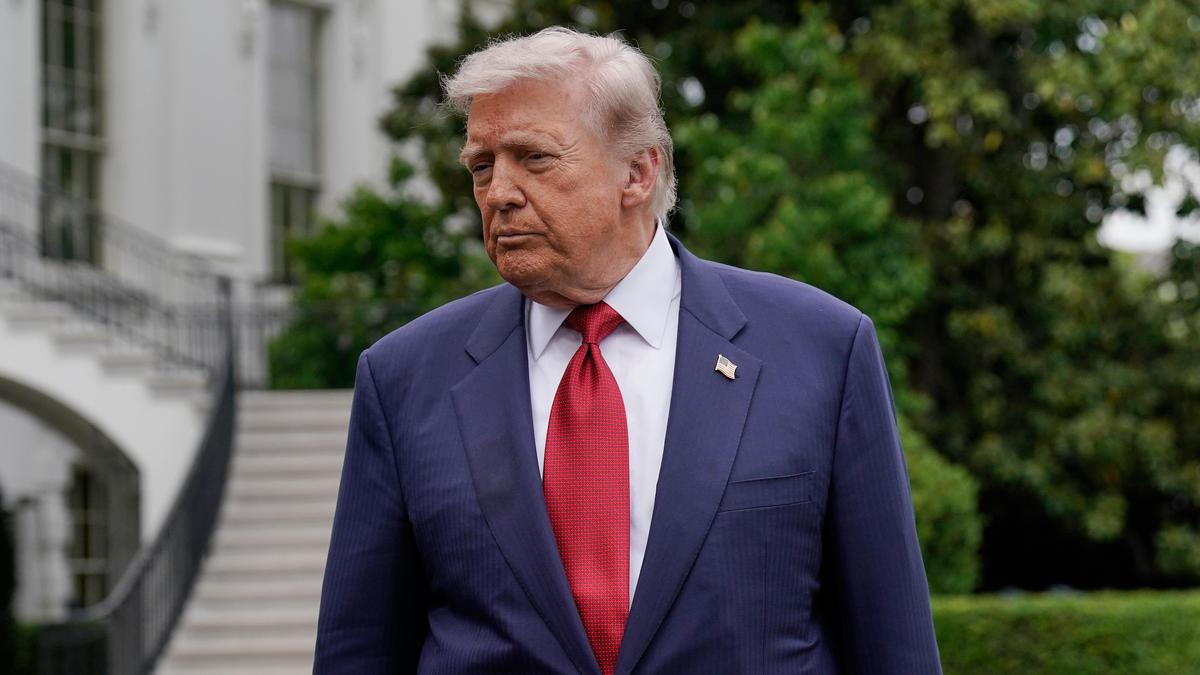
The fragile diplomatic bridge between Washington and Tehran just buckled under the weight of domestic American politics. While the State Department spent months quietly engineering a ceasefire framework designed to de-escalate tensions across the Levant and the Gulf, Donald Trump has effectively neutralized the effort before the ink could dry. Iran’s signaled willingness to engage with the proposal—a rare moment of flexibility from the Islamic Republic—was met not with a counter-offer, but with a categorical rejection from the Republican frontrunner. By branding the deal "unacceptable," Trump hasn't just criticized a policy; he has signaled to every regional power that the current administration's promises carry an expiration date.
This is the brutal reality of modern American statecraft. Foreign leaders are no longer negotiating with a single government; they are gambling on a four-year cycle. Tehran’s decision to entertain the U.S. proposal was a calculated risk aimed at securing immediate sanctions relief and halting the slide toward a regional conflagration. However, Trump’s intervention confirms the "lame duck" status of current diplomatic efforts. For the Iranian leadership, there is little incentive to make hard concessions to a White House that may not be able to enforce its side of the bargain come January.
The Strategy of Strategic Sabotage
Politics usually stops at the water’s edge, or at least it used to. The traditional playbook dictated that opposition leaders refrain from actively dismantling active negotiations. That tradition is dead. Trump’s rejection of the ceasefire terms centers on a "maximum pressure" philosophy that views any compromise with Tehran as a sign of weakness. To his base, and to hawks in the Beltway, a ceasefire is not a peace tool but a lifeline for a regime on the brink of economic collapse.
The specifics of the proposal included a phased withdrawal of certain paramilitary forces and a freeze on enrichment levels in exchange for the unfreezing of several billion dollars in oil assets. To the current administration, this was a pragmatic trade to prevent a full-scale war. To Trump, it was a "surrender." By publicly trashing the deal, he has effectively told the Israeli government and Gulf allies to wait him out. Why sign a restrictive deal now when a more aggressive partner might be in the Oval Office within the year?
The Tehran Calculation
Iran does not act out of a desire for global harmony. Their response to the U.S. proposal was born of necessity. The Iranian economy is suffocating under the weight of inflation and a devalued rial. The internal dissent that characterized the last few years has been suppressed, but the embers remain. For the Supreme Leader, a ceasefire offered a chance to stabilize the domestic front while keeping their regional proxies intact.
When Iran signals "yes" to a U.S. framework, it is usually a sign that they have found a loophole or that the pressure has become unbearable. In this instance, it appears to be the latter. They were looking for a way to climb down from the ledge of a direct confrontation with Israel without losing face. Trump’s intervention removes that ladder. It forces the hardliners in Tehran to dig in, as any further flexibility would now look like they are pleading with a man who has already promised to crush them.
The Shadow of 2015
We have seen this movie before. The 2015 Joint Comprehensive Plan of Action (JCPOA) was the hallmark of Obama-era diplomacy. It was also the primary target of Trump’s first-term foreign policy. When the U.S. unilaterally withdrew from that deal in 2018, it created a trust deficit that has never been bridged. The current ceasefire proposal was an attempt to build a "JCPOA-lite"—a temporary fix to keep the region from exploding.
The problem with "lite" deals is that they require even more trust than comprehensive ones. They rely on the "good faith" of the participants to move toward a more permanent solution. By labeling the current proposal unacceptable, Trump is reinforcing the Iranian narrative that the United States is an unreliable partner. It validates the arguments of the Iranian Revolutionary Guard Corps (IRGC), who have long maintained that negotiating with Washington is a fool’s errand because the Americans change their minds every election cycle.
Regional Consequences of the Rejection
The fallout isn't limited to the Washington-Tehran axis. Consider the following players:
- Israel: The Netanyahu government finds itself in a bind. While they are wary of any deal that empowers Iran, they are also under immense pressure to end the current hostilities. Trump’s stance gives the Israeli right wing the political cover to reject the ceasefire, even if the military establishment sees a tactical need for it.
- The Gulf Monarchies: Saudi Arabia and the UAE have been pivoting toward a "de-escalation first" policy. They want to protect their ambitious economic projects from Iranian missiles. A rejected ceasefire means they must continue to balance their security needs between a fading Biden administration and an unpredictable Trump return.
- The European Union: Brussels remains the most vocal supporter of the ceasefire. They view Trump’s rhetoric as a direct threat to European security, as any escalation in the Middle East inevitably leads to energy price spikes and new waves of migration.
The Economic Leverage Trap
The core of Trump’s argument is that the U.S. is giving up its best weapon—economic sanctions—for too little in return. This is the "leverage trap." The theory is that if you just squeeze hard enough, the regime will either collapse or come to the table ready to surrender everything.
History suggests otherwise. Decades of sanctions have certainly crippled the Iranian middle class, but they have done little to dislodge the ruling elite. In fact, sanctions often give the regime a convenient scapegoat for their own economic mismanagement. By rejecting the ceasefire, Trump is doubling down on a strategy that has produced a more aggressive Iran, a more advanced nuclear program, and a deeper alliance between Tehran, Moscow, and Beijing.
The Nuclear Clock
While the politicians argue over the "unacceptability" of the deal, the centrifuges in Natanz continue to spin. This is the ticking clock that the ceasefire was meant to pause. Iran is currently closer to weapons-grade uranium than at any point in its history. A rejected deal doesn't just mean continued conventional warfare; it increases the likelihood of a nuclear-armed Iran or a preemptive strike to prevent it.
Trump’s critique lacks a specific mechanism for stopping the nuclear clock in the short term. It assumes that the mere threat of his return will frighten Tehran into submission. It is a high-stakes gamble with global security as the stake.
The Death of Incrementalism
The era of "small steps" in Middle Eastern diplomacy may be over. The current administration’s preference for incremental gains—a small ceasefire here, a limited prisoner swap there—is being overwhelmed by the return of "Big Power" grandstanding. When a major political figure rejects a proposal before it is even finalized, they are signaling that only total victory or total defeat is acceptable.
This binary view of the world leaves no room for the gray-zone diplomacy that has historically prevented World War III. If every deal is "the worst deal in history," then no deal will ever be made. We are entering a period where the vacuum created by American political division is being filled by chaos.
The reality on the ground is that the ceasefire was a flawed, fragile, and desperate attempt to save lives and stabilize markets. It was a band-aid on a gunshot wound. But by ripping that band-aid off, Trump has ensured that the wound will continue to bleed, leaving the next commander-in-chief—whoever that may be—with a much messier situation to clean up.
Governments in the Middle East are now moving to a "wait and see" posture. They are moving their assets, hardening their defenses, and looking for alternative mediators in Beijing or Moscow. The United States’ ability to dictate terms is being eroded not by its enemies, but by its own inability to speak with a single voice on the world stage.
If the goal was to keep Iran off-balance, the rejection succeeded. If the goal was to find a path toward regional stability, it has failed spectacularly. The ceasefire proposal is effectively dead, not because it was inherently unworkable, but because it became a pawn in a domestic power struggle. In the world of high-stakes geopolitics, a deal that cannot survive an election is no deal at all. It is just a pause in the inevitable.