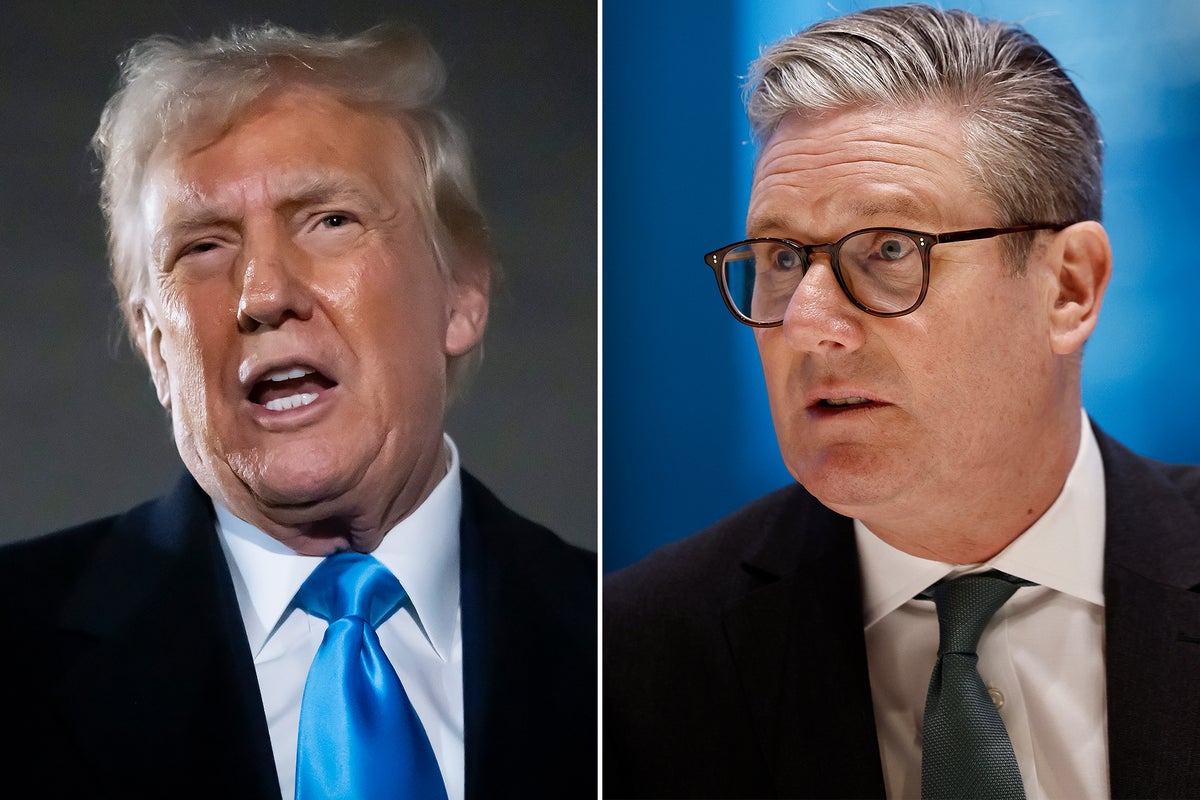
Donald Trump isn't one for subtle diplomacy. He's recently taken a massive swing at UK Prime Minister Keir Starmer, accusing him of "pandering to Muslim voters" because the UK refused to join the initial wave of US and Israeli offensive strikes against Iran. It's a messy, high-stakes fallout that suggests the "special relationship" is currently on life support. Trump didn't stop at questioning Starmer's motives; he basically claimed the UK is becoming "unrecognizable," taking personal shots at London’s Mayor Sadiq Khan along the way.
The disagreement isn't just about a few missed phone calls. It's a fundamental split on how to handle a Middle East that’s currently on fire. While the US and Israel launched Operation Epic Fury—a massive campaign targeting Iranian nuclear sites and military leadership—Starmer held back, citing international law and the "mistakes of Iraq."
The Pandering Accusation and the Voter Factor
Trump’s core argument is that Starmer’s hesitation is born of domestic political fear rather than strategic calculation. In a phone interview with The Sun, Trump suggested that the Prime Minister is effectively hamstrung by his own electorate. When asked if Starmer was courting Muslim voters by staying out of the offensive, Trump’s response was a blunt "it could be."
It’s no secret that the Labour Party has faced intense pressure over its Middle East policy since 2024. In the UK, significant portions of the electorate, particularly in urban areas with large Muslim populations, have been vocal about avoiding another Western intervention in the Middle East. Trump is leaning hard into this narrative, framing Starmer as a leader who prioritizes local polling over global security.
Starmer, for his part, denies this. He told the House of Commons that his duty is to "judge what is in Britain's national interest." He’s clearly trying to walk a razor-thin line: keep the Americans happy enough to maintain intelligence sharing, but avoid being seen as a "poodle" to a second Trump administration.
Defensive vs Offensive: The UK's Fine Line
If you look at the actual military movements, the UK isn't exactly sitting on the sidelines. They're just refusing to be the ones pulling the trigger on the first strike. Starmer has authorized the use of British bases, including RAF Fairford and Diego Garcia, but with a massive asterisk. They can only be used for "defensive" purposes—specifically to destroy Iranian missiles and drones at their source before they can hit UK allies or personnel.
- Initial Strikes: The UK was notably absent from the February 28th strikes that targeted Iranian leadership and nuclear facilities.
- The Shift: After Iran retaliated by hitting regional targets and even a drone strike near RAF Akrotiri in Cyprus, Starmer loosened the rules.
- The Current Stance: UK jets are in the air, and US bombers are using British soil, but only to neutralize "imminent threats."
Starmer’s favorite phrase right now is that he doesn't believe in "regime change from the skies." It's a direct jab at the US-Israeli goal of ending the current Iranian government. He’s essentially telling Trump that while the UK will help stop a missile, it won't help start a revolution.
Why the Special Relationship is Straining
Trump’s frustration stems from a sense of betrayal. He pointed out that France has been "great" and more cooperative than the UK. For a President who views foreign policy as a series of transactions and loyalty tests, Starmer’s legalistic approach feels like a snub.
The tension goes beyond Iran. Trump has also been chirping about the Chagos Islands deal and UK immigration policy. He’s painting a picture of a Britain that has lost its way, or as he put it, is "not such a recognizable country" anymore. This kind of rhetoric is designed to appeal to the UK's own right-wing opposition, effectively trying to squeeze Starmer from both sides of the Atlantic.
Domestic Backlash in Westminster
It's not just Trump giving Starmer a hard time. At home, the Prime Minister is getting it from all angles:
- The Right: Kemi Badenoch and Reform UK are echoing Trump, calling Starmer’s caution "dithering delay" and arguing that the UK should stand shoulder-to-shoulder with its most important ally.
- The Left: Figures like John McDonnell and Emily Thornberry are terrified of "mission creep." They’re demanding a parliamentary vote, fearing that "defensive" basing rights are just a back door into a full-scale war.
- The Public: With 200,000 British citizens in the Middle East, the fear of Iranian retaliation is real. The strike on the Cyprus base proved that the UK is a target regardless of whether it’s "offensive" or "defensive."
The Reality of the Military Conflict
The situation on the ground in Iran is chaotic. Following the death of Supreme Leader Ali Khamenei, the US has been calling for the Iranian people to "take back their country." Trump’s strategy is maximum pressure, hoping the regime collapses under the weight of the strikes.
Starmer’s refusal to join this specific goal isn't just about "pandering." It’s about a deep-seated institutional skepticism in the UK Ministry of Defence. They’ve seen this movie before in 2003, and they know that "regime change" usually ends in a decade of urban warfare and regional instability.
What Happens Next
The rift between 10 Downing Street and the White House is only going to grow as the conflict in Iran enters its next phase. Trump has already indicated the strikes could last weeks. If Iran continues to target British assets in the Gulf, Starmer may be forced to abandon his "defensive only" posture.
If you're following this, watch the flight paths out of RAF Fairford. If B-2 bombers start taking off for missions that aren't strictly about intercepting incoming missiles, you'll know Starmer has folded. For now, he's sticking to his legal guns, even if it means being the only person in the room Trump isn't talking to.
Check the Foreign Office travel alerts if you have family in the region; the "shelter in place" orders in Bahrain and Qatar aren't just for show. The diplomatic bridge between the US and UK is currently being rebuilt with very shaky materials.