The dust hasn't even settled in Tehran, yet the vultures are already circling to decide who gets the throne. After the weekend strike that took out Ayatollah Ali Khamenei, the world is scrambling for a "Day After" plan. Everyone has an opinion. The exiles want their kingdom back. The hawks want a Western-style democracy installed by Tuesday. But Donald Trump just threw a massive wrench into those fantasies by suggesting the next leader should come from within the current Iranian regime.
It's a take that'll make the neocons scream and the activists cringe, but there’s a cold, hard logic to it that most people are missing.
The internal play is the only safe bet
Trump’s logic is simple: he doesn’t want a repeat of Iraq or Libya. He’s seen what happens when the U.S. tries to vacuum-seal a "democracy" and drop it into a Middle Eastern power vacuum. It usually ends in a decade of IEDs and trillion-dollar bills. By suggesting "someone from within" might be the best choice, he’s basically saying he’d rather deal with a pragmatic devil he knows than a chaotic mess he doesn't.
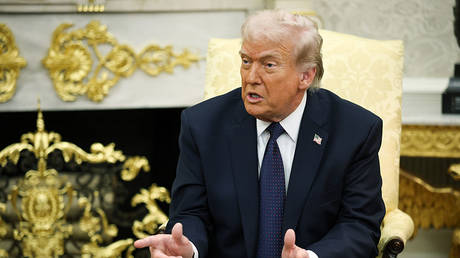
"I guess the worst case would be we do this and then somebody takes over who’s as bad as the previous person," Trump told reporters during his meeting with German Chancellor Friedrich Merz on Tuesday. He’s not wrong. If the U.S. and Israel burn the house down only for a more radical cleric to crawl out of the basement, the whole "Operation Epic Fury" was a waste of expensive ordinance.
The reality on the ground is that the Iranian state isn't just a handful of guys in turbans. It’s a massive, multi-layered machine involving the IRGC, the bureaucracy, and local power brokers. If you want the lights to stay on and the missiles to stop flying, you need someone who knows where the switches are.
Why the exiled crown prince is getting the cold shoulder
For months, Reza Pahlavi, the son of the last Shah, has been the darling of Western media. He talks about human rights, secularism, and friendship with the West. He looks great on camera. But Trump essentially just swiped left on him.
"He looks like a very nice person," Trump said about Pahlavi, using the kind of faint praise that usually precedes a "but." The "but" in this case is a reality check: Pahlavi hasn't lived in Iran since 1979. He doesn't have a base of support within the security forces. He doesn't have a seat at the table where the actual power is brokered.
Trump wants someone "currently popular" or at least functional. He knows that an imported leader is often viewed as a puppet, and puppets don't last long in Tehran once the B-2 bombers go home. The administration is looking for a pragmatist—someone like Ali Larijani or a disillusioned IRGC general—who is tired of the sanctions and the constant threat of annihilation.
The problem of the dead pool
There's one glaring issue with Trump's plan: he's been hitting the target list a little too effectively. During that same Oval Office exchange, the president admitted that "most of the people we had in mind are dead."
That’s what happens when you launch a decapitation strike. You don't just kill the "bad guys"; you often kill the "less bad guys" who were sitting in the same room. By wiping out the top tier of the regime, the U.S. may have accidentally vaporized the very moderates or pragmatists they hoped would take over.
This leaves a dangerous middle management in charge. These are the guys who grew up in the system, are terrified for their lives, and might feel they have nothing left to lose. If Trump wants someone from within to lead, he better hope there’s a bench deep enough to survive the current bombardment.
Managing the mess without a roadmap
Right now, the White House is juggling three different stories. One day, it’s about regime change. The next, it’s strictly about nuclear facilities. By Tuesday afternoon, it’s about finding a popular guy inside the regime who won't be "as bad" as Khamenei.
This isn't a bug; it's the Trump feature. He likes to keep everyone—allies and enemies alike—guessing. But for the Iranian people, the "wait and see" approach is life or death. Trump told them to protest, then told them "don't do it yet" because it's too dangerous. That kind of whiplash makes it hard to build a grassroots movement.
If the goal is truly to "bring it back for the people," as Trump claims, then the focus has to shift from just breaking things to figuring out who’s going to fix them. A pragmatic insider might keep the country from spiraling into a Syrian-style civil war, but they aren't likely to deliver the Jeffersonian democracy that some hawks are dreaming about.
Don't expect a clean exit. The administration is betting that the Iranian military and political elite will see the writing on the wall and offer up a sacrificial lamb who can play ball with Washington. It's a gamble that prioritizes stability over idealism. Honestly, after twenty years of failed nation-building in the region, maybe that's the only play left on the board.
If you’re tracking the fallout, keep your eyes on the names coming out of Tehran's remaining administrative hubs. We're looking for the survivors—the guys who didn't get hit and are now making back-channel calls to Steve Witkoff or Jared Kushner. That’s where the next leader of Iran is currently hiding.