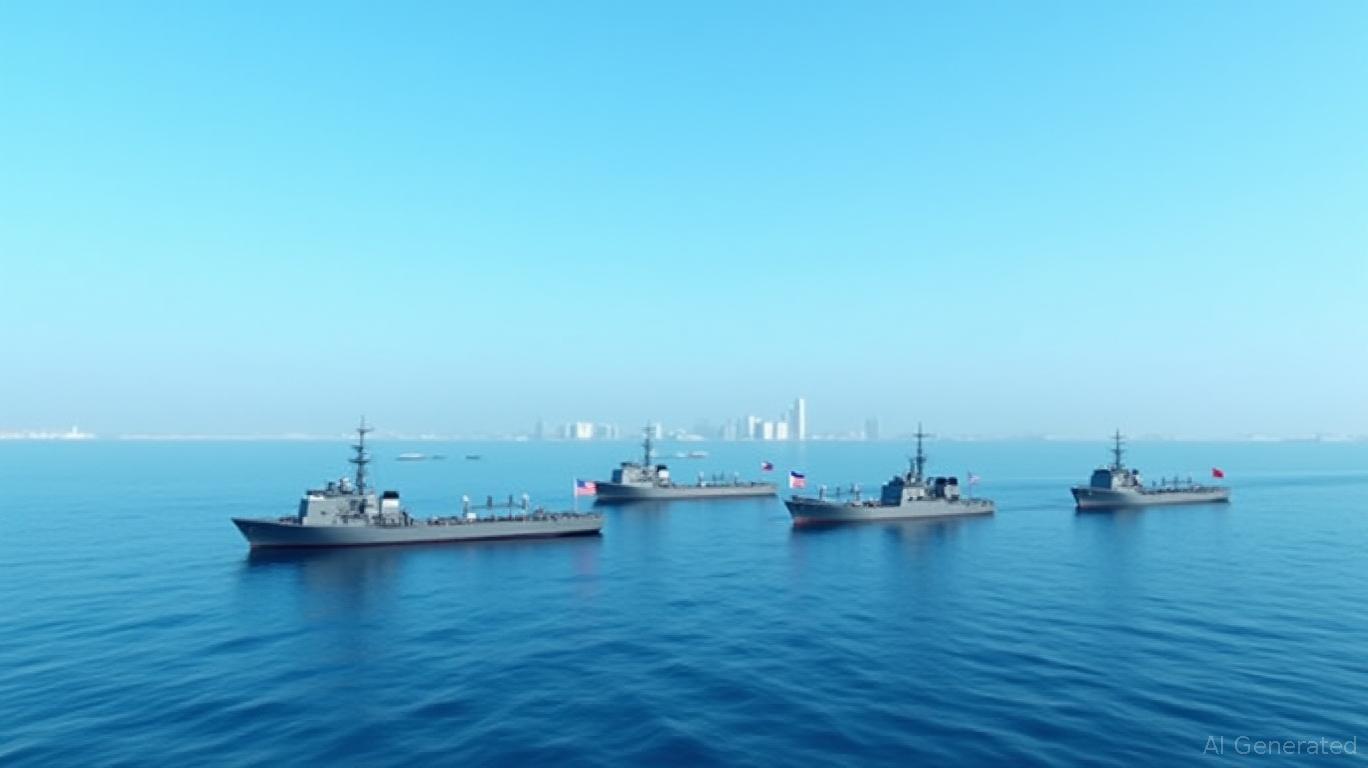
The boarding of the Iranian-flagged Touska by U.S. Navy SEALs on Sunday was not a routine enforcement of maritime law. It was a calculated detonation of the fragile ceasefire that has held the Middle East in a chokehold for two weeks. While early reports focused on the "dual-use" nature of the cargo, the reality is far more clinical and dangerous. This vessel, a modest container ship owned by the sanctioned Islamic Republic of Iran Shipping Lines (IRISL), was carrying specific electronic components and specialized piping sourced from Chinese industrial hubs—materials that Washington believes are the final pieces for Iran’s domestic missile and drone manufacturing lines.
By disabling the Touska with warning fire and seizing it off the coast of Chabahar, the United States has moved from a policy of containment to a policy of active interdiction. This is the first time the U.S. has physically stopped an Iranian vessel to enforce the new naval blockade, effectively telling Tehran that the Strait of Hormuz is no longer a sovereign lever they can pull at will. If you enjoyed this post, you should read: this related article.
The China Connection and the Malaysian Blind Spot
The Touska’s journey reveals the anatomy of a modern "ghost trade" route. It did not simply sail from Point A to Point B. Satellite data and port logs show the vessel spent late March in Taicang and Gaolan, China—two ports known for handling industrial chemicals and precision electronics.
The ship then performed a classic maritime shell game at the Port Klang anchorage in Malaysia. This area is notorious for ship-to-ship (STS) transfers, where cargo is moved between vessels in international waters to scrub the original point of origin. For a veteran analyst, the Touska’s six-hour standoff with the USS Spruance before the boarding suggests the crew was buying time, possibly to wipe digital manifests or secure specific cargo holds. For another look on this development, check out the latest update from The Washington Post.
This isn't just about "pipes and electronics." We are looking at:
- High-grade carbon fiber for airframes.
- Pressure-tested valves for liquid-fuel rockets.
- Integrated circuits that have no place in a civilian washing machine but work perfectly in a loitering munition.
The U.S. has labeled these items "contraband" under a broadened definition of dual-use goods. It is a legal stretch that turns any Iranian merchant ship into a legitimate military target if it carries so much as a pallet of high-end sensors.
The Blockade as a Negotiation Tactic
The timing of this seizure is anything but accidental. With ceasefire talks scheduled for Islamabad, the Trump administration used the Touska to signal that the "Maximum Pressure" campaign of 2026 has a naval component that the 2019 version lacked. The U.S. isn't just sanctioning bank accounts anymore; it is physically seizing the hardware.
Tehran has responded with the only card it has left: the threat of total maritime shutdown. The Iranian military’s warning that "no port in the Persian Gulf will remain safe" if their ships are boarded is an admission of weakness, not strength. They are losing the ability to move the materiel required to sustain their regional proxies.
The Failure of "Dual-Use" Ambiguity
For years, the "dual-use" label was a gray zone that allowed shipping companies to look the other way. If a container held industrial-grade steel, it was for "infrastructure." If it held high-speed processors, it was for "telecommunications."
That ambiguity died on Sunday.
The U.S. Navy is now operating under rules of engagement that prioritize the potential end-use over the stated manifest. This creates an impossible environment for global insurers. If a ship can be seized and its cargo confiscated based on a "likely" assessment by Central Command, the risk of transiting the Gulf of Oman becomes uncalculable. We are seeing a permanent shift in how maritime insurance will be priced for any vessel that has touched a Chinese or Iranian pier in the last 90 days.
What Happens When the Smoke Clears
The Touska is currently being towed toward a secure location for a full forensic offload. The findings will likely be used as political ammunition in the coming days to justify a permanent U.S. presence in the Strait.
However, there is a limit to this strategy. A blockade is an act of war, even when dressed up in the language of "customs enforcement." By seizing the Touska, the U.S. has called Iran’s bluff on the ceasefire. If Tehran retaliates against commercial tankers in the Strait—as they have threatened—the result won't be a return to the negotiating table. It will be the systematic destruction of the Iranian navy.
The immediate takeaway for the industry is clear: the era of the "unrestricted" Strait of Hormuz is over. Shipping lanes are no longer neutral territory; they are the front line of a technical and industrial blockade that China is unwilling to challenge and Iran is unable to break. The real story isn't the ship that was seized, but the dozens of others now turning back, realizing the cost of doing business has just become too high.
Stop looking for a diplomatic exit. The blockade is the new reality.