The mahogany desk in Arthur’s study doesn't see much paper anymore. It sees a glowing screen and a series of digital portals that lead to places the average person cannot go. Arthur is seventy-four. He spent forty years buying blue-chip stocks, watching the ticker tape turn into a digital crawl, and believing that the New York Stock Exchange was the heartbeat of the world.
He was wrong.
The heartbeat has moved. It’s now thumping behind closed doors, in the private offices of venture capital firms, in the silent corridors of private equity, and inside the sprawling warehouses of real estate conglomerates. Arthur is part of a silent migration. He is one of the thousands of wealthy individuals who are currently pulling their anchors out of the choppy, public waters of the S&P 500 and dropping them into the deep, still pools of "alternatives."
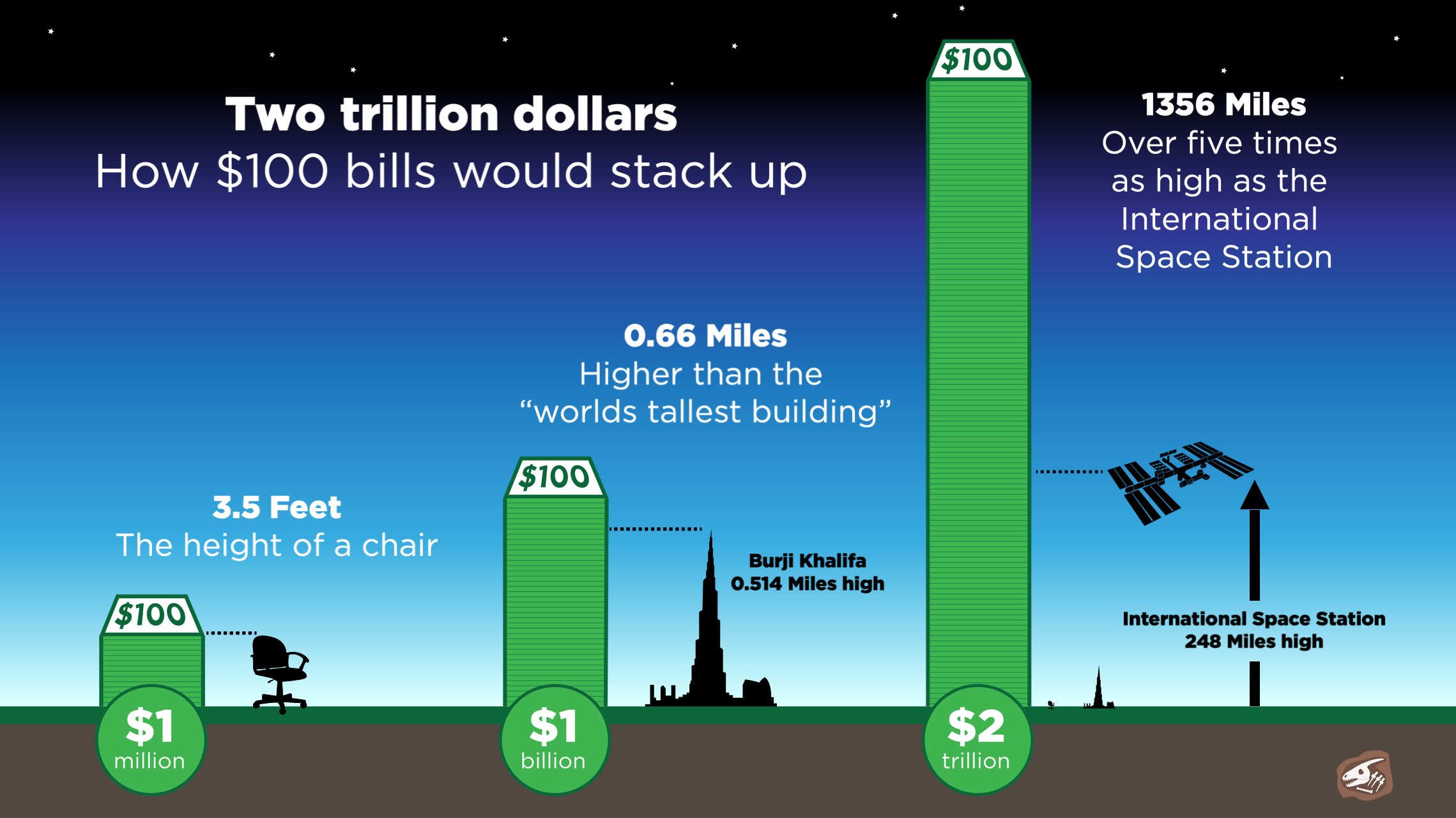
By 2028, this migration is expected to swell into a $32 trillion movement. To put that in perspective, that is more than the entire annual GDP of the United States.
We are witnessing a fundamental rewrite of how money works. The old guard—the "buy and hold" crowd—is realizing that the public markets have become a high-frequency trading playground, a place where companies only go when they are already massive and their explosive growth is a memory. If you want the real growth, you have to get in before the doors open to the public.
The Ghost in the Machine
Consider the "Retail Investor." For decades, this was a term of endearment, or perhaps condescension, for the person sitting at home with a brokerage account. They were told that the public market was the great equalizer. But look at the numbers. The number of public companies in the U.S. has plummeted by nearly half since the mid-1990s.
Why? Because staying private is the new status symbol.
Companies used to go public to raise capital. Now, they stay private because the private world is awash in cash. They avoid the quarterly earnings calls, the prying eyes of regulators, and the frantic mood swings of Twitter-driven stock fluctuations. By the time a company like Uber or Airbnb actually hits the public market, the "generational wealth" has already been harvested by those behind the velvet rope.
Arthur realized this when he looked at his portfolio and saw it stagnating. He was holding the husks. The seeds were being traded elsewhere.
This isn't just about greed. It’s about a desperate search for "alpha"—that elusive return that beats the standard market average. In a world where inflation eats your savings and bonds offer a pittance, the wealthy are forced to become explorers. They are hunting for yield in private credit, infrastructure projects, and even fine art.
The Hypothetical Case of Sarah and the Wind Farm
To understand how $32 trillion moves, look at Sarah. She is a hypothetical tech executive in her mid-forties. She has $5 million sitting in a traditional mix of 60% stocks and 40% bonds. In the old world, she was set. In the new world, she is falling behind.
Sarah decides to move 25% of her wealth into alternative assets.
She doesn't buy shares of an energy company on the Nasdaq. Instead, she joins a private equity fund that is building a specific wind farm in the North Sea. This is a "tangible" investment. It isn't a ticker symbol that flashes red or green based on a Fed chairman’s cough. It’s steel, wind, and a twenty-year contract to sell power.
This is the "Illiquidity Premium." Sarah can’t sell her stake tomorrow. Her money is locked away for five, seven, maybe ten years. But in exchange for that "handcuff," she expects a return that would make a bank manager weep. She is trading her freedom to exit for the certainty of a higher floor.
The $32 trillion figure isn't just a dry statistic. It represents millions of Sarahs and Arthurs deciding that the "instant liquidity" of the stock market is actually a bug, not a feature. They are tired of the volatility. They want to own things, not just shadows of things.
The Technology of the Velvet Rope
For a long time, the only way to get into these deals was to be "institutional." You had to be a pension fund or a sovereign wealth fund. You needed a billion dollars just to get a seat at the table.
That wall is crumbling.
A new breed of financial technology is acting as a digital sledgehammer. Platforms are emerging that allow "accredited investors"—those with a certain level of income or net worth—to buy "fractions" of these private deals. You don't need $50 million to invest in a skyscraper anymore. You might only need $50,000.
This "democratization" (a word often used by the platforms themselves, though critics call it "risk-shifting") is the engine behind the $32 trillion projection. The gatekeepers are realizing that the collective pool of individual wealth is larger than the institutional pool. They want that money. And they are building the digital pipes to let it in.
But there is a catch. There is always a catch.
The Hidden Cost of the Private World
When you buy a stock on a public exchange, you have a "lit" market. You know exactly what it’s worth at 10:15 AM on a Tuesday. In the world of alternatives, you are flying in the dark.
Valuations are "marked to model," not "marked to market." This is a fancy way of saying that the people running the fund tell you what they think it’s worth based on their own math. It’s an exercise in trust. If the math is wrong, or if the manager is overly optimistic, the crash doesn't happen in slow motion. It happens all at once, years later, when the fund tries to liquidate.
Arthur feels the anxiety of this. He likes the idea of the wind farm, but he hates that he can't see its value on his phone while he’s eating breakfast. He has to wait for a quarterly PDF report. He has to trust the person writing the report.
This shift toward alternatives is a shift away from data and toward relationships. It’s a return to an older way of doing business, where your "allocation" depends on who you know and which platform you use.
The Great Reallocation
Wealth managers are changing their scripts. They used to talk about diversification across sectors—tech, healthcare, industrials. Now, they talk about diversification across "time horizons."
They are telling their clients to split their souls:
- One half stays in the public world, liquid and frantic.
- The other half goes into the "long-term" world, where it sleeps for a decade.
This is why the $32 trillion figure is so significant. It’s not just "new money" being created. It’s a massive relocation of existing capital. It’s a vote of no confidence in the traditional public market as a sole vehicle for wealth creation.
We are seeing a bifurcated economy. There is the "Public Face," which is what we see on the news—the daily fluctuations of the Dow, the drama of CEO tweets, the retail frenzy over meme stocks. And then there is the "Private Core," where the actual infrastructure of the future is being bought and sold in silence.
The Emotional Anchor
Why does this matter to the person who doesn't have $5 million?
Because the movement of $32 trillion changes the gravity of the entire planet. When the wealthiest investors pull their money out of public companies, those companies have less "sticky" capital. They become more beholden to the whims of short-term traders.
Meanwhile, the things we use every day—the apartment buildings we live in, the hospitals we visit, the data centers that power our AI—are increasingly owned by these private funds. You might not be an investor in an alternative fund, but you are almost certainly a customer of one.
The landlord of your office isn't a person. It’s a "Real Estate Investment Trust" or a private equity vehicle backed by a thousand people like Sarah.
There is a strange, cold comfort in this. The world is becoming more "owned" and less "traded." It is becoming more deliberate. But it is also becoming more opaque.
Arthur sits at his desk and clicks "approve" on a new private credit offering. He is lending money to a mid-sized manufacturing company in Ohio that couldn't get a loan from a traditional bank. He is now the bank. He feels a sense of power he never felt when he was just buying shares of General Electric. He is part of the machinery now.
The $32 trillion isn't coming. It’s already here, vibrating beneath the floorboards of the global economy.
The public markets were the 20th century’s greatest show. But the audience is leaving. They are heading backstage, where the real deals are made, the real risks are taken, and the real wealth is built in the shadows.
The lights are still on in the theater, but the front row is empty.
One by one, the heavy hitters are slipping through the side exit, disappearing into a world where the ticker tape doesn't run and the doors only open for those who know how to knock.