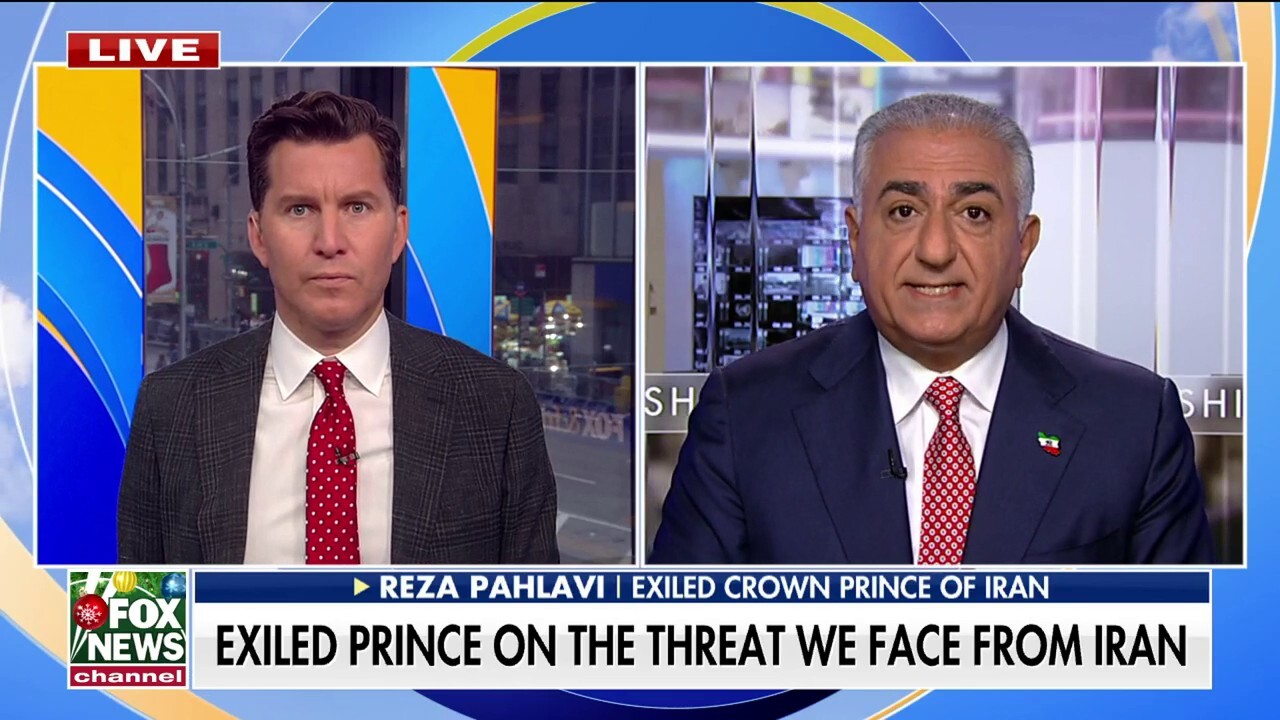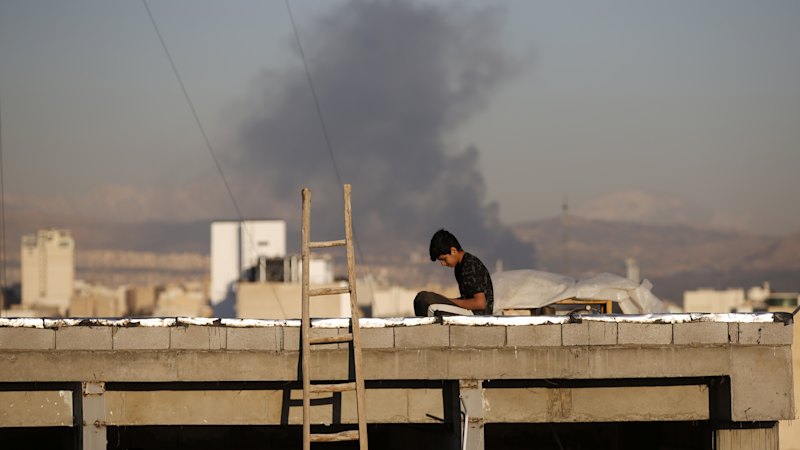
Iran is betting that it can outlast a second Trump administration by weaponizing its own economic isolation. The strategy is not a desperate scramble but a cold calculation based on a decade of practice in shadow banking, energy smuggling, and shifting its trade dependencies toward the East. Tehran’s leadership has already factored in the return of "maximum pressure" by hardening its internal markets and securing back-channel oil sales to China that now bypass the traditional financial system entirely. While the West looks for signs of a domestic collapse, the Islamic Republic is busy building a permanent architecture for a sanctioned economy.
The Architecture of the Shadow Economy
The assumption that cutting off a nation from the SWIFT banking system will inevitably lead to its surrender is a relic of 20th-century thinking. Iran has spent the last eight years constructing a parallel financial universe. This isn't just a handful of front companies; it is a sophisticated, multi-layered network of money changers, trust accounts, and shell entities across the United Arab Emirates, Turkey, and Hong Kong.
When an Iranian firm needs to import industrial machinery or chemicals, they don't open a letter of credit at a major bank. Instead, they use a system of internal ledgers. A buyer in Tehran pays rials to a local agent. That agent’s partner in Dubai then pays out the equivalent in dirhams or dollars to a supplier in Europe or Asia. The physical money never crosses a border. This "hawala" system on steroids makes it nearly impossible for the U.S. Treasury to track specific transactions.
This internal resilience is bolstered by the "Economy of Resistance," a policy that prioritizes domestic production over imports. While the quality of Iranian-made goods often lags behind global standards, the goal isn't consumer satisfaction. The goal is survival. By producing its own steel, cement, and basic consumer electronics, Iran reduces its need for hard currency. This diminishes the leverage of any administration in Washington that hopes to use the exchange rate as a primary weapon of war.
The China Lifeline and the Failure of Interdiction
Washington’s primary tool for behavior change has always been the oil embargo. Under the first Trump term, Iranian exports plummeted to nearly zero for a brief window. That window has closed. Today, Iran exports upwards of 1.5 million barrels per day, with the vast majority flowing to "teapot" refineries in China.
These small, independent refineries are the perfect partners for a sanctioned state. They have no exposure to the U.S. financial system, meaning they have nothing for the Treasury Department to seize. They pay in yuan or through barter arrangements, trading crude for the infrastructure technology and consumer goods Iran needs to keep its middle class from rioting.
The logistical dance of this trade is a masterclass in maritime deception. Iranian tankers frequently turn off their transponders, engage in ship-to-ship transfers in the middle of the South China Sea, and "rebrand" their cargo as Malaysian or Omani crude. Short of a full-scale naval blockade—which would risk a direct military confrontation with both Iran and China—there is very little a U.S. president can do to stop this flow.
The Nuclear Brinkmanship as a Negotiation Floor
Tehran knows that its economic resilience only buys time; it doesn't provide a solution. To get what it wants, it needs a credible threat. That threat is the nuclear program. Since the U.S. withdrawal from the JCPOA in 2018, Iran has pushed its uranium enrichment levels to 60%, a short technical jump from the 90% required for a weapon.
This isn't an irrational dash for a bomb. It is the creation of a "negotiation floor." By moving closer to the threshold, Iran forces the next administration to choose between a disastrous regional war or a new, likely more expensive, deal. They are betting that Donald Trump’s isolationist "America First" instincts will eventually outweigh his desire for a regime-change conflict.
The Internal Power Struggle
While the external strategy is unified, the internal reality is fractured. The Iranian public is exhausted. Inflation remains stubbornly high, and the rial has lost the vast majority of its value over the last decade. The 2022 "Woman, Life, Freedom" protests proved that the social contract is shredded. However, a veteran analyst knows that a weak public does not equal a weak regime.
The Islamic Revolutionary Guard Corps (IRGC) has used sanctions to consolidate their grip on the economy. When foreign companies like Peugeot or Total left the country, the IRGC’s engineering arms moved in to take over their contracts. For the military elite, sanctions are a protectionist racket. They have no incentive to see them lifted if it means competing with transparent, international firms. This creates a paradox: the more the U.S. squeezes the Iranian economy, the more power it transfers to the very hardliners it seeks to undermine.
Regional Firefighting and the Proxy Network
Iran’s "Forward Defense" policy remains the third pillar of its survival plan. From the Houthis in Yemen to Hezbollah in Lebanon, Tehran has built a ring of fire around its rivals. This network serves as a massive insurance policy. If the U.S. or Israel moves to strike Iranian nuclear facilities, the retaliation will not come from Tehran alone. It will come from every corner of the Middle East, targeting global shipping lanes and oil infrastructure.
The recent rapprochement with Saudi Arabia, mediated by China, was a tactical masterstroke. By cooling tensions with Riyadh, Tehran has neutralized the prospect of a unified regional front against it. The Gulf monarchies, once the loudest voices calling for U.S. intervention, are now more interested in regional stability to protect their own ambitious economic diversification projects. They are no longer willing to be the front line in a Washington-led crusade.
The Strategic Shift to the Global South
The most significant change since the first Trump term is the geopolitical environment. Iran is no longer isolated in its opposition to the Western-led order. Its recent induction into the BRICS+ bloc and the Shanghai Cooperation Organization (SCO) provides a diplomatic and economic framework that didn't exist in 2016.
These organizations are working toward "de-dollarization"—the creation of payment systems that do not rely on the U.S. dollar. While these systems are in their infancy, they represent a long-term threat to the efficacy of U.S. sanctions. If Iran can trade with Russia, India, and China in local currencies, the "power of the purse" wielded by the U.S. Treasury becomes an empty threat.
The Reality of the Stalemate
Any belief that a sudden increase in sanctions will bring Iran to its knees ignores the historical data. The regime has proven it can tolerate immense amounts of internal suffering to maintain its geopolitical objectives. The "plan" to see off a hostile U.S. administration is simply to endure.
They are waiting for the West to tire of the "forever sanctions" just as it tired of the "forever wars." They are betting that the global shift toward a multipolar world will happen faster than their own internal collapse. It is a high-stakes gamble, but it is one they have been playing for forty-five years.
Ask yourself what happens if the next round of "Maximum Pressure" fails to produce a new deal or a regime collapse. If the oil keeps flowing to China and the centrifuges keep spinning, the U.S. is left with only two options: acceptance of a nuclear-threshold Iran or an avoidable war in the Middle East. Tehran is betting on the former.
Would you like me to analyze the specific impact of de-dollarization on the effectiveness of future U.S. Treasury sanctions?