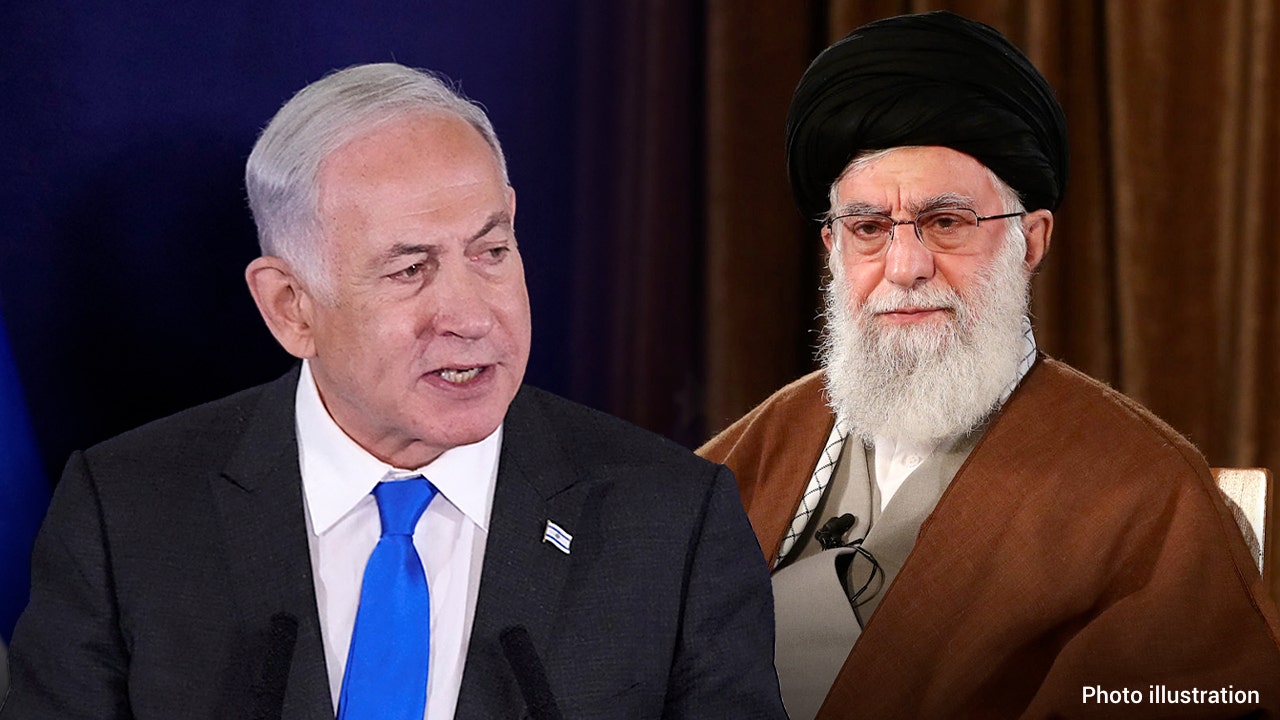
The recent wave of joint US-Israeli kinetic operations inside Tehran marks a terminal point for the unspoken rules of engagement that have governed the Middle East for a generation. While initial reports focused on the immediate physical wreckage—shattered glass in residential districts and the proximity of strikes to medical facilities—the real story lies in the precision-engineered destruction of Iran’s command-and-control infrastructure. This was not a blind retaliatory strike. It was a surgical demonstration of intelligence penetration that bypassed the most sophisticated air defense systems the Islamic Republic has to offer.
For decades, the city of Tehran was considered a "safe" zone in the shadow war between Jerusalem and the IRGC. Direct strikes on the capital were avoided to prevent a total regional conflagration. That era ended last night. By hitting targets embedded deep within civilian sectors, the coalition has signaled that human shields and urban density no longer provide the diplomatic or tactical immunity they once did.
The Architecture of Intelligence Failures
The precision of these strikes suggests a terrifying reality for the Iranian leadership. Missiles did not just hit buildings; they hit specific floors and server rooms. This level of accuracy is impossible without real-time, ground-level intelligence. It implies that the security apparatus surrounding Iran’s most sensitive sites has been compromised to its core.
Military analysts often focus on the hardware—the F-35s or the long-range stand-off munitions. They miss the human element. For a missile to strike a specific ventilation shaft in a fortified housing complex used by paramilitary leaders, someone had to provide the blueprints. Someone had to confirm who was in the room. This wasn't just an aerial bombardment. It was a forensic execution.
The Iranian government’s narrative has focused heavily on the damage to hospitals and residential blocks. While the collateral damage is undeniable and tragic, it serves a specific political purpose for Tehran. By highlighting the proximity to "soft" targets, they aim to mobilize international condemnation. However, the tactical reality is that the IRGC has spent years burying its operational hubs beneath these exact locations. They use the city's heartbeat as a cloak.
The Myth of the Iron Shield
Russia’s S-300 and the domestic Bavar-373 systems were supposed to make Tehran an impenetrable fortress. They didn't. During the strikes, eyewitness reports and social media footage showed anti-aircraft fire lighting up the sky, but the intercepts were few and far between. The electronic warfare suites deployed by the US and Israel effectively blinded the Iranian radar arrays before the first kinetic impact occurred.
This failure of Russian-origin technology will have ripples far beyond the Persian Gulf. Defense ministries from New Delhi to Algiers are watching this. If the most guarded city in the Middle East can be picked apart while its sensors are active, the perceived value of these defense systems drops to zero. We are seeing a massive gap between legacy defense capabilities and the current generation of offensive cyber-electronic integration.
Hidden Costs of the Precision Doctrine
The shift toward high-precision weaponry has created a dangerous paradox. Because we can hit a single room in a crowded apartment building, we are more likely to try. In the past, the risk of "leveling the block" acted as a deterrent. Now, that deterrent is gone. The ability to strike with a "scalpel" encourages operations in environments that were previously off-limits.
This leads to a grim calculation. When a missile hits its mark perfectly, but the shockwave collapses a neighboring pharmacy, is the mission a success? To the planners in Tel Aviv and Washington, the answer is usually yes. To the civilians on the ground, the distinction between a "precise" strike and a "blind" one is purely academic when their roof falls in.
The IRGC Displacement Strategy
Following the strikes, there is evidence that the IRGC is already moving assets. They aren't going to the desert. They are moving deeper into the civilian fabric. Sources indicate that logistical hubs are being relocated to the basements of shopping malls and beneath public parks.
This is a classic insurgency tactic scaled to a state level. By intertwining military necessity with civilian life, Iran forces its adversaries to choose between inaction and international outrage. The US-Israeli coalition has shown it is now willing to risk the outrage.
The Economic Aftermath
Tehran is the heartbeat of the Iranian economy, which is already gasping under the weight of sanctions. The psychological impact of these strikes is perhaps more damaging than the physical craters. When the capital city becomes a front line, capital flight accelerates. The rial plunged to new lows within hours of the first explosion.
Investors—even those from "friendly" nations like China—are reassessing the risk of long-term projects in a city that can be targeted at will. The destruction of infrastructure is secondary to the destruction of the illusion of stability. Without that illusion, the regime’s grip on the merchant class begins to slip.
Beyond the Official Narrative
We must look at the timing. These strikes occurred just as back-channel negotiations regarding maritime security were reaching a stalemate. The message sent wasn't just about neutralizing specific targets; it was about demonstrating that there is no sanctuary.
While the Pentagon remains tight-lipped about the exact level of involvement, the footprint of US aerial refueling and satellite reconnaissance is all over this operation. This was a joint venture in every sense of the word. It signals a unified front that many believed had been fractured by domestic politics in both countries.
The technical execution of the strikes also suggests the use of new, low-collateral munitions. These are kinetic energy projectiles or "R9X-style" variants that use blades or sheer mass rather than large explosive payloads. This technology is designed to kill people in cars or specific rooms without bringing down the entire structure. If these were used in Tehran, it marks the first time such specialized weaponry has been deployed in a high-intensity state-on-state conflict rather than a counter-terrorism operation.
The New Urban Front
The battle for Tehran isn't over; it has just moved into a more volatile phase. The Iranian response will likely be asymmetrical. Expect cyberattacks on Western financial institutions or infrastructure, and increased pressure on transit points like the Strait of Hormuz. They cannot win a conventional dogfight over their own city, so they will fight where they have the advantage: in the shadows and in the global economy.
The "housing and hospitals" mentioned in the initial reports are the tragic scenery of a much larger shift. We have entered an era where the city is the primary theater of war, and the "redlines" that once protected urban centers have been erased by the cold logic of precision targeting.
Watch the movement of the IRGC’s Quds Force over the next 48 hours. If they retreat further into the shadows of the civilian population, the next round of strikes will be even more intrusive, and the cost to the people of Tehran will grow exponentially. Demand a higher level of transparency regarding the "intelligence" that justifies these urban incursions, because the margin for error has narrowed to a few meters.
Check the tail numbers of the reconnaissance drones still loitering over the city.