The valley didn’t scream. It gasped.
Ten years ago, the creek bed behind the Miller farm was a silver thread, a reliable pulse of water that fed the cattle and kept the silt moving toward the sea. But the climate changed its rhythm. The rains stopped being a blessing and started being a blunt force instrument. When the storms hit, the water didn't soak in; it tore through, carving the earth into a deep, jagged trench. By the time the sun came out, the water was gone, leaving behind a dry, dusty wound in the ground. For a different view, read: this related article.
The land was dying of thirst while being drowned.
We tried to fix it with concrete. We tried to fix it with backhoes and steel Culverts. We spent millions of dollars trying to out-engineer a hydrological cycle that was faster, meaner, and more unpredictable than our blueprints. It didn't work. It turns out that when you try to fight a river, the river eventually wins. Further coverage regarding this has been shared by NBC News.
Then came the crates.
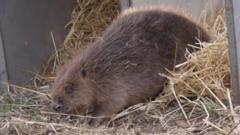
They arrived on the back of a flatbed, smelling of wet fur and aspen bark. There was no fanfare, no ribbon-cutting ceremony with local politicians. Just a few biologists and a pair of heavy-set rodents with orange teeth and tails like leather paddles. We were releasing beavers. To some, it looked like a desperate surrender to the wild. To those who understood the mechanics of the earth, it was the most sophisticated technology we had left.
The Original Infrastructure Architects
A beaver is not just an animal. It is a biological machine programmed to recognize the sound of running water as a flaw in the universe that must be corrected.
When a beaver hears the trickle of a leak, it experiences a drive we can barely comprehend. It begins to stack. It weaves willow branches with mud, anchoring them with stones, creating a structure that is porous enough to let life through but solid enough to break the water’s murderous momentum.
Consider the "leaky dam." In modern civil engineering, we build to exclude. We build walls to keep water out or pipes to send it away. The beaver builds to invite. By slowing the water down, the beaver forces the liquid to sit still. It gives the earth time to drink. This process, known as groundwater recharge, is the difference between a desert and a meadow.
As the water pools behind these organic barricades, the "invisible stakes" of our landscape become visible. The water table rises. Suddenly, the grass ten yards away from the stream stays green in August. The old well that ran dry three years ago starts to hum again. This isn't magic. It's the simple physics of pressure and saturation, managed by a creature that doesn't need a permit or a paycheck.
The Cost of a Clean Creek
There is a persistent myth that a "healthy" stream is a straight, clear one. We like our nature orderly. We want the water to flow in a neat line, tucked away from our roads and our backyards. But a straight stream is a high-velocity weapon.
When we removed beavers from the ecosystem centuries ago for the sake of top hats and fur coats, we accidentally triggered a slow-motion catastrophe. Without their dams, streams straightened and "incised." They cut down into the earth like a knife through cake. This lowered the water table, effectively drenching the surrounding wetlands and turning them into tinder-dry scrubland.
We traded resilience for neatness. We are now paying that debt in wildfires and flash floods.
The reintroduction of these "engineers" is an admission of humility. We are acknowledging that a rodent with a brain the size of a walnut understands the fluid dynamics of a floodplain better than a supercomputer. When the beavers were released into the headwaters of the Devon rivers recently, the goal wasn't just "conservation" in the sense of saving a cute species. It was a tactical deployment of natural infrastructure.
A Tale of Two Valleys
Imagine two identical valleys facing a once-in-a-century storm.
In the first valley, the stream is "clean." It has been dredged and straightened. When the four inches of rain hit the hillsides, the water rushes into the channel. It gains speed. It carries boulders. It hits the town at the bottom of the hill like a liquid battering ram. The damage is measured in billions.
In the second valley, three beaver families have been at work for two years. The stream is a mess. It's a chaotic labyrinth of ponds, side channels, and submerged logs. When that same rain hits, the water hits a speed bump. Then another. And another. The energy is dissipated. The peak flow—the terrifying "crest" of the flood—is flattened. The water that would have leveled a house instead gently spills into a marsh, depositing nutrient-rich silt that becomes the foundation for a new ecosystem.
The town at the bottom of the second valley stays dry.
This is the "human element" we often ignore when talking about ecology. We talk about biodiversity as if it’s a luxury, something we pay for after the "real" bills are settled. But biodiversity is the insurance policy. The beaver is the claims adjuster who prevents the disaster before it happens.
The Friction of Coexistence
It would be dishonest to suggest that this is a fairy tale without friction. Beavers are stubborn. They do not care about your property lines. They do not care that the culvert under the county road cost fifty thousand dollars; to them, it's just a very loud hole that needs to be plugged.
Living with beavers requires a shift in our psychological landscape. It requires us to accept a certain level of messiness. In some areas, "beaver deceivers"—cleverly designed pipes that allow water to pass through a dam without the beaver noticing—are necessary to prevent localized flooding of roads.
It is a partnership, not a takeover. It's a negotiation between two different types of engineers. We provide the space; they provide the labor. They work the night shift, for free, forever.
The biologists who monitor these release sites often talk about the "halo effect." Within months of a beaver’s arrival, the birds return. Then the amphibians. Then the trout, which find shelter in the deep, cool pools created by the dams. The temperature of the water actually drops because the ponds are deep enough to stay cold at the bottom, creating a refuge for fish during heatwaves.
The Sound of a Healing Land
Back on the Miller farm, the change wasn't overnight. It was a series of small, quiet victories.
First, the frogs started calling again in April—a sound that had been missing for a generation. Then, the damp patch in the lower pasture stayed damp even through the July drought. The cows didn't have to be moved as early. The soil felt different underfoot. It felt spongy, alive, and heavy with the weight of stored water.
We often think of "technology" as something made of silicon and light. We look for "cutting-edge" solutions to our environmental crises in laboratories and carbon-capture startups. But sometimes, the most sophisticated technology is the one that has been beta-tested for eight million years.
The beaver is a reminder that we don't always have to dominate the landscape to survive it. Sometimes, the most powerful thing we can do is step back, open the crate, and let a pair of orange teeth do the heavy lifting.
The creek is no longer a silver thread. It is a wide, shimmering mosaic of ponds and wetlands. It looks chaotic. It looks cluttered. It looks perfect.
Last night, the clouds opened up. It was a heavy rain, the kind that used to keep the Millers up at night, worrying about the banks bursting and the topsoil washing away. But as the rain pounded the roof, there was no rushing roar from the gully. Instead, there was only the sound of water being caught, held, and slowed.
The valley didn't gasp. It breathed.