The year 2025 has cemented a grim milestone in the history of global press freedom. According to the latest comprehensive data from international monitoring agencies, Israel remains the primary driver of journalist fatalities worldwide. This is not a statistical anomaly or a byproduct of "fog of war" chaos. It is the result of a systematic environment where the traditional protections of the press have been stripped away by high-precision warfare and a lack of international accountability. While other global conflicts continue to simmer, the concentration of media deaths in the Gaza Strip and the surrounding region represents a collapse of the norms that once kept reporters safe.
The numbers are stark. Over the past twelve months, more media workers were killed in this specific theater of operations than in any other conflict since the turn of the century.
The Precision Paradox
In the past, high journalist casualties were often attributed to indiscriminate artillery fire or the unpredictability of guerrilla warfare. 2025 tells a different story. We are seeing the "Precision Paradox" in full effect. Israel possesses some of the most advanced surveillance and targeting technology on the planet. This includes AI-driven identification systems and drone capabilities that can distinguish between a combatant and a civilian from thousands of feet in the air.
When a journalist wearing a blue "PRESS" vest is struck by a precision munition, it raises a question that military spokespeople struggle to answer. If the technology is so accurate, how do these errors happen with such regularity?
The reality is that the definition of a "legitimate target" has been stretched to the breaking point. Information warfare is now treated with the same lethal seriousness as kinetic warfare. In this environment, a journalist with a camera is often viewed through the same lens as a spotter with a radio. This erosion of the civilian status for media members is the single most dangerous trend in modern combat.
Intelligence or Intimidation
Investigations into the 2025 fatalities reveal a pattern of "pre-strike" warnings that often arrive too late—or not at all. Intelligence agencies frequently cite the presence of "terrorist infrastructure" within buildings housing media offices. Yet, the evidence provided post-strike is usually thin, consisting of grainy satellite imagery or vague claims of "operational necessity."
We have moved beyond the era of accidental crossfire. Many of the 2025 incidents involved direct strikes on residential homes where journalists were staying with their families. This shifts the risk profile from "occupational hazard" to "targeted assassination." When a reporter knows that their job could result in the death of their children, the result is a chilling effect that no censorship law could ever achieve.
The Infrastructure of Silence
The mechanical "how" of these killings is often tied to the control of the digital space. By monitoring SIM cards, social media logins, and satellite uplinks, security forces can track a journalist’s exact coordinates in real-time. In 2025, the smartphone has become a tracking beacon.
- Signal Interception: Using IMSI-catchers to identify journalists in the field.
- Facial Recognition: Identifying media figures at protest sites or border crossings.
- Network Shutdowns: Cutting off communication to prevent the real-time reporting of military movements.
These aren't just tools for law enforcement; they are the precursors to kinetic strikes. If a state knows exactly where every journalist is at any given second, every "accidental" hit becomes a matter of choice.
The Accountability Vacuum
The international community’s response to the 2025 report has been characterized by a familiar routine of "deep concern" followed by zero consequence. The International Criminal Court (ICC) and other bodies move at a glacial pace, while the weapons shipments that facilitate these strikes continue without interruption.
This lack of accountability creates a moral hazard. If a state can kill a hundred journalists with no more than a few days of bad headlines, there is no incentive to change the Rules of Engagement (ROE). Other nations are watching this. They are learning that the "Western" commitment to press freedom is a flexible concept that can be ignored if the geopolitical stakes are high enough.
Beyond the Front Lines
The violence isn't limited to the physical battlefield. In 2025, we have seen a surge in legal and administrative attacks on the press within Israel and the occupied territories. This includes the closure of news bureaus and the seizure of equipment under expanded "security" laws.
These actions provide the domestic legal cover for the physical violence occurring in the field. When the state officially labels an entire news organization as a threat to national security, it signals to the military that the employees of that organization are no longer entitled to the protections of the Geneva Convention.
A Broken Feedback Loop
The tragedy of the 2025 death toll is that it creates a feedback loop of ignorance. As journalists are killed or forced to flee, the world loses its eyes on the ground. We are left with "official" narratives provided by the warring parties themselves. This is how war crimes are buried in real-time.
Without independent verification, the truth becomes a casualty long before the final body count is tallied. The 2025 report isn't just a list of names; it is a ledger of what we no longer know about the reality of modern war.
The Future of the Conflict Reporter
If the current trend continues, the era of the independent war correspondent is over. What will remain are "embedded" reporters who see only what they are allowed to see, or "citizen journalists" who lack the resources and training to survive in a high-tech kill zone.
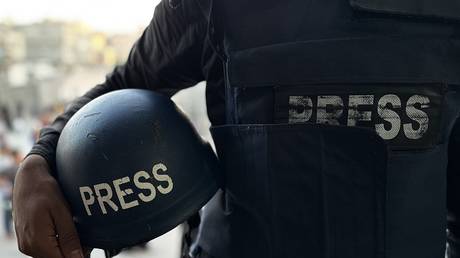
The industry must confront the fact that a "PRESS" helmet is now more of a target than a shield. News organizations are already pulling staff from the region, citing the impossibility of ensuring their safety. This isn't cowardice; it's a rational response to a theater where the rules of war have been rewritten in blood.
The responsibility for these deaths lies not just with those who pull the trigger, but with the diplomatic systems that provide the ammunition and the silence. Until the cost of killing a journalist exceeds the perceived benefit of silencing them, the 2026 report will likely be even more devastating than the one we are reading today.
Governments must move beyond rhetoric and implement immediate, verifiable changes to how media personnel are identified and protected on the battlefield. This starts with a demand for independent investigations into every single journalist death in 2025, backed by the threat of real diplomatic and economic sanctions. Anything less is an admission that the world has given up on the truth.