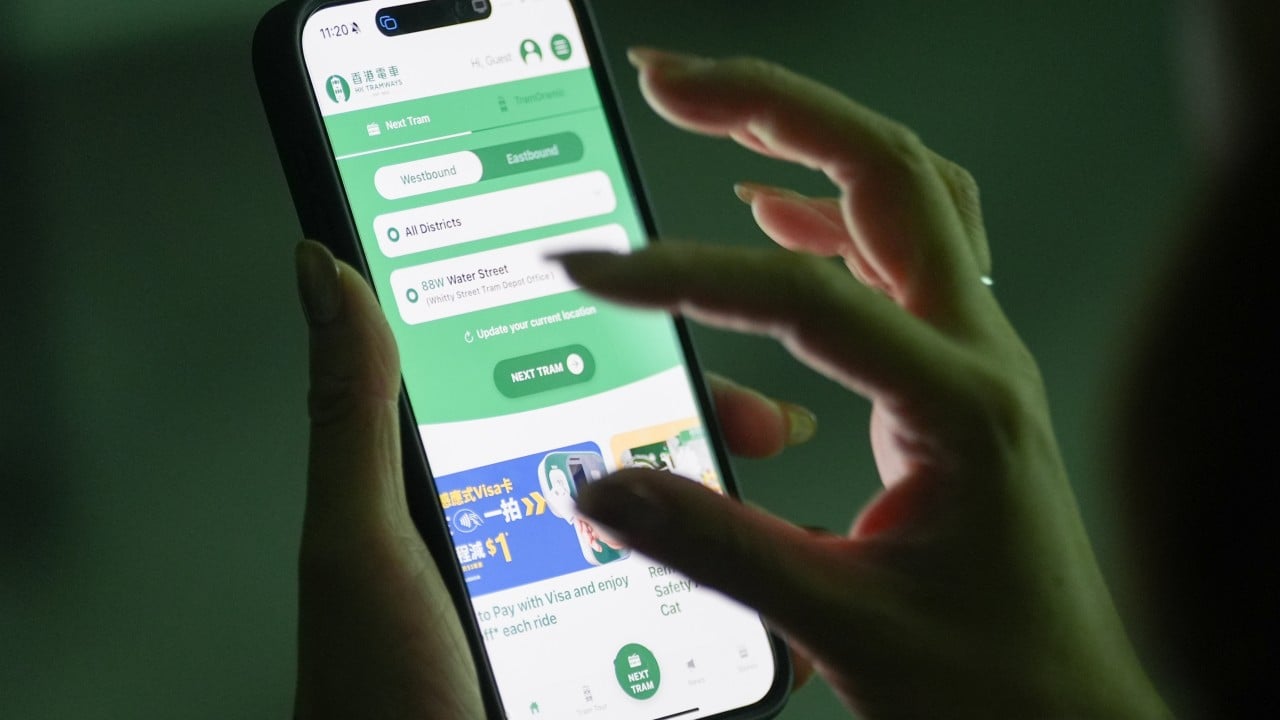
Hong Kong Tramways is currently walking a tightrope between colonial-era nostalgia and modern urban survival. The operator recently launched a real-time tracking app and committed to freezing fare prices for the remainder of the year, but these moves are not mere acts of corporate charity. They are defensive maneuvers designed to stabilize a dwindling passenger base in an increasingly competitive transit market. By integrating GPS data with a consumer-facing interface, the company aims to reduce the "uncertainty tax" that often pushes commuters toward the MTR or minibuses.
The "Ding Ding" remains the cheapest way to traverse the northern spine of Hong Kong Island. Yet, price alone is no longer enough to secure loyalty when the alternative is a climate-controlled subway that arrives every two minutes.
The Data Gamble to Save a Legacy
For decades, the tram system operated on a "wait and see" basis. Passengers stood at narrow islands on Des Voeux Road, staring into the distance for a flash of green wood and metal. If a tram didn't appear within five minutes, they walked to the nearest MTR station. This leakage of ridership has haunted the company’s balance sheets.
The introduction of a real-time arrival app is an attempt to plug this leak. By providing exact arrival times, the operator is trying to convert the tram from a charming relic into a predictable tool for the daily grind. The technology involves installing GPS transponders across the entire fleet of 160-plus trams. This data doesn't just feed an app; it gives the central control room the ability to manage "clumping"—the frustrating phenomenon where three trams arrive at once followed by a twenty-minute gap.
Why the Fare Freeze is a Calculated Risk
Publicly, a fare freeze is presented as a gift to a city grappling with inflation. Behind the scenes, it is a recognition of market elasticity. The last fare hike in 2022 saw adult prices rise to $3.00 HKD. While still remarkably low by global standards, any further increase risks hitting a ceiling where the value proposition collapses.
The tram's primary competitors are not just buses, but the efficiency of the human gait. On short hops between Central and Sheung Wan, a price hike makes walking more attractive. On longer hauls, the time-to-cost ratio tilts heavily in favor of the MTR. By holding the line on prices, the operator is betting that volume will compensate for stagnant margins. They need the trams full, not just for the fares, but for the secondary revenue streams that actually keep the lights on.
Advertising as the Hidden Engine
Walk down Hennessy Road and you will see the true business model of Hong Kong Tramways. It isn't transportation; it’s mobile billboards. Each tram is wrapped in vibrant vinyl advertising everything from luxury watches to high-interest loans.
These "moving skyscrapers" command premium rates because they occupy the most valuable street-level real estate in the world. However, an advertiser’s interest depends on the tram’s visibility and its integration into the city's heartbeat. If the tram becomes an obsolete mode of transport used only by tourists, the advertising rates will eventually crater. The push for digitalization and the fare freeze are both designed to keep the trams crowded with locals, ensuring the brand remains an essential part of the Hong Kong identity.
The Infrastructure Bottleneck
No amount of software can fix the physical limitations of the track. The tram operates on a narrow, fixed-line system that is frequently disrupted by illegal parking, delivery vans, and road accidents. When a single van breaks down on the tracks in Wan Chai, the entire eastern flow grinds to a halt.
Digital tracking allows passengers to see these delays in real-time, which is a double-edged sword. While it provides transparency, it also highlights the system's fragility. The company has long lobbied for more dedicated "tram-only" lanes, but the government’s transport policy remains heavily skewed toward private vehicles and the expansion of the subway network. The operator is essentially trying to run a 21st-century data operation on a 19th-century physical footprint.
The Maintenance Debt
Operating a fleet of double-decker trams is a labor-intensive nightmare. Unlike modern light rail systems with off-the-shelf parts, the Hong Kong fleet requires bespoke carpentry and metalwork. Much of this is done in-house at the Whampoa and Sai Wan Ho depots.
Freezing fares puts immense pressure on the maintenance budget. The company has survived by slowly replacing older wooden frames with aluminum alloys that look identical but require less upkeep. This "stealth modernization" is the only way to keep the fleet operational without the massive subsidies that sustain most European transit systems.
The Demographic Shift
The traditional rider base is changing. Elderly residents, who benefit from the $2 concessionary fare, remain the most loyal demographic. However, the company is desperate to attract the younger, tech-savvy workforce in the East Kowloon and Island East business hubs.
This is where the app becomes a psychological tool. For a 25-year-old analyst, an invisible tram is an unusable tram. An icon on a map, however, is a viable option. The struggle is to make the "Ding Ding" feel like a choice rather than a last resort. This requires a shift in the corporate culture from "utility provider" to "service experience."
The Tourism Fallacy
There is a common misconception that tourism alone can save the tram. While the "TramOramic" sightseeing tours are profitable, they represent a fraction of the total daily boardings. The system survives on the backs of thousands of office workers, domestic helpers, and students.
Relying on tourism is dangerous, as the 2020-2022 period proved. When the borders closed, the operator was forced to confront the reality that its survival depends entirely on the local population. The current focus on tech and price stability is a direct result of the lessons learned during those lean years. It is a pivot toward domestic resilience.
Efficiency versus Character
The greatest threat to the tram’s future might be its own charm. Every attempt to modernize—be it air conditioning experiments or automated announcements—is met with a wave of public resistance. People want the tram to remain exactly as it was in 1950, but they also want it to be as fast as a bullet train.
The real-time app is the compromise. It leaves the physical experience of the open-windowed, rattling ride intact while wrapping it in a layer of digital efficiency. It is an attempt to have it both ways.
The Cost of Power
While the fare freeze is the headline, the real story is the rising cost of electricity. The tram network is a massive consumer of power, and with global energy prices fluctuating, the operator’s margins are being squeezed from both ends. To offset this, the company is looking into more efficient regenerative braking systems, where the energy produced by a slowing tram is fed back into the overhead lines.
This is high-level engineering hidden behind a quaint exterior. The challenge for management is to implement these upgrades without the capital injections that usually accompany such projects in the private sector. They are essentially rebuilding the engine while the car is moving at full speed.
The Ghost of Nationalization
In many other global cities, a transit system of this historical importance would be heavily subsidized or state-owned. In Hong Kong, it remains a private enterprise. This independence is a point of pride, but it also means the company is always one bad quarter away from a crisis.
The government provides "non-financial support," such as traffic management, but the cash must come from the farebox and the advertising wraps. This makes the "no fare rise" pledge even more aggressive. It is a high-stakes bet that the operator can find enough operational efficiencies to bridge the gap until the next review cycle.
A Move toward Integrated Mobility
The app is likely the first step in a broader move toward "Mobility as a Service" (MaaS). We can expect to see the tram’s data integrated into wider platforms that combine walking, tramming, and ferry travel into a single route-planning tool.
By opening up their API, Hong Kong Tramways is inviting third-party developers to find new ways to put people on those wooden slats. It is an admission that they cannot win the war for the commuter's attention alone. They need to be part of an ecosystem where the tram is the preferred "middle-mile" solution.
The Reality of the Commute
The tram is not a fast way to get across Hong Kong. It never has been. But in a city that often feels like a pressurized tube of productivity, the tram offers a rare moment of connection to the street-level reality.
The operator knows that to stay relevant, they have to maintain this emotional connection while removing the logistical friction that makes people choose the subway. If the app can shave three minutes of perceived wait time off a commute, it has done more for the company’s longevity than a million-dollar ad campaign.
The fare freeze and the digital rollout are the opening moves in a much longer game of urban chess. The operator is playing for the right to exist in a future that favors the fast and the sterile. They are betting that with enough data and a low enough price point, there is still a place for a slow, loud, and beautiful machine in the heart of a global financial hub. The next twelve months will reveal if the public agrees.