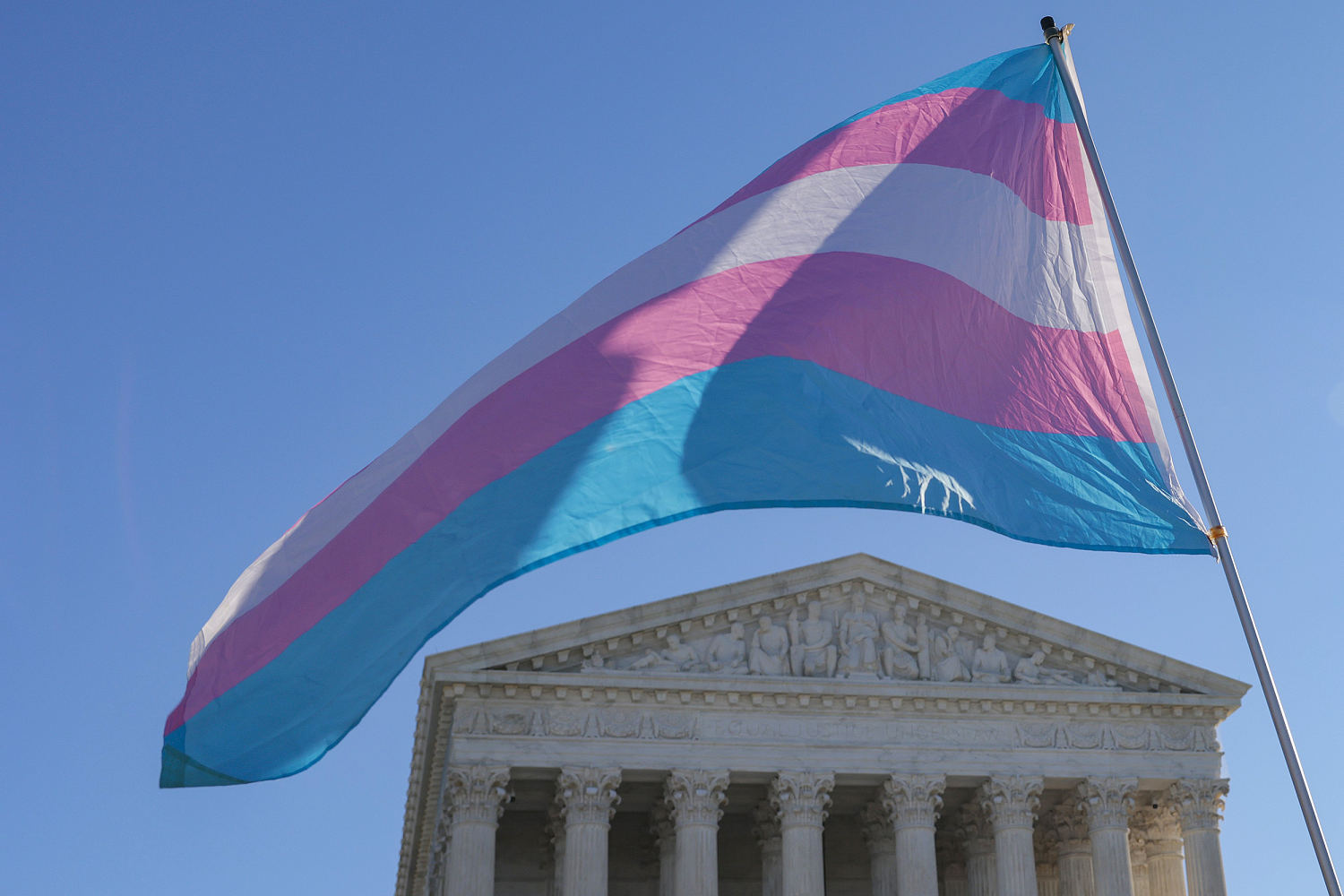
The legal tug-of-war over what happens inside California classrooms just hit a massive roadblock at the nation's highest court. If you've been following the heated battles between local school boards and state officials, you know the stakes aren't just about paperwork. They're about who has the fundamental right to guide a child's upbringing. The Supreme Court recently stepped in to block California's attempt to stop school districts from notifying parents if their child identifies as transgender. This isn't just a win for a few suburban school boards. It's a signal flare for the entire country.
For months, California Attorney General Rob Bonta and State Superintendent Tony Thurmond pushed hard to silence local districts. They argued that "forced outing" policies put vulnerable students at risk of abuse at home. It sounds like a noble cause on the surface. But a growing number of parents and legal experts saw it as a state-sponsored wedge driven between families. When the high court stepped in, they didn't just issue a stay. They hit the brakes on a state-wide effort to keep parents in the dark about the most significant mental and emotional shifts in their children's lives.
The breakdown of the California notification battle
This fight started in places like Chino Valley and Temecula. These are communities where the school boards decided that transparency wasn't optional. They passed policies requiring staff to notify parents within three days if a student requested to use a different name or pronouns, or wanted to access facilities designated for the opposite sex.
Sacramento didn't like that. Not one bit.
The state sued, claiming these policies violated student privacy and equal protection rights. A lower court initially sided with the state, issuing an injunction that prevented these districts from enforcing their rules. The argument from the state’s lawyers was basically that a child’s right to privacy from their own parents is absolute when it comes to gender identity. That’s a bold claim. It's also one that many find legally shaky.
When the Supreme Court intervened, they effectively paused that lower court injunction. This means, for now, those school districts can go back to telling parents what's going on. It’s a temporary measure while the full legal merits are argued, but the message is loud and clear. The court is skeptical of the idea that the state can legally mandate secrets between a child and their legal guardian.
Why the privacy argument often falls flat in court
You’ll hear the word "privacy" tossed around a lot in this debate. In a legal sense, privacy usually protects you from the government, not from your parents. If a ten-year-old gets a concussion at football practice, the school calls the parents. If a teenager gets caught smoking behind the gym, the school calls the parents. The state’s logic suggests that gender identity is the one and only category where the school's relationship with the child supersedes the parents' relationship.
Federal law, specifically the Family Educational Rights and Privacy Act (FERPA), actually leans the other direction. It guarantees parents access to their children’s education records. While "records" is a specific legal term, the spirit of the law has always been about parental involvement.
What the critics get wrong about parental notification
Opponents of these notification laws often paint a dark picture. They suggest that notifying a parent is a death sentence for the child's safety. While domestic abuse is a horrific reality for some, the law generally assumes parents are fit and acting in their child's best interests unless proven otherwise.
- Schools aren't equipped to be social workers or therapists for every child.
- Keeping secrets creates a "double life" dynamic that can increase student anxiety.
- Most parents, even those who are confused or hesitant, want to support their kids through transitions.
By cutting parents out, the state assumes the worst of every family in California. That’s a cynical way to run an education system. It also ignores the reality that many gender-questioning kids are dealing with other underlying issues like autism, depression, or peer influence. Parents need that information to provide comprehensive care outside of school hours.
The national ripple effect of the Supreme Court decision
Don't think for a second this stays in California. This ruling is a massive green light for school boards in other states that were worried about state-level blowback. We're seeing similar movements in Virginia, Florida, and across the Midwest.
The Supreme Court’s willingness to step in at this stage suggests they see a significant constitutional issue at play. It's likely centered on the 14th Amendment’s Due Process Clause, which the court has historically interpreted to protect the right of parents to direct the upbringing and education of their children. Think back to cases like Pierce v. Society of Sisters. The court has long held that "the child is not the mere creature of the state."
How schools are reacting on the ground
In the wake of this block, we're seeing two distinct camps emerge. Some districts are doubling down on transparency, viewing it as a way to rebuild trust with a disillusioned public. Others are trying to find loopholes, using "informal" name changes that don't get written down to avoid triggering notification requirements.
This creates a messy, inconsistent environment for students. Imagine a kid who moves from a district in Orange County to one in San Francisco. The rules for their identity and their family's involvement could flip-flop overnight. This legal instability is exactly why the Supreme Court had to act. We need a uniform standard that respects the family unit.
Practical steps for parents and advocates
If you're a parent in a district currently navigating these waters, don't sit on the sidelines. The legal landscape is shifting fast. You have more leverage now than you did six months ago.
First, get your hands on your district’s specific policy manual. Don't rely on what the local news says. Look for terms like "Gender Support Plans" or "Privacy Protocols." Often, these documents explicitly tell teachers not to use a student’s preferred pronouns when talking to parents. That’s a red flag.
Second, attend your school board meetings. These boards are where the rubber meets the road. The Supreme Court gave them the room to breathe, but they need to know the community supports transparency.
Third, if you feel your rights are being bypassed, look into organizations like the Center for American Liberty or the Pacific Justice Institute. They’ve been at the forefront of these specific California cases and offer resources for parents who feel the state is overstepping.
The Supreme Court just reminded California—and the rest of the country—that the state doesn't own our children. Transparency isn't a threat; it’s a prerequisite for a healthy society. We’re moving toward a standard where "don’t tell mom and dad" is no longer an official government policy. It's about time.
Check your local school board's upcoming agenda for any "Equity" or "Student Services" updates. If a notification policy isn't on the books, ask why. Use the recent Supreme Court stay as your primary talking point to show that the legal tide has turned.