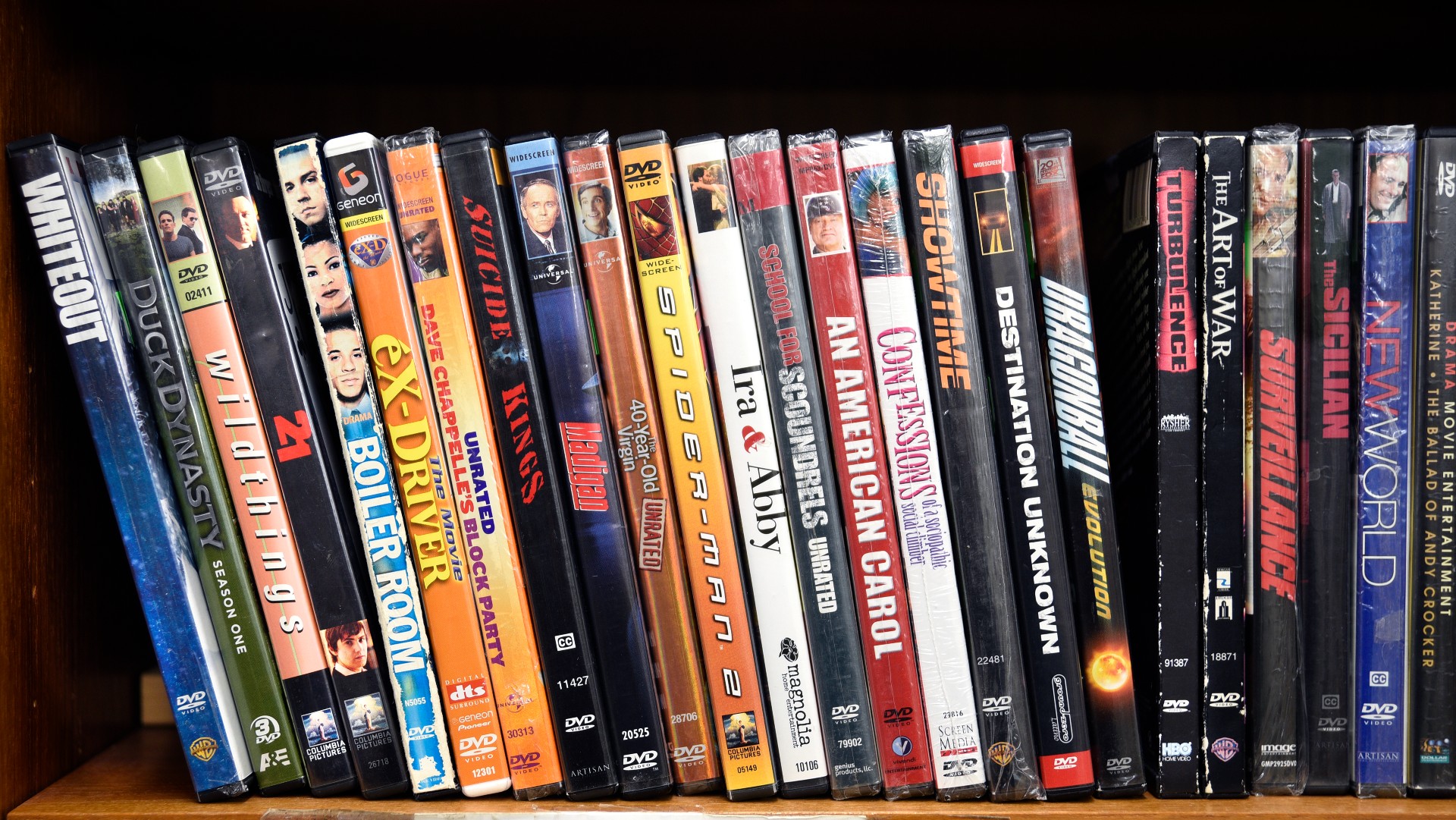
Streaming is broken. You know it, I know it, and surprisingly, Gen Z knows it too. After a decade of being told that "digital is the future," we've reached a point where you can pay for five different subscriptions and still have nothing to watch on a Friday night. This is exactly why the shiny silver disc is making a massive comeback. It isn't just nostalgia for a time most twenty-somethings barely remember. It’s a rebellion against the "rental economy" where you own nothing and the content you love can vanish overnight because of a tax write-off or a licensing dispute.
Gen Z is treating DVDs exactly like millennials treated vinyl records ten years ago. They’re turning a "dead" format into a status symbol and a survival kit for the culture they love.
The Streaming Bubble Has Finally Popped
For years, the pitch was simple. Pay ten bucks, get everything. But the "everything" part was a lie. Today, the streaming market is fragmented, expensive, and increasingly unreliable. When Disney+ or Max pulls an original series off their platform to save on residuals, that show effectively ceases to exist. If you don't have a physical copy, you don't own it. You’re just renting access to a library that the landlord can rearrange—or burn down—whenever they want.
This "digital fragility" is the primary driver for the DVD resurgence. Data from the Physical Media Association and various retail trackers shows a surprising stabilization in disc sales, particularly in 4K Ultra HD and boutique Blu-ray labels. It’s about "permanent access." In a world where Netflix can cancel your favorite show or edit out "offensive" scenes years later, having the unedited, original disc on your shelf is a quiet act of defiance.
Why Gen Z is Ditching the Algorithm
The algorithm is exhausting. We've all spent forty minutes scrolling through rows of tiles only to give up and go to sleep. Physical media fixes this. When you walk up to a shelf and pull out a copy of Lady Bird or The Dark Knight, you've made a choice. There's a tactile intentionality to it. You have to get up, put the disc in the player, and wait for the menu to load.
That friction is actually a feature, not a bug. It turns "consuming content" into "watching a movie." It's an event. Young collectors are finding that the ritual of physical media leads to a much higher quality of attention. You’re less likely to scroll on your phone when you’ve gone through the effort of setting up a disc. Plus, there’s the aesthetic. A shelf full of Criterion Collection releases or limited edition steelbooks looks a lot better in your apartment than a generic black screen with a "Who is watching?" prompt.
The Superiority of Bitrate and Bonus Features
Let’s talk about the technical side for a second because it actually matters. Most people think a 4K stream on Netflix is the same as a 4K disc. It’s not. Not even close. Streaming services compress the hell out of their video to make it travel over your internet connection. This leads to "banding" in dark scenes and a loss of fine detail.
A standard Blu-ray has a much higher bitrate than a 4K stream. A 4K Ultra HD disc? It blows streaming out of the water. You get deep blacks, vibrant colors, and lossless audio that actually uses your speakers properly. If you’ve spent money on a decent TV, watching a stream is like putting regular gas in a Ferrari.
What You Lose When You Go Digital Only
- Director’s Commentaries: These are disappearing. Hearing a filmmaker explain how they shot a scene is a film school education in a box.
- Deleted Scenes: Streaming versions almost never include these.
- Behind-the-Scenes Featurettes: Most platforms don't bother hosting the "making of" documentaries that used to be standard.
- Original Audio Mixes: Discs often give you multiple audio options, including the original theatrical mix, whereas streamers often default to a generic "spatial audio" fold-down.
The Boutique Label Boom
The DVD section at Best Buy might be gone, but the collector's market is thriving. Companies like Criterion, Arrow Video, Vinegar Syndrome, and Shout! Factory are the new tastemakers. They treat movies like art. They commission custom cover art, include thick booklets with essays, and perform painstaking 4K restorations from original film negatives.
For Gen Z, these labels are the "A24" of home media. Owning a Vinegar Syndrome release isn't just about the movie; it's about being part of a subculture that appreciates the obscure, the weird, and the beautifully preserved. It's the same energy as hunting for a rare 1970s psych-rock LP. It’s about curation. In an age of infinite, cheap digital noise, a curated physical collection says something about who you are.
The Economics of Physical Media
Is it more expensive? Upfront, yes. A new 4K disc can run you $25 to $35. But consider the long game. If you buy the movies you actually love and watch them once a year, you aren't paying a monthly "access fee" forever. Furthermore, discs have resale value. You can't sell your digital license for The Avengers on eBay when you get tired of it. You can absolutely sell a limited edition Blu-ray, sometimes for more than you paid for it.
Thrifting is also a massive part of this. While the high-end collectors are buying $50 box sets, others are hitting up Goodwill and local record stores to find DVDs for $1. You can build a world-class library of cinema for the cost of two months of Max. For a generation that values sustainability and "pre-loved" goods, rescuing a disc from a landfill is a win-win.
How to Start Your Collection Without Getting Scammed
If you’re ready to jump back in, don't just buy the first player you see. Most people make the mistake of buying a cheap $40 DVD player from a big-box store. If you have a modern 4K TV, those will look terrible.
The smart move is to look for a dedicated 4K Blu-ray player—brands like Panasonic and Sony are the gold standard here. Even better? If you have a PlayStation 5 or an Xbox Series X, you already own a 4K Blu-ray player. Just pop the disc in.
Start by identifying the five movies you watch at least once a year. Buy those on the best format available. Check sites like Blu-ray.com to see which version has the best transfer. Avoid "stacked" discs where the movie and the extras are crammed onto one layer, as this hurts the image quality.
Go to your local independent record store. Talk to the person behind the counter. Ask what's in the used bin. You'll find that the community around physical media is much more rewarding than a "Recommended for You" row. Stop letting tech CEOs decide what culture you get to keep. Buy the disc. Hold the art. Own the movie.