The Western press is currently obsessed with a ghost. They are staring at a vacant throne in Tehran and calling it a "crisis." They see the smoke from U.S.-Israeli airstrikes and assume the machinery of the Islamic Republic is grinding to a halt because the man at the top is gone.
This isn't just a misreading of Persian politics. It is a fundamental misunderstanding of how modern, ideologically driven states survive in the 21st century.
The "succession crisis" narrative is a comfort blanket for analysts who want to believe that decapitation strikes work. They don't. History is littered with the corpses of "irreplaceable" leaders whose removals only served to solidify the bureaucracies they left behind. If you think the death of the Supreme Leader creates a power vacuum, you haven't been paying attention to the Assembly of Experts or the Islamic Revolutionary Guard Corps (IRGC).
There is no vacuum. There is only a pivot.
The Fallacy of the Indispensable Man
We love the Great Man theory of history because it makes complex geopolitical problems feel solvable. If one man is the problem, one missile is the solution. This is the lazy consensus driving the current headlines.
In reality, the Office of the Supreme Leader (the Beyt-e Rahbari) has spent four decades evolving into a decentralized shadow government. It is a massive corporate entity disguised as a religious one. It manages billions in assets and controls the most sophisticated internal security apparatus in the Middle East.
When you remove the head of a hierarchy, the body dies. But Iran isn't a hierarchy; it’s a hydra. The IRGC doesn't need a specific octogenarian to tell them how to maintain their grip on the Strait of Hormuz or how to manage their drone proxy networks in Iraq and Yemen. In fact, a "crisis" at the top gives the military wing exactly what it has always wanted: a pretext for a total security state.
I have watched Western intelligence circles high-five over "tactical wins" for twenty years. They cheered when Soleimani was neutralized, claiming it would break the "Axis of Resistance." It didn't. It just forced the IRGC to automate their command structures and diversify their leadership. Losing the Supreme Leader isn't the end of the regime; it’s the beginning of its most pragmatic, and therefore most lethal, era.
Why Stability is More Terrifying than Chaos
The media wants you to fear a civil war in Iran. They paint pictures of rival factions fighting in the streets of Qom.
You should be praying for that. Because the alternative—the one actually happening—is a seamless, cold-blooded transition to a military-clerical junta that is far more efficient than the predecessor.
The Assembly of Experts is a Rubber Stamp
The 88-member body tasked with choosing the next leader isn't a debating society. It is an audition hall. The candidates have already been vetted by the Guardian Council. The IRGC already knows who they can work with. The idea that there will be a "stalemate" ignores the fact that the men with the guns cannot afford a stalemate. They will produce a consensus candidate within hours, not weeks, to project strength to the West.
The "Moderate" Mirage
Stop looking for a reformer. There are no reformers left in the upper echelons of Iranian power. They were purged in 2009, sidelined in 2017, and erased in 2022. Anyone who survives long enough to be in the conversation for succession is a true believer or a total opportunist. Both are equally committed to the survival of the system.
The Airstrike Paradox
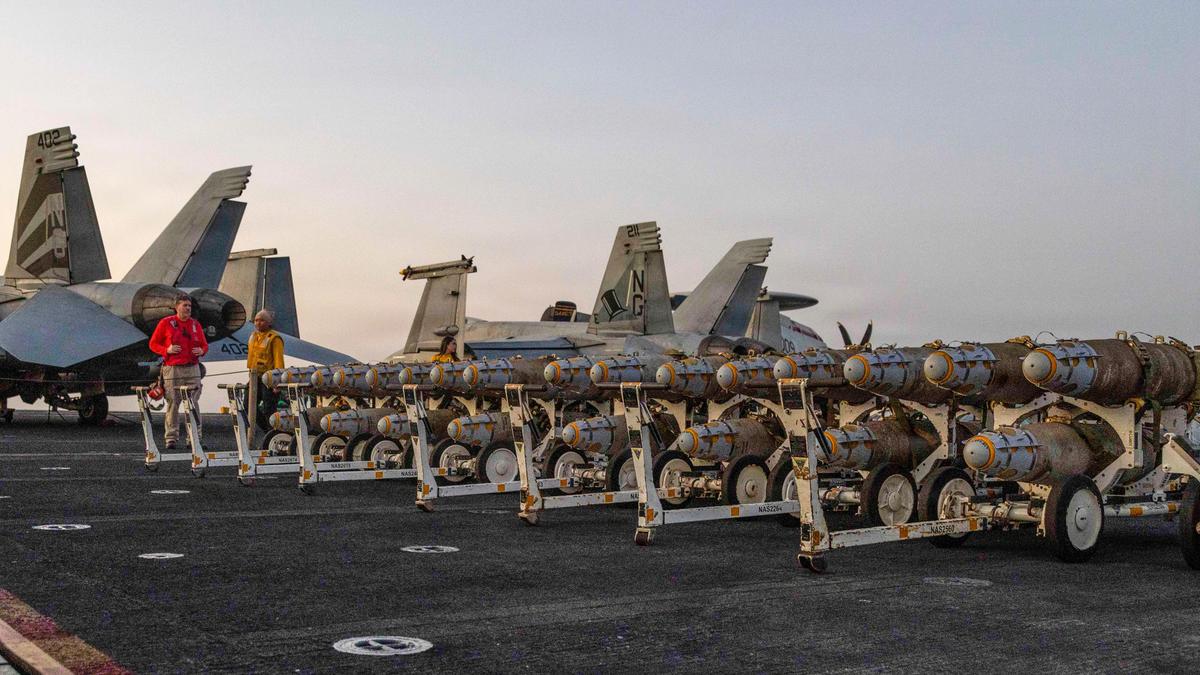
U.S. and Israeli strikes are currently hitting "strategic assets." The logic is that by degrading the military while the leadership is in flux, you force a collapse.
This is the exact opposite of how human psychology and national identity work.
External threats are the ultimate glue for a fracturing regime. Nothing silences a domestic protester faster than a foreign bomb falling on their city. By continuing kinetic operations during a leadership transition, the West is providing the IRGC with the perfect "rally 'round the flag" effect. They are handing the next Supreme Leader his first piece of propaganda: The foreigners attacked us while we were mourning; only the IRGC can protect you.
If the goal was actually regime change, the strikes would have stopped the moment the leader was confirmed dead. You give the factions room to breathe so they can start suffocating each other. By keeping the pressure on, you force them to stay united for survival.
The Technology of Control
The competitor articles ignore the role of the "Siran" (the Iranian Intranet). While the world watches for tank movements, the real succession battle is happening over fiber optic cables.
Iran has spent the last decade building a digital iron curtain. They don't need a charismatic leader to keep the population in check when they have AI-driven facial recognition and a localized internet that can be toggled off at the first sign of a protest.
"We are entering an era of 'Automated Autocracy' where the individual at the top is merely a brand ambassador for a suite of surveillance technologies."
This is the nuance the "crisis" reporters miss. The machinery of repression is now algorithmic. It doesn't sleep, it doesn't grieve, and it certainly doesn't care who is sitting on the throne.
The Brutal Reality of the Proxy Network
The "Axis of Resistance" (Hezbollah, Houthis, PMF) is often described as a series of spokes connected to a central hub in Tehran. The assumption is that if the hub is wobbly, the spokes fall off.
This ignores the reality of decentralized warfare.
Hezbollah is not a puppet; it is a partner. It has its own revenue streams, its own manufacturing capabilities, and its own political agency. The death of a Supreme Leader in Iran doesn't stop a Houthi commander from launching a missile at a cargo ship. If anything, these groups will escalate their activities to prove they aren't weakened by the transition.
We are not looking at a "crisis." We are looking at a stress test. And the system is designed to pass.
Stop Asking the Wrong Questions
People keep asking: "Who is next?"
The question should be: "Does it even matter?"
If the person changes but the policy of regional hegemony, nuclear hedging, and domestic suppression remains constant, then there is no crisis. There is only a change in management.
The Actionable Truth:
If you are an investor, a policy-maker, or a concerned citizen, stop waiting for the Iranian state to "implode" from within.
- Prepare for a Hardline Pivot: The next leader will likely be younger, more tech-savvy, and more closely tied to the military than the previous generation.
- Watch the IRGC, not the Clerics: The turban is becoming a ceremonial hood. The uniform is where the power lies.
- Expect Escalation: A new leader must prove their "revolutionary credentials." That usually involves a display of force.
The "succession crisis" is a narrative sold by people who want to believe the end is near. The reality is that the regime is shedding its old skin. What emerges will be leaner, meaner, and far less interested in negotiating with a West that thinks a few airstrikes can undo forty years of institutionalized survival.
Get ready for the era of the Military Republic of Iran. The clerics are just there for the photo op.