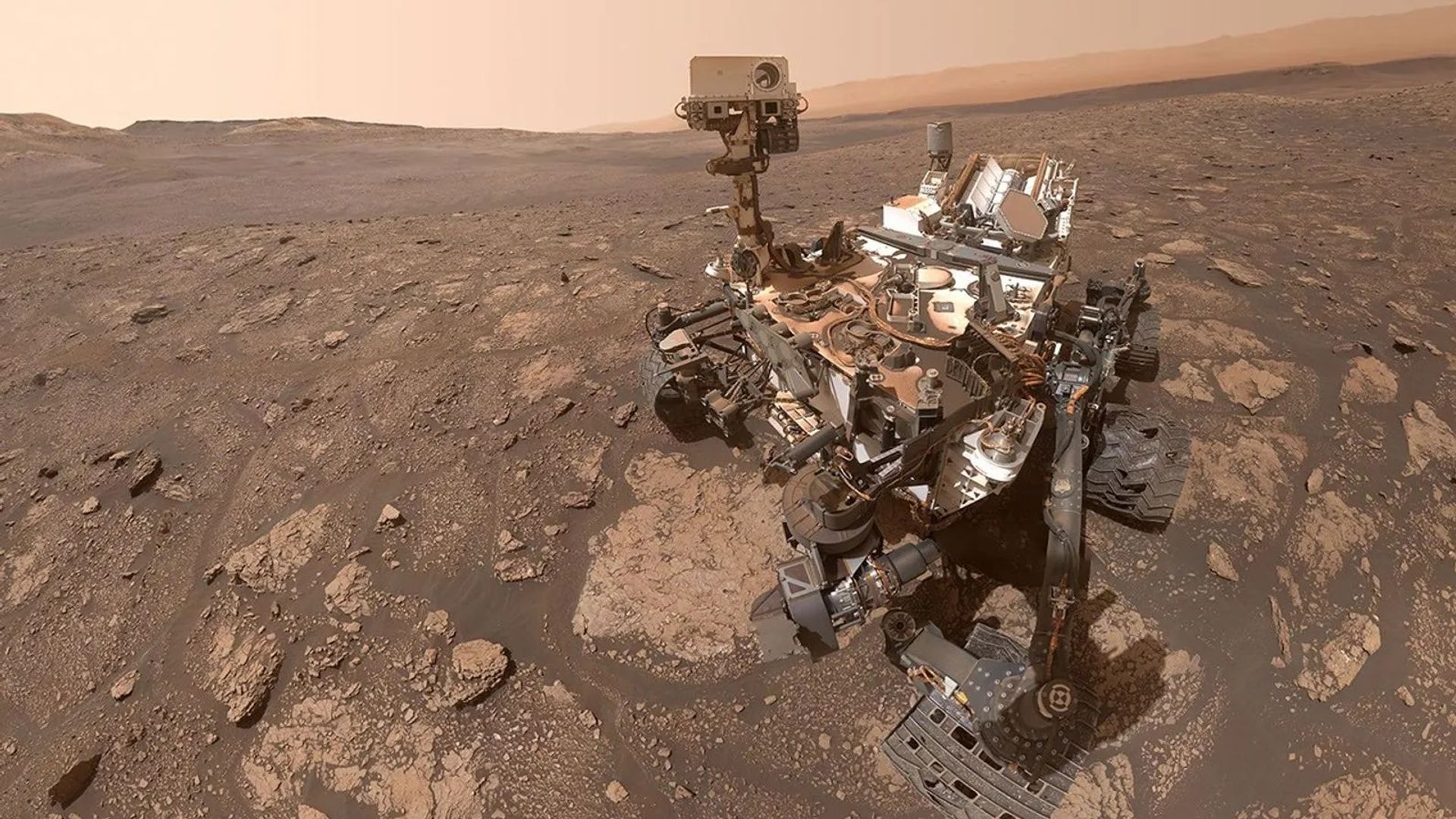
The detection of organic molecules on Mars is frequently misconstrued as a binary indicator of life. In reality, these findings represent a complex geochemical puzzle where the presence of carbon-based compounds is a baseline requirement, not a smoking gun. To evaluate the significance of the latest rover data, one must apply a rigorous framework that distinguishes between abiotic carbon cycling and authentic biological precursors. The fundamental challenge lies in the Martian surface's oxidizing environment, which actively degrades the very evidence sought by mobile laboratories like Curiosity and Perseverance.
The Hierarchical Framework of Martian Carbon
Understanding the discovery of organic molecules requires a departure from vague "building blocks of life" terminology. Instead, carbon compounds on Mars must be categorized by their origin and stability. The Martian carbon cycle functions through three distinct channels: If you liked this piece, you might want to look at: this related article.
- Exogenous Delivery: Mars is constantly bombarded by micrometeorites and carbonaceous chondrites. These objects carry complex organic molecules, including amino acids, across the solar system. The detection of organics may simply be a measurement of the interplanetary dust flux rather than an internal planetary process.
- Endogenous Abiotic Synthesis: Geological processes can produce organics without biological intervention. Fischer-Tropsch-type reactions, occurring during the serpentinization of olivine-rich rocks, can generate methane and other hydrocarbons. These are strictly chemical outcomes of water-rock interactions.
- Biogenic Signatures: This is the rarest category, where carbon molecules exhibit specific isotopic fractionation or homochirality—patterns that suggest metabolic processing.
The current analytical bottleneck is that current instrumentation can identify the presence of carbon chains but lacks the sensitivity to confirm the specific isotopic ratios ($^{13}C/^{12}C$) required to differentiate between a volcanic vent and a microbial colony.
The Preservation Paradox and the Perchlorate Barrier
The Martian surface is a hostile chemical reactor. Even if Mars once possessed a thriving biosphere, the preservation of its chemical remnants faces two primary degradative forces: Ionizing radiation and the "Perchlorate Filter." For another look on this event, check out the recent update from Ars Technica.
Perchlorates ($ClO_4^-$) are salts ubiquitous in Martian soil. They act as powerful oxidants, especially when heated. When a rover scoops a soil sample and places it into an oven for Thermal Evolved Gas Analysis (TEGA), the perchlorates react with any organic matter present. This reaction often destroys the original organic structure, leaving behind simple chlorinated hydrocarbons like chloromethane.
Scientists are essentially trying to reconstruct the shape of a burnt letter by looking at the ash. The "discovery" of organics is often the detection of these chlorinated fragments. The presence of these fragments proves that more complex carbon was there initially, but the specific molecular architecture—the data that would signal life—is lost in the heating process.
Geochemical Contextualization: Why Location Dictates Probability
The value of an organic detection is multiplied or divided by its geological context. Detecting organics in a random basaltic plain is low-value; detecting them within a lacustrine (lake-bed) delta system, such as Jezero Crater, triggers a different set of strategic priorities.
The Deltaic Trap Mechanism
Deltas are efficient at concentrating organic matter. As ancient rivers slowed upon entering the Martian craters, they deposited fine-grained clays. These clays have high surface areas that chemically bind to organic molecules, shielding them from the destructive effects of UV radiation. The strategy for the Perseverance rover involves identifying "tapho-facies"—specific rock layers with the highest potential for fossil preservation.
- Mudstones: High preservation potential due to low permeability, preventing oxidant infiltration.
- Carbonate precipitates: These can entomb microbial structures, effectively creating a chemical time capsule.
- Silica sinters: Associated with hydrothermal activity, these are high-energy environments where life could have thrived and been rapidly mineralized.
Quantifying the Signal-to-Noise Ratio in Mass Spectrometry
Analyzing Martian samples from 140 million miles away introduces significant data noise. The Sample Analysis at Mars (SAM) instrument suite uses Gas Chromatography-Mass Spectrometry (GCMS). The resulting data produces a "total ion chromatogram"—a series of peaks representing different molecules.
The logical failure in most reporting is the assumption that a peak equals a discovery. Analysts must account for:
- Instrumental Background: Terrestrial contaminants brought from Earth, despite ultra-sterilization protocols.
- Sample Processing Artifacts: The aforementioned perchlorate reactions.
- De-convolution Complexity: Multiple molecules often overlap in their transit time through the chromatography columns, requiring heavy mathematical modeling to separate the signals.
Unless a molecule shows a high degree of structural complexity—such as long-chain fatty acids or specific isoprenoids—it remains in the "undetermined" category. Simple molecules like benzene or propane are too chemically common to serve as definitive biosignatures.
The Strategic Shift to Sample Return
The limitations of in-situ analysis have led to the Mars Sample Return (MSR) mission architecture. The current rover missions are no longer intended to find life; they are intended to select life-candidate samples. The decision-making logic follows a strict hierarchy:
- Identify a high-potential geological unit (e.g., the base of a delta).
- Scan for bulk organic presence using deep-UV Raman spectroscopy (SHERLOC instrument).
- Cross-reference organic presence with mineralogical indicators of liquid water (e.g., hydrated sulfates).
- Cache the sample for future retrieval.
This creates a high-stakes inventory management problem. The rover has a limited number of sample tubes. Every tube filled with a "false positive" organic sample reduces the capacity to capture the definitive "gold" sample. Strategy dictates that we prioritize samples with high "textural integrity"—where the organics are found in specific patterns, such as laminations, that mimic terrestrial microbial mats (stromatolites).
Thermodynamic Constraints on Martian Habitability
Life requires a thermodynamic gradient—a difference in energy that can be exploited. On Earth, this is often the interface between oxygen and organic carbon, or light and water. On Mars, the gradient is likely "chemolithotrophic," meaning life would eat rocks.
The detection of methane ($CH_4$) in the Martian atmosphere is a critical data point here. Methane is unstable in the Martian atmosphere, breaking down in roughly 300 years. Its presence implies an active source. While abiotic reactions can produce methane, the fluctuation of methane levels—spiking in certain seasons—suggests a dynamic process. If this methane is seeping from the subsurface, it indicates a reservoir where liquid water may still interact with rock, providing the necessary energy for a deep-biosphere.
Addressing the False Dichotomy of Martian Life
The public discourse often frames the search as "Life vs. No Life." This is a flawed logical structure. The reality is a spectrum of "Prebiotic Chemistry."
Mars may have reached a state of "Prebiotic Complexity" where organic molecules began to self-organize but never achieved the threshold of self-replication (DNA/RNA). In this scenario, finding organics is not a "failure" to find life, but a success in mapping the universal steps toward it. Mars serves as a control group for Earth. By studying a planet where the "spark" may have failed, we gain a quantitative understanding of the variables required for the spark to succeed.
The current mission profile must focus on identifying the "boundary layer" between simple chemistry and biological complexity. This requires looking for molecules that are "expensive" for nature to build. Abiotic processes favor the path of least resistance, creating simple, symmetric molecules. Life, conversely, invests energy into building complex, asymmetric molecules to perform specific functions. The discovery of high-molecular-weight organics is the first step in determining if Mars ever paid that energetic price.
The analytical path forward requires a transition from "detection" to "characterization." We have moved past the era of asking if there are organics on Mars; we know there are. The mission-critical objective now is determining their "functional morphology." This means identifying if these molecules are distributed randomly or if they are clustered in a way that suggests localized metabolic activity. Until we can perform high-resolution isotopic analysis on returned samples, every organic discovery must be treated as a geochemical baseline, not a biological conclusion. The strategic imperative is the preservation of sample integrity during the retrieval phase to ensure the chemical data we eventually read in terrestrial labs hasn't been further corrupted by the journey home.