The declaration that combat operations against Iranian interests will persist until the achievement of all strategic objectives necessitates a transition from political rhetoric to a cold-eyed assessment of military and economic variables. When a state commits to open-ended kinetic engagement, it moves beyond simple deterrence into a high-stakes optimization problem. The success of this policy is not measured by the frequency of strikes, but by the degradation of an adversary’s capacity to project power relative to the internal political and fiscal costs of the campaign.
The operational reality of modern Middle Eastern conflict relies on three distinct vectors of confrontation: the neutralization of proxy logistics, the destruction of high-value nuclear or industrial infrastructure, and the maintenance of maritime dominance in the Strait of Hormuz. Each vector carries a specific risk profile and a declining marginal utility if the "objectives" remain fluid.
The Tri-Vector Framework of Regional Attrition
To understand the current trajectory, one must decompose the broad term "combat operations" into its functional components. The effectiveness of these operations is bound by the geographic distribution of Iranian-aligned assets and the technological parity of the defense systems involved.
1. Proxy Network Disruption and the Logistics Gap
Iran’s primary defensive and offensive mechanism is its "Forward Defense" strategy. By utilizing non-state actors in Yemen, Lebanon, Iraq, and Syria, Tehran creates a buffer that complicates direct attribution. Combat operations targeting these nodes must achieve a rate of destruction that exceeds the adversary's replenishment rate.
If the cost of a precision-guided munition used by the coalition exceeds the cost of the drone or rocket it destroys by a factor of 100 or more, the operation enters a state of negative economic return. Sustained operations require a shift in this ratio, focusing on "Left-of-Launch" interventions—cyber or kinetic strikes on manufacturing and assembly centers rather than intercepting the finished products in flight.
2. Infrastructure Neutralization and the Hardening Variable
Operations directed at the Iranian mainland face a different set of constraints. The hardening of nuclear facilities, such as those at Fordow or Natanz, necessitates the use of Massive Ordnance Penetrators (MOP) or sophisticated cyber-warfare tools like the Stuxnet variants of the past decade.
The objective here is not just physical damage, but the creation of a "technological setback period." If a strike resets a program by five years, it is a success; if it only causes a six-month delay, the diplomatic and military cost of the strike likely outweighs the benefit. This is the Infrastructure Decay Constant: the measure of how long an adversary takes to recover from a specific unit of kinetic damage.
3. Maritime Chokepoint Stability
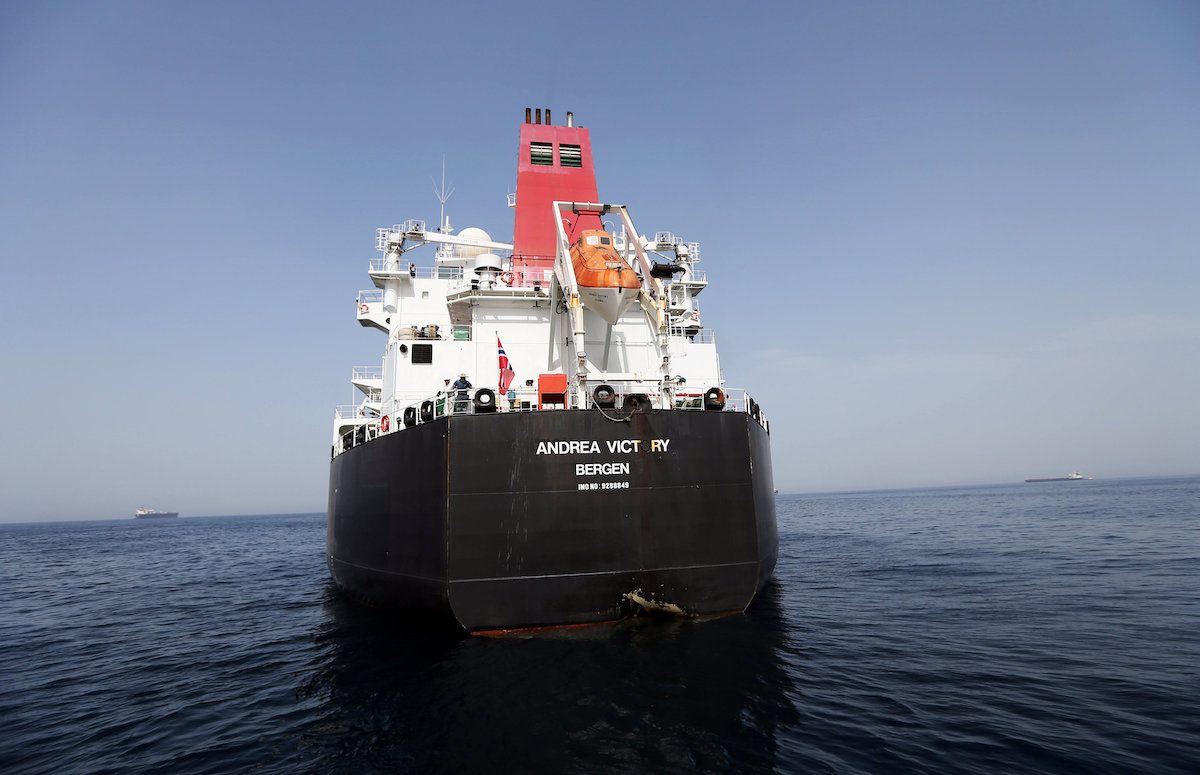
The Strait of Hormuz remains the ultimate lever of global economic pressure. Approximately 20% of the world's liquid petroleum passes through this 21-mile-wide passage. Combat operations in this theater are binary: either the lane is open, or it is contested. A contested lane triggers an immediate spike in global insurance premiums for tankers, effectively taxing the global economy to fund the containment of a single regional power.
The Kinetic Cost Function and Resource Allocation
Strategic objectives are often compromised by the exhaustion of the "will to pay." In this context, "pay" refers to both fiscal expenditure and political capital. The current operation must be analyzed through a cost function where:
$$C_{total} = C_{kinetic} + C_{diplomatic} + C_{opportunity}$$
- $C_{kinetic}$: The direct cost of munitions, fuel, personnel, and hardware attrition.
- $C_{diplomatic}$: The erosion of alliances or the hardening of adversarial coalitions (e.g., the acceleration of the Russia-Iran-China security bloc).
- $C_{opportunity}$: The resources diverted from other theaters, such as the Indo-Pacific or Eastern Europe.
The assertion that operations continue "until objectives are achieved" assumes that $C_{total}$ remains below the threshold of domestic tolerance. However, history suggests that as $C_{kinetic}$ remains constant, $C_{opportunity}$ rises exponentially as other global rivals exploit the distraction.
Identifying the Terminal State: What Constitutes an Objective?
A primary failure in long-term military engagements is "Objective Drift." For the current administration’s policy to be considered analytically sound, the objectives must be translated from slogans into verifiable benchmarks.
Zero-Export Pressure
If the objective is the total cessation of Iranian oil exports, the metric is the effectiveness of the "Shadow Fleet" interdiction. Iran has become adept at ship-to-ship transfers and using non-traditional financial clearinghouses. Combat operations that do not integrate with a sophisticated financial blockade are merely pruning the leaves of a tree with deep roots.
Denuclearization vs. Containment
There is a fundamental logical divide between preventing a nuclear breakout and forcing a regime change. The former can be achieved through periodic kinetic intervention; the latter requires a level of sustained combat that borders on full-scale war. If the administration’s objective is the latter, the current "combat operations" are mathematically insufficient to reach that terminal state.
The Missile Parity Problem
Iran possesses the largest ballistic missile arsenal in the region. The proliferation of precision-guidance kits has turned formerly "dumb" rockets into high-precision threats.
A successful combat operation must address the "Launcher-to-Interceptor" ratio. If the defender is forced to use a $2 million interceptor against a $50,000 missile, the defender loses the war of attrition even if every missile is shot down. Achieving the objective requires neutralizing the launchers themselves, which are often mobile and hidden in rugged terrain, requiring a high density of Intelligence, Surveillance, and Reconnaissance (ISR) assets.
The Role of Asymmetric Response and Cyber Attrition
We must account for the reality that Iran will not meet conventional force with conventional force. Their response is calibrated for "Asymmetric Threshold Maneuvering." This involves:
- Cyber-Industrial Sabotage: Targeting the SCADA (Supervisory Control and Data Acquisition) systems of regional water desalination plants or power grids.
- Grey Zone Escalation: Small-boat harassment or "mystery" explosions on commercial vessels that stay just below the threshold of an act of war.
- Information Operations: Leveraging social media to influence domestic opinion in the nations conducting the combat operations, aiming to increase the internal political cost ($C_{political}$) of the mission.
The strategic consultant’s view is that combat operations are a single tool in a broader toolkit. If the kinetic tool is used in isolation, it eventually dulls. To maintain the "until objectives are achieved" stance, the administration must synchronize these strikes with a "Digital Iron Dome" and a robust secondary sanctions regime that targets the facilitators in third-party nations.
Tactical Bottlenecks and the "Sunk Cost" Trap
A significant risk in stating that operations will continue indefinitely is the Sunk Cost Fallacy. Policymakers may feel compelled to continue an underperforming strategy because of the resources already expended. To avoid this, the operation requires Dynamic Pivot Points:
- Pivot A: If the adversary achieves a 20% increase in missile accuracy despite strikes, the strategy must shift from attrition to total blockade.
- Pivot B: If the cost of maritime insurance in the Persian Gulf exceeds a specific basis point threshold, the operation must escalate to "Dominance" mode or de-escalate to "Diplomatic" mode to protect global trade.
Precision in these operations is not just about where the bombs land, but about the economic and psychological impact on the decision-makers in Tehran. If the strikes hit IRGC-linked businesses, the internal pressure on the leadership increases. If the strikes hit civilian infrastructure, it often has the counterproductive effect of nationalistic unification.
The Shift Toward Autonomous Warfare
A critical technical evolution in these ongoing operations is the deployment of autonomous and semi-autonomous systems. We are seeing a transition away from carrier-based manned flight toward "attritable" drone swarms. This shifts the $C_{kinetic}$ variable in favor of the coalition. By using lower-cost, high-volume autonomous systems, the coalition can match the adversary's quantity-over-quality approach.
The integration of AI-driven target acquisition allows for a shorter "Kill Chain." In high-intensity combat operations, the time from detection to destruction is the most critical metric. Reducing this from minutes to seconds prevents the relocation of mobile assets and minimizes the window for the adversary to utilize human shields or other obfuscation tactics.
Strategic Forecast: The Path to Resolution
The current posture suggests a multi-year engagement characterized by "Pulsed Escalation." This involves periods of high-intensity strikes followed by tactical pauses to assess damage and offer off-ramps. However, the equilibrium is fragile.
The ultimate success of the "continue until achieved" mandate depends on the coalition's ability to maintain a Technological Overmatch that prevents the adversary from achieving a "cheap win"—a single successful strike on a high-value asset like an aircraft carrier or a major regional refinery.
The strategic play is to move beyond "punitive" strikes and toward "functional" strikes. Punitive strikes aim to change behavior through pain; functional strikes aim to remove the capability to act regardless of behavior. The administration appears to be moving toward the latter, which implies a significantly higher tempo of operations and a broader target list than previously seen.
To conclude this engagement successfully, the focus must shift from "ending the conflict" to "managing the decay" of the adversary's military-industrial complex. This requires a relentless focus on the supply chain, the financial arteries, and the technological bottlenecks that allow a mid-tier power to challenge a global superpower. The objectives will only be "achieved" when the cost of Iranian defiance exceeds the regime's survival threshold, a point that is reached through the methodical application of pressure across all domains—kinetic, economic, and digital.