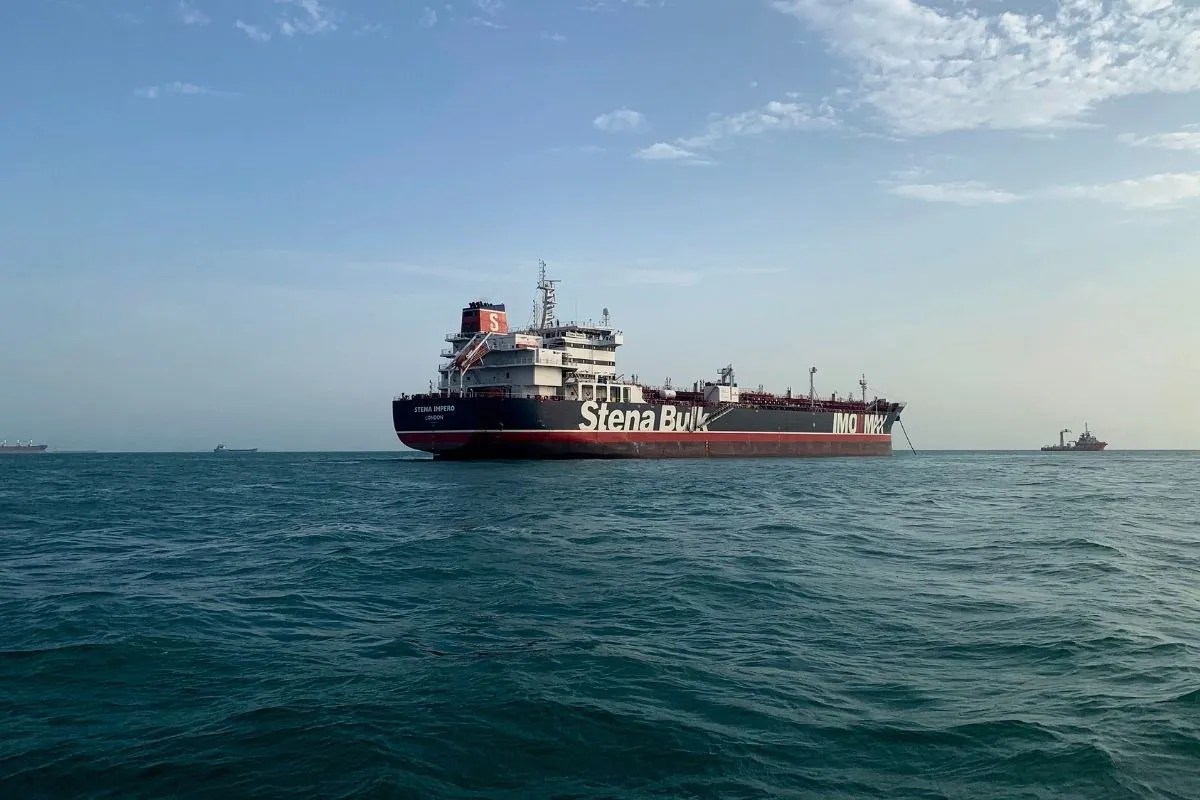
Comparing the Strait of Hormuz to the Suez or Panama canals isn't just an apples-to-oranges mistake. It’s a fundamental misunderstanding of international law, geography, and the mechanics of global power. Most analysts look at a map, see a narrow "choke point," and assume the rules of the road should be identical. They aren't.
If you think Iran or Oman could simply "set a booth" and charge for passage like Egypt does, you are ignoring the bedrock of maritime stability. You are also falling for a lazy narrative that treats natural waterways and man-made shortcuts as the same asset. They are polar opposites. If you found value in this article, you should read: this related article.
The Sovereign Shortcut vs. The Natural Right
The Suez and Panama canals are artificial. That distinction is everything. Before 1869, there was no water connecting the Mediterranean to the Red Sea. Egypt dug a hole in its own dirt. Panama sliced through an isthmus. Because these are man-made infrastructures, the owners have the right to charge for their "service." You aren't paying for the water; you are paying for the convenience of not sailing around the Cape of Good Hope or Cape Horn.
The Strait of Hormuz is a natural waterway. Under the United Nations Convention on the Law of the Sea (UNCLOS), it is governed by the regime of Transit Passage. This isn't a "gift" from the coastal states. It is a recognition that international straits are the arteries of the planet. For another look on this development, see the recent coverage from BBC News.
In a canal, the host nation provides pilots, maintenance, and dredging. In the Strait of Hormuz, the "service" is simply not shooting at ships. You cannot legally charge a fee for "not interfering." That isn't a business model; it's a protection racket.
The Territorial Sea Trap
People often ask: "If the shipping lanes fall within the territorial waters of Iran and Oman, why can't they tax the cargo?"
Here is where the "lazy consensus" fails. Territorial waters usually extend 12 nautical miles. The Strait of Hormuz is roughly 21 to 60 miles wide. Yes, the shipping lanes technically dip into Omani and Iranian waters. However, international law creates a specific carve-out for straits used for international navigation.
Transit Passage is much stronger than "Innocent Passage." In a standard territorial sea, a coastal state can suspend "innocent passage" if it deems its security is at risk. In an international strait, transit passage cannot be suspended. Period. Submarines can stay submerged. Aircraft can fly over. Ships can move in their "normal mode" of transit.
Attempting to monetize this would be a declaration of war against the global economy. The moment a fee is levied, the legal status of the strait changes from an international highway to a private driveway. The world's navies—led by the U.S. Fifth Fleet—exist specifically to ensure that transition never happens.
The Cost of Maintenance Fallacy
A common argument from proponents of a "Hormuz Fee" is that coastal states bear the burden of environmental protection and search and rescue. They argue it’s only fair that the tankers pay for the "upkeep" of the Persian Gulf.
I’ve seen maritime lawyers try to build cases around this for years. It never holds water. The "upkeep" of a natural strait is negligible compared to the billions required to maintain the locks of the Panama Canal or the constant dredging of the Suez.
Furthermore, any fee would have to be "non-discriminatory." If Iran tried to charge U.S.-bound tankers but let Chinese-bound tankers pass for free, the entire framework of the 1958 Convention on the Territorial Sea and the 1982 UNCLOS (which Iran has signed but not ratified, though they generally respect the transit passage customs) would collapse.
Why the Market Would Kill a Hormuz Toll
Let’s run a thought experiment. Imagine Iran successfully enforces a $100,000 "transit fee" per VLCC (Very Large Crude Carrier).
On the surface, it looks like a gold mine. $20 million worth of oil passes through daily. But the second you add a toll, you incentivize the "Middle East Bypass."
- The East-West Pipeline (Petroline): Saudi Arabia already has the capacity to move 5 million barrels per day across the peninsula to the Red Sea, skipping Hormuz entirely.
- The Abu Dhabi Crude Oil Pipeline: The UAE can move 1.5 million barrels per day to Fujairah, outside the strait.
- The Iraq-Turkey Pipeline: Diversification away from the Gulf would accelerate at a pace that would leave the Strait of Hormuz a ghost town for high-value shipping.
A toll wouldn't generate revenue; it would generate obsolescence. The reason the Suez can charge upwards of $500,000 per transit is that the alternative—sailing around Africa—adds 10 days and massive fuel costs. The alternative to Hormuz is already being built in the form of pipelines and rail.
The Real Power isn't in the Fee, It's in the Threat
The "illegal" nature of a fee in Hormuz is exactly what gives it geopolitical value. If it were a legal, regulated toll-road, it would be boring. It would be a line item on a spreadsheet for ExxonMobil.
Because it is a "free" strait that can only be closed by force, it remains the ultimate "kill switch" for the global economy. The tension is the point. Iran doesn't want your $100,000 toll; they want the ability to threaten a $100 spike in the price of Brent Crude. That leverage is worth more than any transit fee could ever generate.
Stop Asking if it's Fair
The question "Why is it illegal in Hormuz if it's legal in Suez?" is the wrong question. Fairness has nothing to do with the sea. The sea is governed by the ability to project power and the necessity of keeping trade moving.
Canals are services. Straits are geography. You can sell a service. You cannot sell geography without being prepared to fight the entire world to keep the shop open.
The status quo isn't a mistake. It's a calculated global agreement that says no one gets to own the throat of the world.
If you want to charge a fee, dig your own hole. Until then, the water belongs to everyone, and the first person to try and put a price tag on it will find out exactly why the world’s most expensive navies spend their time doing circles in the sand.