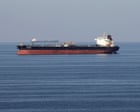
The global energy market just hit a wall that no amount of shale oil or strategic reserves can bypass. For the last four days, the Strait of Hormuz, a 21-mile-wide artery carrying 20% of the world’s oil and 25% of its liquefied natural gas (LNG), has effectively ceased to function as a commercial waterway. This isn't a formal naval blockade in the 20th-century sense. It is something far more modern and harder to break: a total collapse of the insurance and safety infrastructure that allows a $100 million tanker to move through a high-risk zone.
When the Islamic Revolutionary Guard Corps (IRGC) announced on March 2, 2026, that they would set any ship attempting the transit "ablaze," the market didn't wait for a confirmed sinking. It simply stopped. Within hours, Lloyd’s List Intelligence reported an 80% drop in seaborne traffic. By March 3, that number effectively hit zero. The world is now watching a real-time experiment in what happens when the most critical chokepoint on the planet is deleted from the global supply chain.
The Insurance Guillotine
We often talk about military power in terms of carrier strike groups and missile batteries. However, the most effective weapon deployed this week wasn't a drone; it was the withdrawal of "war-risk" coverage. On Monday, major maritime insurers began canceling policies for any vessel entering the Persian Gulf.
A tanker captain doesn't just "brave" the waters. Without insurance, a vessel is a floating liability that no port will accept and no commodity house will finance. The IRGC’s rhetoric, backed by the reality of four tankers already struck by projectiles since the weekend, has turned the Strait into a "no-go" zone by economic decree. Even if the U.S. Fifth Fleet clears every mine and sinks every Iranian fast-attack craft, the ships won't move until the actuaries in London and Zurich say they can.
The Anatomy of a Halt
The crisis began following the massive escalation between the U.S., Israel, and Iran on February 28. While initial reports focused on the "hard" military strikes, the investigative reality is more nuanced. Iran, knowing its traditional navy is outmatched by U.S. Centcom’s recent surge, has pivoted to a strategy of "asymmetric denial."
- GPS Spoofing and Electronic Warfare: Ships in the area have reported massive failures in satellite navigation. Some tankers showed up on tracking software as being miles inland, making night-time navigation through the narrow two-mile shipping lanes a suicidal prospect.
- Drone Saturation: Instead of using large, detectable warships, Iran is utilizing the Shahid Bagheri, a converted container ship acting as a mobile drone carrier. It can launch swarms of low-cost loitering munitions that are difficult for standard Aegis systems to prioritize when they are launched in dozens.
- Port Paralysis: The disruption isn't just in the water. In Iraq, the Rumaila oil field—one of the world's largest—has begun shutting down operations. Why? Because there is no more storage space. If the tankers can’t leave the Gulf, the oil has nowhere to go but back into the ground.
The Asian Vulnerability
The West often views the Strait of Hormuz through the lens of domestic gas prices, but the real victim of this closure is the East. Data from Kpler shows that 84% of the crude passing through the Strait is destined for Asian markets. China, India, Japan, and South Korea are the primary lifelines for this oil.
While the U.S. imports only about 12.5% of its oil via the Strait, China sits at a staggering 45.7%. Beijing has spent years building a strategic reserve of nearly one billion barrels, but that is a finite cushion. If this "effective closure" lasts more than a month, the industrial heart of Asia will begin to seize. We are already seeing the first signs of this: naphtha flows to East Asian crackers—essential for the global plastics and electronics industries—have plummeted.
The LNG Shockwave
While oil gets the headlines, the natural gas story is arguably more dire. Qatar, the world’s LNG powerhouse, is essentially trapped. European natural gas futures jumped 30% almost instantly because, unlike oil, LNG cannot be easily rerouted through pipelines or trucked across deserts. It requires specialized terminals and a clear path for massive, pressurized tankers.
Europe, which has spent the last two years trying to decouple from Russian gas, now finds its primary alternative blocked. The storage levels in Europe started 2026 lower than in previous years, sitting at roughly 46 billion cubic meters compared to 77 billion in 2024. The timing couldn't be worse.
Bypassing the Impossible
There is a common myth that Saudi Arabia and the UAE can simply "turn on" pipelines to the Red Sea or the Gulf of Oman to bypass the Strait. The math doesn't hold up.
The UAE’s Habshan-Fujairah pipeline can handle about 1.5 million barrels per day, but that’s a fraction of the 20 million barrels that normally transit the Strait. Saudi Arabia’s East-West Pipeline has a higher capacity, but it is already heavily utilized. Even in a best-case scenario where every bypass is pushed to its mechanical limit, at least 15 million barrels per day remain "stranded" inside the Persian Gulf.
The Invisible Threat of Debris
One overlooked factor in this crisis is the physical state of the shipping lanes. It isn't just about active missiles. The debris from intercepted drones and missiles, combined with the "unreliable data" from disrupted AIS (Automatic Identification System) signals, has turned the Strait into a graveyard of hazards.
A single "inadvertent" strike on a tanker carrying two million barrels of crude would create an environmental and logistical catastrophe that would shut the Strait for months, regardless of the military situation. This is the "dirty blockade"—making the water so hazardous and the legal risk so high that the Strait closes itself.
The Price of Silence
Brent crude is currently hovering around $83, but that reflects a market in a state of shock, not a market that has fully priced in a total, multi-week closure. If the insurance blackout remains in place through the end of the week, analysts from Goldman Sachs and Barclays are openly discussing $100 or $120 per barrel.
But the price of oil is only one metric. The real cost is the breakdown of the "just-in-time" energy world. When the Strait of Hormuz stops, the clock starts ticking on every refinery in India, every chemical plant in Germany, and every gas station in the American Midwest.
The U.S. military has crippled Iran’s formal naval assets at Bandar Abbas, but they haven't yet found a way to shoot down a "warning" from an insurance company or a GPS spoofing signal coming from a hidden coastal battery. Until they do, the Strait of Hormuz is a lake, and the global economy is holding its breath.
Check the current status of the "War Risk" premium updates from Lloyd’s to see if a corridor for uninsured "state-flagged" vessels is being established.
[/article]