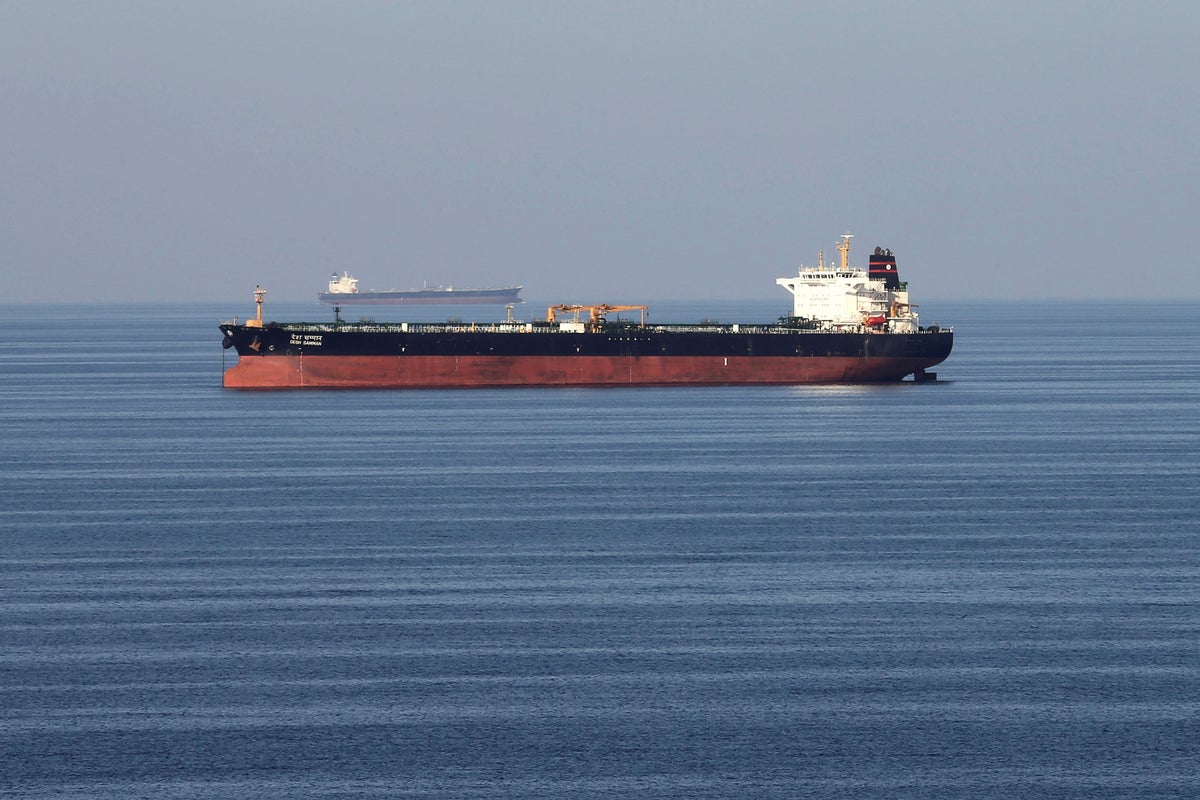
The global energy market has a single, terrifying point of failure. It's a 21-mile-wide strip of water separating Iran from the Arabian Peninsula. Right now, it's effectively a no-go zone. While the world watched the headlines about "increased tensions," the reality on the water has shifted from posturing to a genuine economic blockade.
If you think this is just another Middle Eastern spat that might raise your gas prices by a few cents, you're missing the scale of the disaster. We aren't just looking at a price spike. We're looking at a structural collapse of the energy supply chain for half the planet.
The Chokepoint That Holds Your Economy Hostage
Most people don't realize how much of their daily life depends on this narrow channel. It’s not just "some oil." About 20% of the world's liquid petroleum and roughly a fifth of global liquefied natural gas (LNG) pass through the Strait of Hormuz. For countries like India and Japan, this isn't a "geopolitical interest"—it’s their lifeblood. Japan gets over 90% of its crude from the Middle East. India relies on it for nearly half its oil and 60% of its LNG.
When Iran's Revolutionary Guard (IRGC) issues "warnings" to commercial vessels, insurers don't wait for a formal blockade. They simply pull coverage. As of early March 2026, war-risk premiums haven't just doubled; they’ve become unavailable for many carriers. This has created a "shadow blockade" where the strait is technically open, but for a tanker owner, it's a suicide mission.
Why Pipelines Aren't the Solution
I often hear analysts say we can just "bypass" the problem. That's a dangerous myth. Let's look at the math. The world moves about 20 million barrels of oil through that strait every single day.
If you max out every single alternative route—the Saudi East-West pipeline to the Red Sea and the UAE’s pipeline to Fujairah—you only move about 3.5 to 5 million barrels. That leaves 15 million barrels with nowhere to go. You can't just build a new pipeline overnight. And for LNG? There are literally zero alternative routes for Qatar’s gas. If the boats don't move through Hormuz, the lights go out in cities across Asia and Europe.
The Asymmetric Trap
Iran isn't trying to win a naval battle against the U.S. Fifth Fleet. They know they’d lose that fight in hours. Instead, they’ve built what I call an "economic booby trap." They use thousands of naval mines, drone swarms, and fast attack boats.
It’s a mosquito fleet strategy. They don't need to sink an aircraft carrier; they just need to hit one or two commercial tankers. On February 28, 2026, that’s exactly what happened. The MKD VYOM was struck by a drone boat, killing a sailor and sparking an engine room fire. That single event did more damage to the global economy than a month of diplomatic cables. It proved that the "safety" of the strait is an illusion.
The Asian Vulnerability
Asia is the first to feel the heat. China, India, Japan, and South Korea accounted for 75% of the oil flowing through this chokepoint last year.
- India: Stockpiles might last 18 days if they're lucky.
- Japan: They have more reserves, but the price of gasoline in Tokyo could hit ¥320 per liter.
- China: They’re the biggest importer, and while they have Russian pipelines, they can’t run their industrial base on those alone.
Beyond the Pump: The Fertiliser Crisis
This is the part nobody talks about. Iran is the world's third-largest producer of urea. It’s a critical supplier of ammonia. If the strait stays closed, food prices are the next to explode.
In India, the upcoming kharif season—the country's most important agricultural cycle—is at risk. Without Iranian urea and the 2 million tonnes of fertilizer that transit the strait monthly, crop yields will crater. We’re talking about a transition from an energy crisis to a global food security crisis in a matter of weeks.
What Happens When the Reserves Run Dry
Nations with Strategic Petroleum Reserves (SPR) are already eyeing the "release" button. But the SPR is a band-aid, not a cure. If the disruption lasts more than a month, the backlog of tankers, the rescheduling of cargo, and the sheer logistical nightmare of rerouting will take months to normalize even after the strait "opens."
We're currently seeing Brent crude flirt with $130 a barrel. Some Iraq officials are warning it could hit $300. That’s not hyperbole; it’s what happens when you remove 20% of the world’s energy from the market with no backup plan.
Your Next Steps
If you're managing a business or managing your household budget, stop waiting for "de-escalation."
- Hedging Energy Costs: If you're in logistics or manufacturing, lock in your fuel contracts now. The "consolidation" phase analysts talk about is a gamble you don't want to take.
- Diversify Logistics: If your supply chain touches the Middle East, look at air freight or land routes through Central Asia, even if the cost seems high today. It will be cheaper than a total halt next week.
- Monitor Fertilizer Markets: If you're in the agricultural sector, the urea shortage is real. Secure your inputs before the kharif season starts in June.
The Strait of Hormuz is no longer just a geographical feature. It’s a trigger. And right now, Iran has its finger on it.