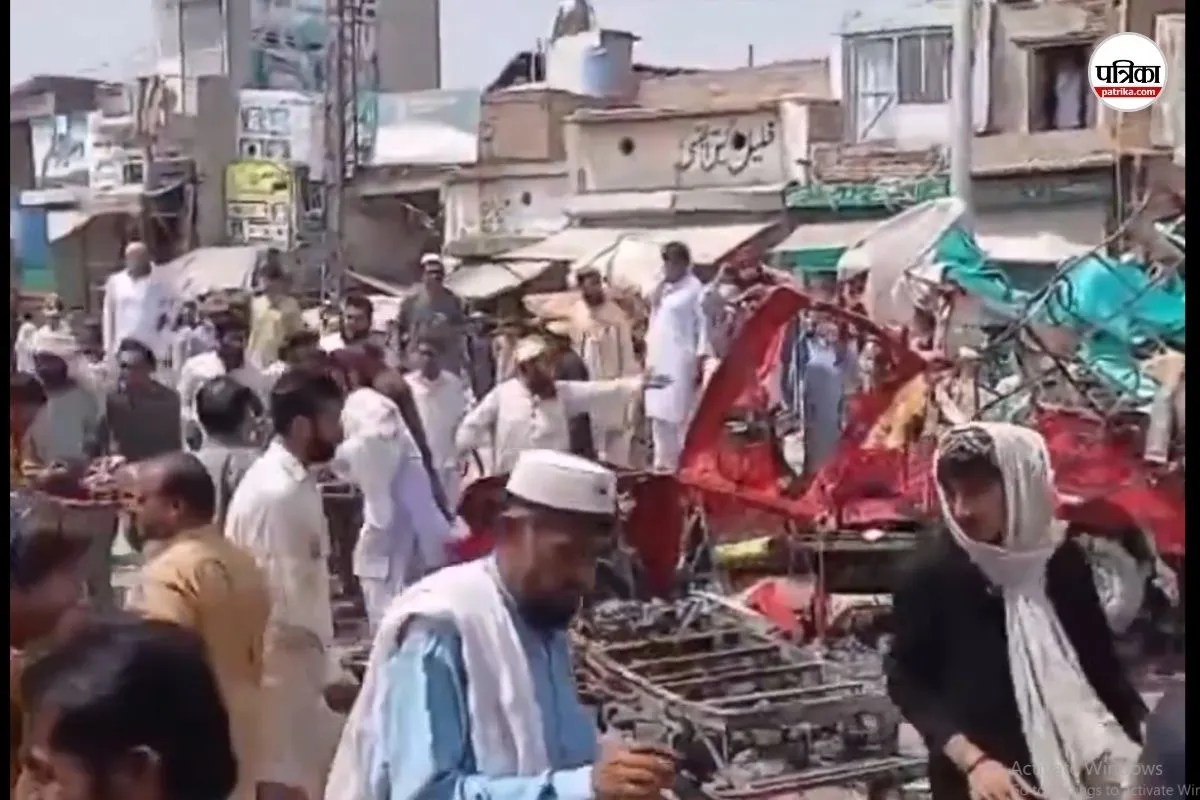
The standard media script for a blast in a Pakistani border market is so predictable it could be written by a malfunctioning bot. Nine dead in a bazaar near the Afghan frontier. Thirty-five wounded. Local police "cordon off the area." Politicians offer "strong condemnations." We treat these events as isolated tragedies or sudden spikes in a "war on terror" that supposedly has a beginning, a middle, and an end.
That narrative is a lie. It’s a comfortable, lazy blanket wrapped around a much uglier reality.
If you view the recent carnage in the markets of the tribal belt through the lens of "terrorism," you have already lost the plot. These aren't just ideological strikes; they are the brutal, kinetic manifestation of a failed administrative ghost zone that both Islamabad and Kabul find too profitable to actually fix. We are witnessing the lethal overhead costs of a black-market economy, not just a religious crusade.
The Myth of the "Border"
To the journalists sitting in Karachi or Washington, the line between Pakistan and Afghanistan is a hard border. To the people on the ground, it’s an inconvenience. The "Durand Line" is a colonial phantom. When a bomb goes off in a market near that line, the media frames it as an external threat "crossing over."
That is a fundamental misunderstanding of the geography. The border doesn't divide two different worlds; it runs straight through the middle of a single, integrated ecosystem. The markets being targeted aren't just places to buy vegetables; they are the clearinghouses for a multi-billion dollar smuggling industry that moves everything from Japanese electronics to high-grade narcotics.
When a "terrorist" group claims responsibility, they aren't just seeking virality. They are often acting as the enforcement arm for specific trade interests. You don't need a degree in geopolitics to see that violence in these specific corridors fluctuates with the price of transit. I’ve watched analysts spend months dissecting the ideological shifts of splinter groups while ignoring the fact that the blast happened exactly when a new tax was imposed on "informal" trade.
Terrorism as a Commodity
The "Nine Dead" headline focuses on the casualty count because that’s what drives clicks. It ignores the market mechanics. In the tribal districts, violence is a currency.
Groups like the TTP (Tehrik-i-Taliban Pakistan) or various IS-K offshoots use these blasts to signal their "market share" to potential donors and local power brokers. If you can shut down a bazaar in a high-security zone, you’ve proven that the state’s protection racket is broken. You’ve just lowered the "security value" of the government and raised your own "protection fee" price.
The "lazy consensus" says these attacks are meant to destabilize the government. Wrong. They are meant to negotiate with it. Every blast is a bloody bullet point in a long-standing negotiation over who controls the trade routes. If the state can't provide security in the bazaar, the merchants will pay whoever can.
The Sovereignty Scams
Islamabad loves to blame "foreign hands." Kabul loves to blame "failed Pakistani policies." Both sides are right, which means both sides are lying.
The Pakistani state has spent decades treating the border regions as a buffer zone—a place where the law of the land is intentionally murky. This creates a "gray zone" that is perfect for strategic depth but disastrous for human life. You cannot maintain a lawless perimeter for thirty years and then act surprised when the lawlessness bites back.
The recent push to fence the border and regulate the markets is being met with explosive resistance because it threatens the livelihoods of hundreds of thousands who exist entirely outside the formal economy. When we call it "terrorism," we strip away the economic desperation and the local power struggles that actually fuel the fuse. We make it about "extremism," which is a neat, unsolvable problem that justifies more military spending.
Stop Asking "Why" and Start Asking "Who Profits"
The "People Also Ask" sections on these news stories always focus on the wrong things:
- "Which group is responsible?" (Irrelevant; the name changes, the funding source stays the same).
- "Is the border safe?" (It never was).
- "How can the government stop this?" (They can't without destroying the very shadow economies that keep the region afloat).
The real question is: Who benefits from a perpetual state of low-level conflict in the border markets?
- The Shadow Shippers: For whom a closed, official border means a massive markup on smuggled goods.
- The Militant Franchises: Who use the "insecurity" to recruit young men who have no other job prospects in a bombed-out market.
- The Hardliners: On both sides of the Durand Line who use the bodies of bazaar shoppers as political leverage to demand more autonomy or more centralized control.
The Actionable Truth
If you want to understand why 35 people were just injured in a market blast, stop reading the "terrorism" experts. Look at the shipping manifests. Look at the "tax" collectors at the checkpoints.
The status quo is a meat grinder fueled by a refusal to formalize the border economy. We call it a "security crisis" because it sounds more noble than calling it a "failed trade policy."
Military operations can clear a valley, but they can't fix a broken market. Until the residents of these border towns have a stake in a legitimate, functioning economy that doesn't rely on the whims of armed groups or corrupt officials, the bazaars will keep burning.
Stop mourning the "randomness" of the violence. There is nothing random about a bomb placed in the center of a trade hub. It is a precise, calculated move in a game that most people don't even realize is being played.
The death of nine people is a tragedy. The way we report it is a farce.
Turn off the news. Follow the money.