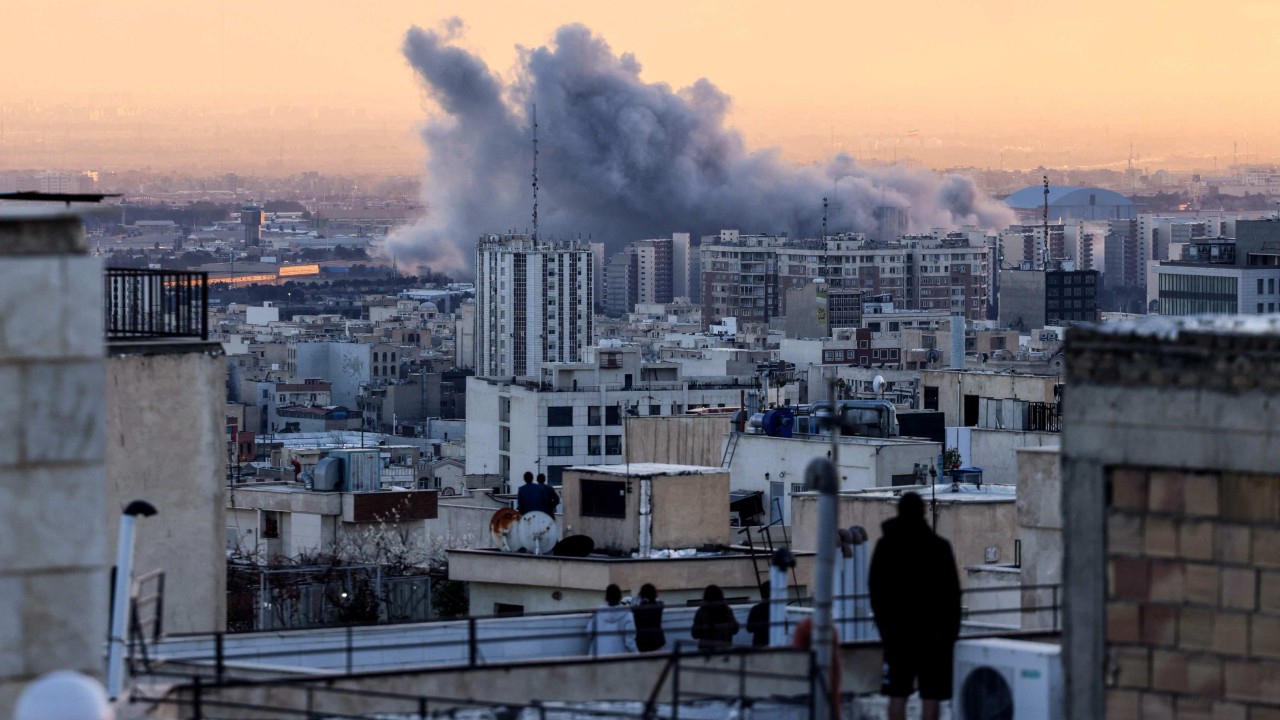
The shadow of Operation Epic Fury—the joint U.S.-Israeli strikes launched on February 28, 2026—has reached far beyond the smoking ruins of Iranian ballistic missile sites and the IRGC command centers in Tehran. As President Trump’s administration pushes for a month-long campaign to ensure "regime change," the friction is no longer just between Washington and the Middle East. It is internal. The sprawling network of American military bases across Europe, long viewed as the stable bedrock of NATO’s power, is currently a site of unprecedented political and legal gridlock.
At the heart of the crisis is a simple, uncomfortable reality: these bases sit on sovereign European soil. While the Pentagon may own the hangars and the hardware, the host nations own the land and, crucially, the legal authority to say no. As the U.S. shifts from a defensive posture to an active, unilateral air campaign against Iran, the "technical details" of Basing Rights Agreements have transformed into existential political liabilities for European leaders.
The Myth of Extra-Territoriality
For decades, the presence of 50,000 U.S. troops in Germany or the massive naval assets at Rota, Spain, felt like a permanent fixture of the landscape. There was a quiet assumption that in a time of crisis, the "Global Gateway" would open wide. That assumption died this week.
When Spanish Prime Minister Pedro Sánchez banned the use of Morón and Rota for any offensive actions against Iran, he didn’t just issue a press release; he effectively severed a critical artery of the U.S. logistics chain. Within 48 hours, at least eleven U.S. aircraft, including heavy refuelers essential for reaching Persian Gulf targets from the Atlantic, were forced to relocate to Germany.
The legal mechanism Sánchez invoked is the Status of Forces Agreement (SOFA). While these documents vary by country, they generally stipulate that U.S. military activities must align with the "agreed purposes" of the base. In Spain’s view, a unilateral strike without a UN mandate falls outside the scope of "regional defense."
This creates a fragmented operational map. The U.S. military is currently operating in a patchwork environment where a C-17 Globemaster can land for fuel in Ramstein, Germany, but might be denied the same privilege in a neighboring state. It turns strategic depth into a logistical nightmare of "avoidance routing."
The British U-Turn and the Cyprus Proxy
London’s initial resistance followed by a sudden reversal illustrates the immense pressure Washington is applying. Prime Minister Keir Starmer originally refused permission for the U.S. to use RAF Fairford—the primary European home for B-52 bombers—citing international law concerns.
The turning point wasn't a diplomatic cable; it was a Shahed-type drone slamming into a U.K. air base on the southern coast of Cyprus.
By targeting British assets in Cyprus, Tehran unintentionally simplified the political math for Starmer. The moment British soil was hit, the narrative shifted from "supporting a unilateral U.S. war" to "defending the realm." On Monday, the U.K. granted the U.S. full access to Fairford and the Indian Ocean hub of Diego Garcia.
However, this "win" for the Pentagon has sparked a domestic firestorm. Opposition parties are now demanding a parliamentary vote, arguing that a prime minister cannot sign away the country’s neutrality in a Middle Eastern conflict without legislative consent. The "Sovereign Base Areas" in Cyprus, once considered an imperial relic, are now the front line of a war the Cypriot government in Nicosia never asked for and cannot control.
Logistics Under Fire
The sheer volume of hardware moving through Europe is staggering. Since mid-February, flight trackers have monitored a continuous "tanker bridge" of KC-135s moving through the U.K. toward Bulgaria and Greece.
The strategy is clear. If Turkey or the Gulf states restrict their airspace, the U.S. must rely on Southern European hubs to launch long-range sorties. But this reliance introduces a dangerous "single-point-of-failure" risk.
The Refueling Chokepoint
- Fuel Consumption: A sustained air campaign against hardened targets like Natanz or Fordow requires thousands of tons of JP-8 jet fuel daily.
- Storage Capacity: Bases like Aviano in Italy or Incirlik in Turkey (which remains a wild card) have finite reserves. If Spain and other "dissenting" nations block the transit of fuel tankers, the "bridge" collapses.
- Retaliatory Reach: Iran’s drone and missile technology, battle-tested in Ukraine, has proven it can reach the Mediterranean. A base that becomes an active launchpad for strikes on Tehran becomes a legitimate target for Iranian "counter-value" strikes.
The German High-Wire Act
Germany remains the most critical node. Chancellor Friedrich Merz is currently performing a desperate balancing act. On one hand, he has offered "political backing" for the strikes, recognizing the threat of a nuclear-armed Iran. On the other, the German electorate is terrified of a Flächenbrand—a regional wildfire that could trigger a massive new wave of refugees and send energy prices into the stratosphere.
The irony is that while the U.S. uses German bases to project power into the Middle East, Germany is using the crisis to push for "security independence." The recent French-German accord on nuclear deterrence, involving joint exercises and strategic inspections, is a direct response to the "erratic" nature of the current U.S. administration.
Europe is essentially hedging its bets. It is allowing the U.S. to use its bases today because it lacks the capacity to defend itself tomorrow, even as it realizes that being a "spectator" to U.S. military decisions is becoming a terminal risk to its own sovereignty.
A Network Under Strain
The war in Iran has exposed a fundamental flaw in the 20th-century basing model. These installations were designed for a world where the U.S. and Europe were in total lockstep. In 2026, that lockstep has been replaced by a transactional, often hostile, relationship.
When a White House spokesperson claims a country has "agreed to cooperate" only to be met with a flat denial from that country's Foreign Minister—as happened between Washington and Madrid this Wednesday—the illusion of a unified Western military front evaporates.
The U.S. military network in Europe is not a "seamless" extension of American power. It is a series of bilateral contracts currently being renegotiated in real-time under the pressure of incoming fire and political collapse. If the campaign against Iran drags into its second month, the Pentagon may find that its most difficult battles are not being fought over the Persian Gulf, but in the courtrooms and parliaments of its oldest allies.
The "Global Gateway" is no longer an open door. It is a turnstile, and the price of entry has just become prohibitively high.