The most dangerous sound in a geopolitical crisis isn't the roar of a jet engine or the static of a televised address. It is the rhythmic, metallic click-clack of a zipper pulling shut on a half-packed suitcase.
In luxury apartments in Dubai and cramped flats in Erbil, that sound is currently echoing. Thousands of American citizens are looking at their passports, then at their bookshelves, then back at the door. They are measuring the distance between "precaution" and "panic." When the President of the United States suggests that a conflict with Iran could last "weeks," he isn't just offering a military timeline. He is setting a countdown for the people whose lives are lived in the shadow of the Strait of Hormuz.
War is often discussed in the abstract language of chess—movements of carrier strike groups, surgical strikes, and proportional responses. But for a teacher in Kuwait or an engineer in Riyadh, war is a logistical nightmare of canceled flights and the frantic search for an operational ATM.
The Illusion of the Short War
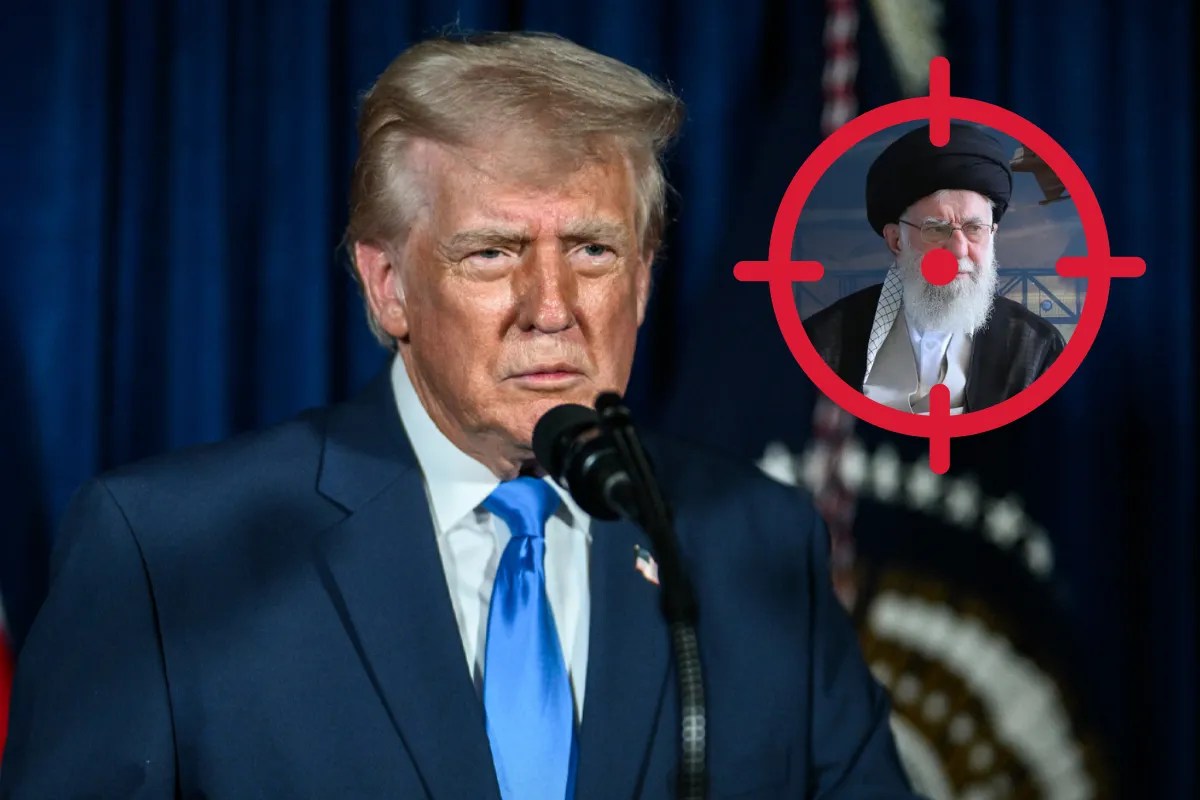
There is a specific kind of hubris that attaches itself to the phrase "it won't last long." We have heard it before. In 1914, they said the boys would be home by Christmas. In more recent decades, we were told conflicts would be "cakewalks" or "slam dunks." When Donald Trump remarks that a potential war with Iran would not involve "boots on the ground" and would conclude with blinding speed, he is leaning on a modern American myth: the clean war.
The reality of the geography tells a different story.
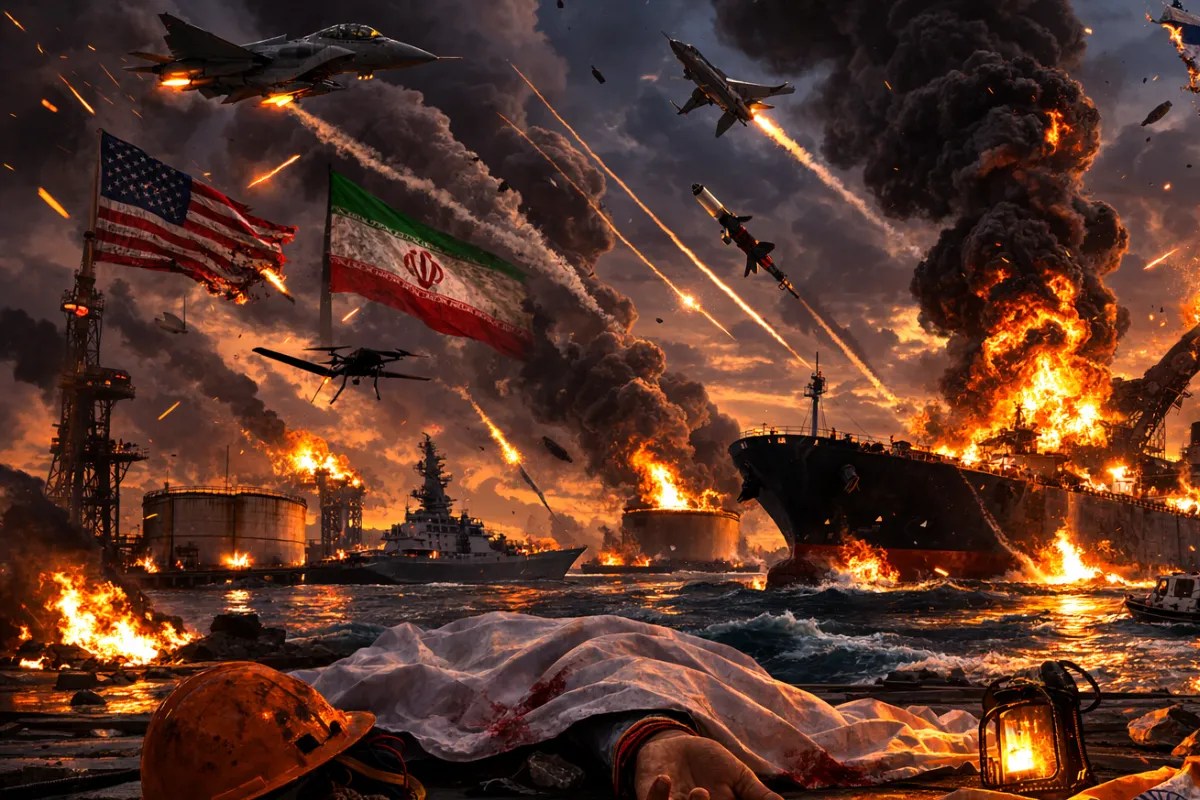
Iran is not a desert flatland easily traversed by tanks. It is a fortress of mountain ranges and jagged coastlines. To suggest a conflict could be settled in a matter of weeks is to ignore the gravity of the terrain and the depth of the regional ties. A "short" war in the Middle East is an oxymoron. Even if the kinetic phase—the dropping of bombs and the firing of missiles—is brief, the atmospheric pressure of such an event lingers for generations.
Consider a hypothetical expat named Sarah. She’s a nurse from Ohio working in Abu Dhabi. She isn't a strategist. She doesn't have a security clearance. Her "intelligence briefing" comes from a State Department email urging her to "exercise increased caution" and "consider departing."
For Sarah, the "weeks" mentioned in the headlines aren't a military victory window. They are a period of purgatory. If she leaves, she abandons her job and her home. If she stays, she bets her life on the accuracy of a politician’s prediction. This is the invisible tax of brinkmanship. It is paid in the currency of human anxiety.
The Architecture of an Exit
The U.S. government’s urge for citizens to leave the Middle East is a bureaucratic lever. It is designed to clear the board, to minimize the "complications" of civilian casualties before the pieces start moving. But you cannot simply "leave" a life you have built.
When a travel advisory moves from yellow to red, the world changes instantly. Insurance premiums for commercial flights spike. Companies begin "re-evaluating" their presence. The local grocery store feels different because the people stocking the shelves are watching the same news you are. They are wondering if your departure is a signal that their home is about to become a battlefield.
The logistics of an evacuation are a brutal lesson in physics. You can only carry what fits in two bags. What do you choose? The photo albums? The hard drive? The jacket you bought in a bazaar three years ago that still smells like cardamom?
The "weeks" the President describes are, in Sarah’s world, the time it takes for a supply chain to snap. The Middle East is a miracle of modern logistics; it is a region that thrives on the constant flow of goods and people. War is the ultimate clog in that system. A conflict that lasts "weeks" can still cause a decade of economic scarring.
The Ghost of 1979
To understand why the rhetoric of a "short war" feels so heavy, one must look at the scar tissue of history. The relationship between Washington and Tehran is not a fresh wound; it is a chronic condition. Every time a drone is downed or a tanker is seized, the ghosts of the 1979 embassy siege and the 1953 coup begin to stir.
The Iranian leadership knows that their greatest asset is not their aging air force, but their ability to endure. They play a long game. While the West speaks in the cadence of four-year election cycles and 24-hour news loops, the power brokers in Tehran think in terms of decades and centuries.
A "surgical strike" sounds precise. It sounds like a medical procedure. But in the crowded corridors of the Middle East, there is no such thing as a clean incision. Every action has a ripple effect. A strike on a coastal battery in Iran vibrates through the oil markets in London, the shipping lanes in Singapore, and the nervous systems of every American family sitting in a departure lounge in Dubai.
The Uncertainty Principle
The most frustrating part of these escalations is the lack of a clear "if/then" structure. We are told that war is a last resort, yet the language used to describe it makes it feel like a foregone conclusion.
The State Department’s warnings are often criticized for being overly cautious, but they are rooted in a hard truth: the U.S. government cannot protect you once the sky turns gray with smoke. The "urging to leave" is an admission of limits. It is the sound of a superpower saying, We are about to do something, and we cannot guarantee your safety while we do it.
This creates a peculiar kind of isolation. You are a citizen of the most powerful nation on earth, yet you are being told that your only real defense is a plane ticket.
The tension doesn't just exist between nations; it exists between the individual and the state. The state views the timeline in weeks. The individual views it in heartbeats.
Beyond the Headlines
If we strip away the partisan shouting and the tactical jargon, we are left with a fundamental question: What is the cost of a threat?
Even if no shots are fired. Even if the "weeks" pass and the bombers stay on the tarmac. The cost is already being paid. It is paid by the students whose exchange programs are canceled. It is paid by the small business owners who see their investments evaporate as the region is branded a "war zone." It is paid by the families who are separated by oceans because one member decided to heed the warning and the other decided to stay.
The President’s words have a weight that exceeds their literal meaning. When he says a war would be short, he is trying to project strength and minimize the domestic political risk of an intervention. But to the ears of someone on the ground, that same sentence sounds like a dismissal of the chaos that follows even the "shortest" of wars.
The "weeks" are a fantasy. There is no such thing as a war that ends when the shooting stops. The debris of conflict—political, emotional, and physical—remains long after the suitcases are unpacked.
As the sun sets over the Persian Gulf tonight, the lights in the hotels and high-rises are still on. But if you look closely at the airports, you will see them. The people who didn't wait for the "weeks" to begin. They are the ones standing at the gate, clutching their blue passports, looking back at a horizon that feels increasingly fragile.
They are leaving not because they hate the place they called home, but because they have learned that when the giants start whispering about "short wars," it is the small who end up bearing the longest burdens. The zipper on the suitcase closes. The taxi pulls away. The narrative continues, but for those on the move, the story has already changed forever.