The Mediterranean sun has a way of bleaching the urgency out of global crises. In Madrid, the midday heat slows the pulse of the city, turning the frantic pace of international diplomacy into a rhythmic, almost drowsy hum. But inside the Palacio de la Moncloa, the air is thinner. It is cooler. It is heavy with the weight of words that must be chosen with the precision of a surgeon’s scalpel.
When a superpower calls, the phone doesn't just ring. It vibrates through the bedrock of national identity.
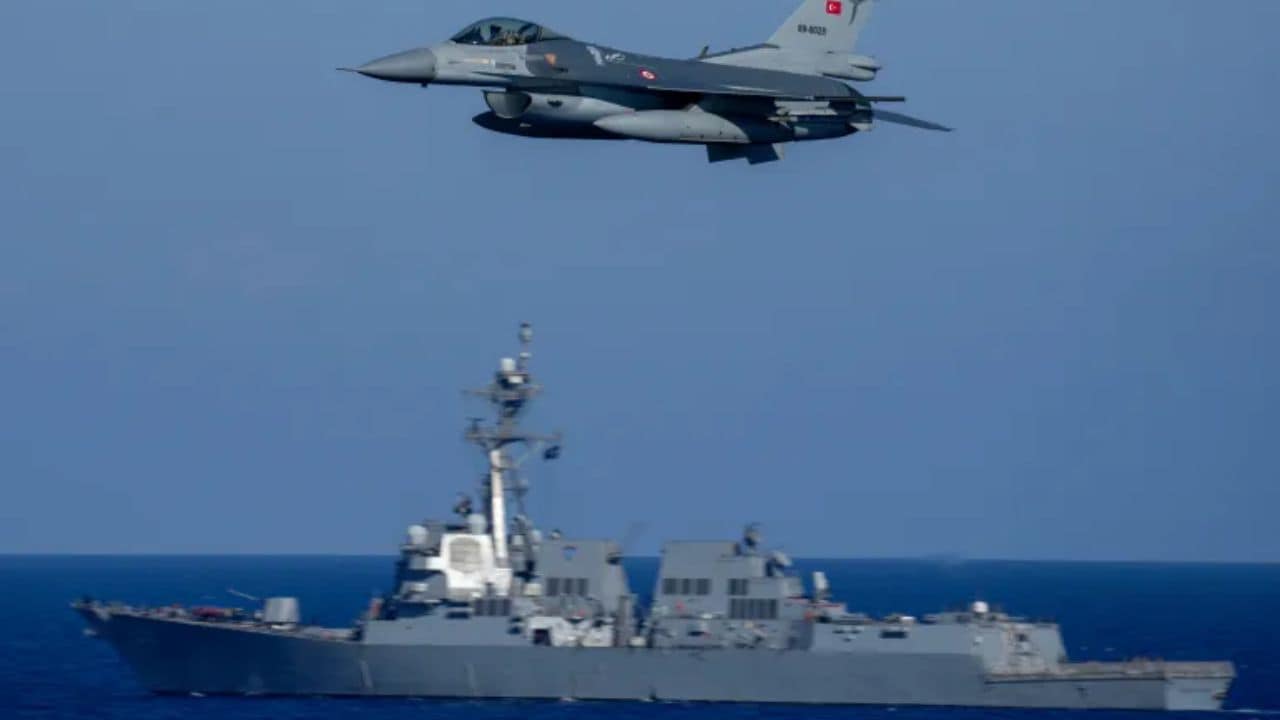
Recently, that vibration became a tremor. Reports began to circulate, whispering through the corridors of Washington and echoing in the press rooms of Europe, suggesting that Spain was quietly folding itself into a U.S.-led coalition. The mission? To strike back against Houthi rebels in Yemen, the group currently strangling the world’s most vital maritime arteries in the Red Sea.
The story was simple, clean, and entirely explosive. It suggested a secret pact, a handshake in the dark, and a departure from Spain’s long-standing preference for European-led diplomacy over American-led intervention.
Then came the denial.
The Weight of a 'No'
To understand why a simple denial matters, you have to look at the map through the eyes of a Spanish merchant sailor or a logistics manager in Valencia.
Imagine a cargo ship. It is a rusted, massive beast carrying thousands of tons of grain, or perhaps the microchips that will power the phone in your pocket next year. For decades, the path through the Suez Canal was a given. It was a line on a map that meant stability. Now, that line is a gauntlet. Missiles launched from the Yemeni coast—often basic in construction but devastating in impact—have turned a commercial transit zone into a shooting gallery.
When the United States launched "Operation Prosperity Guardian," the invitation to join was not just a military request. It was a litmus test for the "Special Relationship" that every NATO ally manages with a mixture of gratitude and anxiety. For Spain, saying "no" isn't about being difficult. It is about the ghost of 2003.
The Spanish memory is long. The scars of the Iraq War—a conflict entered against the overwhelming will of the Spanish public—remain sensitive to the touch. Any move that looks like Spain is trailing behind a U.S. carrier strike group without a clear UN or European mandate triggers a visceral reaction in the streets of Madrid and Barcelona.
The Invisible Stakes of the Red Sea
The facts are cold, but their consequences are sweltering.
- More than 12% of global trade passes through the Bab el-Mandeb strait.
- Rerouting ships around the Cape of Good Hope adds ten days to a journey.
- Those ten days translate to millions of euros in extra fuel, labor, and insurance.
But these aren't just numbers on a spreadsheet. They are the reasons why a family in Seville finds their grocery bill has climbed another 5% this month. They are the reasons why a car factory in Zaragoza might have to pause a production line because a specific sensor is sitting on a ship currently circling the entire African continent.
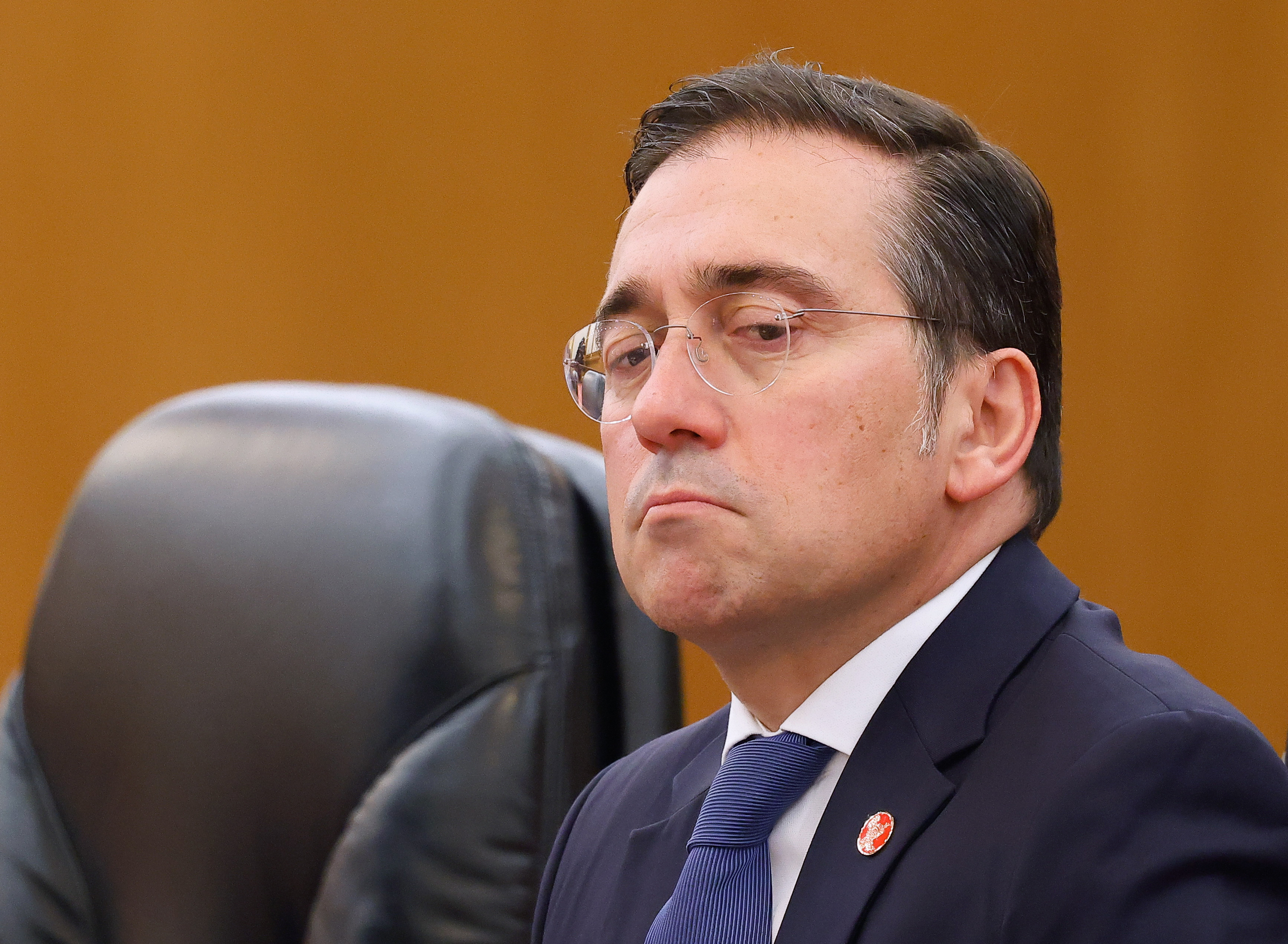
Spain’s Ministry of Defense didn't just issue a correction; they issued a boundary. They clarified that Spain has not authorized any participation in the strikes led by the U.S. and the UK. While the U.S. Central Command continues to coordinate "Operation Poseidon Archer"—the specific offensive arm targeting Houthi infrastructure—Spain remains a spectator by choice.
Consider the tension in the room when these cables arrive. You have the Ministry of Foreign Affairs balancing the need for global maritime security against a fierce domestic desire for sovereignty. Spain supports the protection of trade. They want the Red Sea to be safe. But they want it done through "Aspides," the European Union’s defensive mission.
The distinction is subtle, but it is everything. "Aspides" is a shield. The U.S. operation is a sword. Spain is choosing the shield.
The Human Cost of High-Stakes Diplomacy
Behind every official statement is a person like "Elena," a hypothetical but representative middle-ranking diplomat in the Spanish foreign office.
Elena spends her mornings reading intelligence briefs that detail the exact velocity of a Houthi drone. She spends her afternoons drafting "non-papers" that explain to her American counterparts why Spain cannot, in good conscience, join the bombing runs. She knows that if Spain joins, she has to explain to a skeptical public why Spanish personnel are involved in another Middle Eastern escalation. If Spain stays out, she has to explain to her colleagues in D.C. why one of their most capable Mediterranean allies is sitting on the sidelines while American sailors take the heat.
It is a lonely position.
The Houthis, for their part, have mastered the art of asymmetric psychological warfare. They aren't trying to sink every ship; they are trying to sink the certainty of the global market. By forcing a nation like Spain to publicly distance itself from its most powerful ally, they have already won a small, symbolic victory in the realm of international optics.
Sovereignty in the Age of Coalitions
There is a growing friction between the old world of "Coalitions of the Willing" and a new era where medium-sized powers are asserting their own strategic autonomy. Spain’s refusal to be lumped into the "cooperating" category is a signal to the rest of Europe.
It says that being a loyal ally does not mean being an automatic participant.
The U.S. perspective is equally human, if different in its pressures. An American commander in the Red Sea sees the drones coming in. They see the threats to their crews. From their vantage point, anyone not helping to take out the launch pads is, at best, a bystander and, at worst, an impediment. The frustration is real. The sense of "we are doing the heavy lifting for your economy" is a persistent undercurrent in transatlantic talks.
But diplomacy isn't about making friends; it's about managing interests. Spain’s interest lies in a stable Middle East and a unified European front. They see the U.S. strikes as a potential spark in a powder keg that could lead to a wider regional war—one that would hit Mediterranean shores far harder and faster than it would hit the Atlantic coast of America.
The Myth of the Unified Front
We often talk about "The West" as if it is a single, monolithic entity. We imagine a room where Biden, Macron, Scholz, and Sánchez sit around a table and agree on a singular course of action.
The reality is a fractured mosaic.
Italy has expressed similar hesitations. France keeps its ships under its own command, even when coordinating with the Americans. Spain’s vocal denial of cooperation is merely the most visible crack in the facade. It highlights a fundamental disagreement on how to handle the modern world’s most pressing problem: how do you stop a non-state actor from holding the global economy hostage without starting a fire you can't put out?
The technology of the conflict adds another layer of irony. We are seeing million-dollar interceptor missiles being used to blow up "suicide drones" that cost less than a used hatchback. It is an economic war of attrition where the defense is more expensive than the attack. Spain knows this math. They know that you cannot bomb your way to a low inflation rate.
The Echo in the Harbor
If you walk along the docks in Algeciras, you can see the physical manifestation of this geopolitical chess match. The cranes are still moving, but the rhythm is off. The ships arriving are tired, their hulls battered by the rougher waters of the Cape. The crews are exhausted.
These sailors don't care about the phrasing of a Ministry of Defense press release. They care about whether a silhouette on the horizon is a fishing boat or a threat.
Spain’s denial of cooperation is a message to those sailors, too. It is an assurance that their government is not rushing into a conflict that could escalate their risk. It is a promise that Spain will seek a solution that involves the entire continent, rather than tethering its fate to the specific military objectives of a single superpower.
The silence from the Moncloa on certain tactical details isn't a sign of ignorance. It is a sign of deliberate, calculated distance. In a world that demands you pick a side in every second of every day, there is a quiet power in saying: "We are here, we see the problem, but we will solve it on our own terms."
The sun continues to beat down on the Spanish coast, and the Red Sea remains a world away, yet every missed shipment and every diplomatic cable brings the two closer together. The denial stands. The ships keep turning. The world waits to see if the shield can hold where the sword has failed.
The next time you see a headline about a nation "denying cooperation," don't see it as a lack of resolve. See it as a high-stakes gamble on the value of a different kind of peace.
Would you like me to analyze how this diplomatic shift might affect Spain's influence within the upcoming EU maritime security summits?