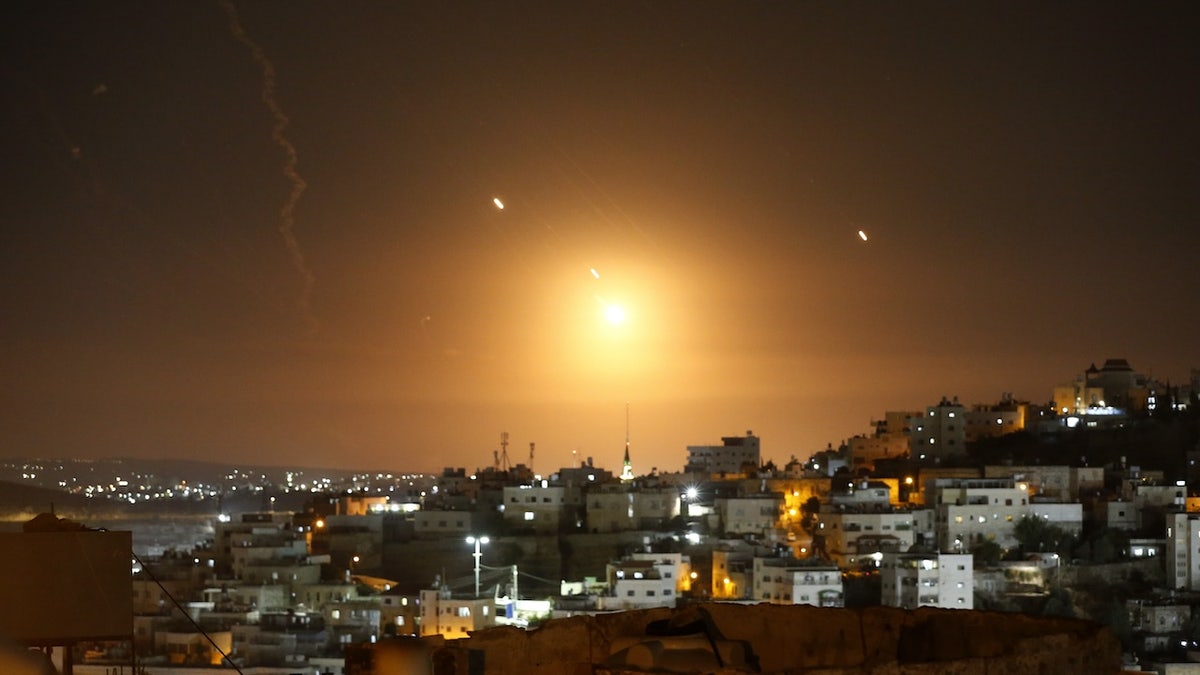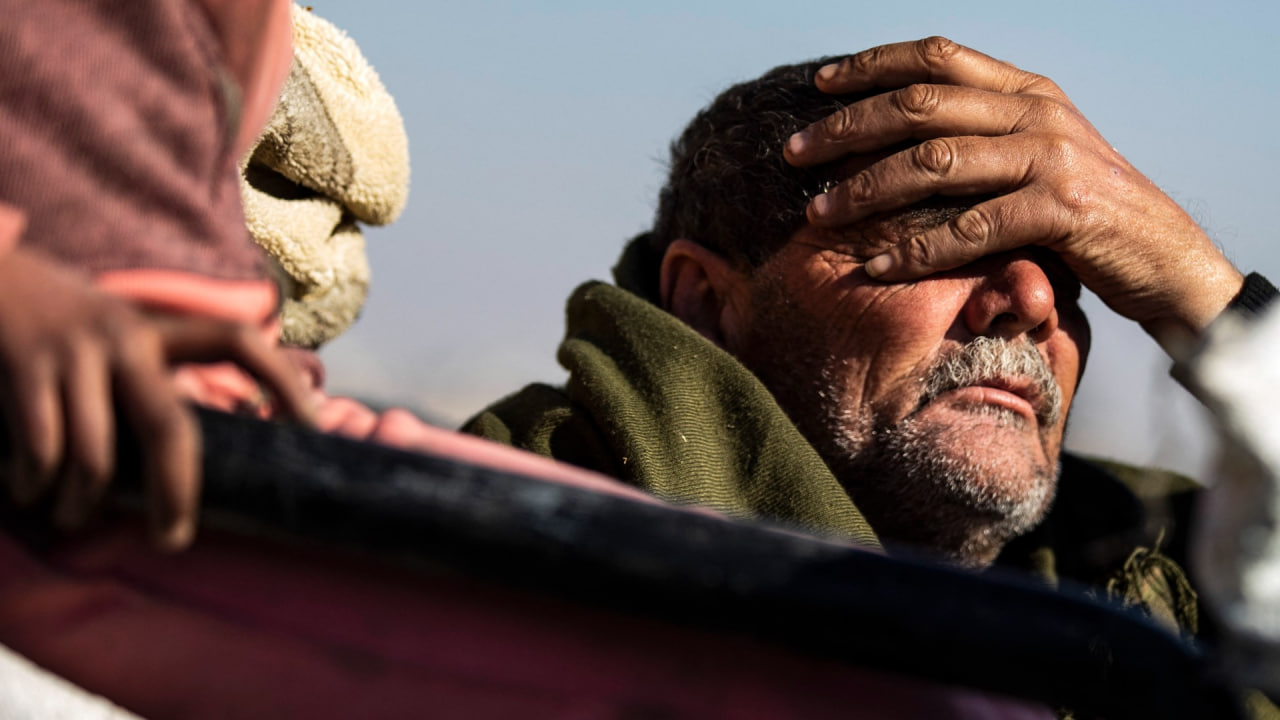
The streets of Aleppo are once again a theater of displacement as the Syrian Arab Army (SAA) pushes a hardline military strategy into Kurdish-governed enclaves. By declaring specific Kurdish regions as military zones, Damascus is not just moving troops; it is attempting to dismantle a decade of semi-autonomous governance through sheer administrative and kinetic pressure. This maneuver has triggered a mass exodus of civilians who recognize the familiar patterns of a looming blockade. The objective is clear. The central government intends to reclaim total sovereignty over northern hubs, even if it means hollowed-out neighborhoods and a fractured social fabric.
This latest escalation follows years of a "cold peace" between the Syrian government and the Kurdish-led People’s Protection Units (YPG). While both sides occasionally found common ground against shared enemies, that thin veneer of cooperation has dissolved. The SAA’s designation of these areas as restricted zones serves as a legal and tactical pretext to sever supply lines and restrict the movement of people. It is a squeeze play designed to force a political surrender by making civilian life untenable.
The Strategy of Manufactured Scarcity
The declaration of a military zone is rarely about immediate combat. It is about control. By formalizing this status, the Syrian government grants its field commanders the authority to seize property, dictate the flow of fuel, and shutter markets. We are seeing a repeat of the "starve or surrender" tactics that defined the earlier years of the civil war.
In districts like Sheikh Maqsoud, the impact was instantaneous. When the military police set up checkpoints that refuse the passage of flour and medicine, the local administration begins to crumble. The SAA understands that the Kurdish forces cannot maintain their legitimacy if they cannot feed the population. It is a cynical calculation. Damascus is betting that the civilian population will flee toward government-held territory or out of the country entirely, leaving the Kurdish militias isolated in an empty urban shell.
The Geopolitical Trigger
Why now? The timing of this offensive is tied directly to the shifting priorities of regional power brokers. For years, the presence of foreign intermediaries acted as a buffer. However, as global attention remains fixed on conflicts in Eastern Europe and the Middle East's southern fronts, Damascus sees a window of opportunity to settle internal scores.
The Syrian leadership is also testing the limits of Russian and Iranian patience. While Moscow has historically played the role of mediator between the Kurds and the SAA, their current bandwidth for complex peacekeeping is stretched thin. Without a firm hand from the Kremlin to restrain the SAA’s 4th Division, the path toward a full-scale takeover of Aleppo’s northern outskirts is wide open.
The Human Cost of Strategic Mapping
When a neighborhood becomes a military zone on a map, it ceases to be a home for those living there. Thousands have already packed what they can carry into aging sedans and trucks, heading toward the relative uncertainty of the northern countryside. They are moving from a known threat to an unknown one.
The displacement is not an accidental byproduct of the policy; it is the point. Emptying these districts removes the "human shield" of a sympathetic population that the YPG relies on for intelligence, recruitment, and logistical support. Once the civilians are gone, the SAA can treat the area as a pure combat environment, allowing for the use of heavy artillery and scorched-earth tactics that would be politically difficult in a populated urban center.
A Breakdown of Local Governance
The Kurdish-led Autonomous Administration has spent years building parallel structures—schools, courts, and local councils. These institutions are the primary targets of the military zone declaration. By criminalizing the presence of "unauthorized" administrative bodies, the Syrian state is systematically erasing the progress made toward decentralization.
- Legal Nullification: Any document issued by Kurdish authorities is now treated as evidence of "terrorist" affiliation.
- Infrastructure Seizure: Water and power stations located within these zones are being placed under direct military management.
- Economic Isolation: Trade routes that previously connected Aleppo to the Kurdish heartland in the northeast are being diverted or taxed to the point of collapse.
The Kurdish Dilemma
The leadership in the northeast faces an impossible choice. They can attempt to defend these pockets militarily, which risks a bloody and likely losing battle against a state military backed by air power. Or, they can withdraw, abandoning the civilians who looked to them for protection and effectively ending their influence in Syria’s second-largest city.
There is a sense of betrayal in the air. Many Kurdish commanders believed that their role in the fight against extremist groups had earned them a seat at the negotiating table. Instead, they find themselves being treated as a temporary problem that the state is finally ready to solve. The SAA is not interested in a federalized Syria. They are interested in the Syria of 2011—a centralized, autocratic state where the capital dictates the reality of every province.
The Role of Shadow Actors
Beyond the visible SAA checkpoints, various paramilitary groups are operating in the shadows of these military zones. These militias, often funded by external interests, have their own agendas, ranging from sectarian cleansing to simple looting. Their presence adds a layer of volatility that the central government can conveniently blame on "uncontrolled elements" while reaping the benefits of the terror they instill in the local population.
The international community’s response has been relegated to standard expressions of concern. But for the family sitting in a stalled line of traffic on the outskirts of Aleppo, these statements mean nothing. They are watching their city disappear behind a line of tanks and red tape.
The Long Road to Erasure
The transformation of northern Aleppo into a military zone is a permanent shift. Even if the immediate threat of shelling subsides, the legal framework of the "military zone" allows the state to prevent residents from returning indefinitely. This is demographic engineering disguised as national security. By preventing the return of a specific political and ethnic demographic, the government ensures that these districts will never again pose a challenge to central authority.
This process is surgical. It starts with a decree, follows with a blockade, and ends with a resettlement program that fills the empty houses with those loyal to the state. We have seen this blueprint in Homs, and we have seen it in the Damascus suburbs. Aleppo is simply the latest chapter in a long-form manual on how to dismantle a rebellion by removing the people who started it.
Survival Tactics in a Shrinking Space
Those who stay behind are forced into a precarious existence. They must navigate a dual reality where they owe taxes to one group and loyalty to another, all while avoiding the suspicious eyes of the military intelligence officers who now patrol their corners. The psychological toll of living in a military zone is immense. It is a state of constant surveillance where every movement is tracked and every conversation is potentially subversive.
The SAA’s 4th Division, led by Maher al-Assad, has been particularly aggressive in enforcing these new boundaries. Their reputation for brutality precedes them, and their presence alone is often enough to trigger a fresh wave of departures. They aren't just there to hold ground; they are there to remind the population who the ultimate master of the house is.
The Failure of Neutrality
For years, many residents of these enclaves tried to remain neutral, focusing on survival rather than politics. The declaration of military zones has made neutrality a luxury that no one can afford. You are either with the state, or you are a target. This polarization is the death knell for any hope of a reconciled, multi-ethnic Aleppo in the near future.
The SAA has effectively weaponized the geography of the city. By controlling the high ground and the arterial roads, they have turned the Kurdish enclaves into islands. These islands are slowly sinking under the weight of state pressure. There is no mystery to the "why" here—this is the final consolidation of power, the closing of the ledger on the Syrian uprising.
Documenting these shifts requires looking past the troop movements and into the ledgers of the local administrative offices and the cargo manifests of the aid trucks. When the state stops the bread and starts the artillery, the intent is no longer up for debate. The SAA is not protecting the city; they are reclaiming a carcass.
Search for a way out. Every civilian currently navigating the checkpoints of northern Aleppo is doing exactly that. They are not looking for a political solution or a peace treaty. They are looking for a road that hasn't been closed yet.