The lights in Havana do not flicker anymore; they simply stay off. For sixty-six years, the Cuban Revolution survived on a diet of Soviet subsidies, Venezuelan crude, and a defiant, if crumbling, sense of exceptionalism. But the geopolitical floor has finally fallen out. By March 2026, the island is no longer just enduring an embargo—it is facing a systematic energy decapitation. The Trump administration’s January 2026 executive order, which declared a national emergency regarding Cuba and threatened secondary tariffs on any nation supplying it with oil, has effectively turned the Florida Straits into a tactical moat.
The primary query for anyone watching the Caribbean is no longer whether Cuba can survive, but how the collapse of its energy grid will force a total restructuring of the state. Within the first ninety days of 2026, the island’s oil reserves dropped to a mere fifteen-day cushion. This is not the "Special Period" of the 1990s. Back then, the population was younger, the infrastructure was thirty years less decayed, and the government still held a monopoly on hope. Today, the "maximum pressure" campaign from Washington is colliding with a Cuban state that has run out of cards to play.
The Oil Blockade and the Secondary Sanction Trap
The current crisis is a masterpiece of economic strangulation. Historically, the U.S. embargo—or el bloqueo—was a bilateral affair. If a Spanish hotel chain or a Canadian mining firm wanted to do business in Havana, they faced hurdles, but they weren't treated as national security threats to the United States. That changed on January 29, 2026.
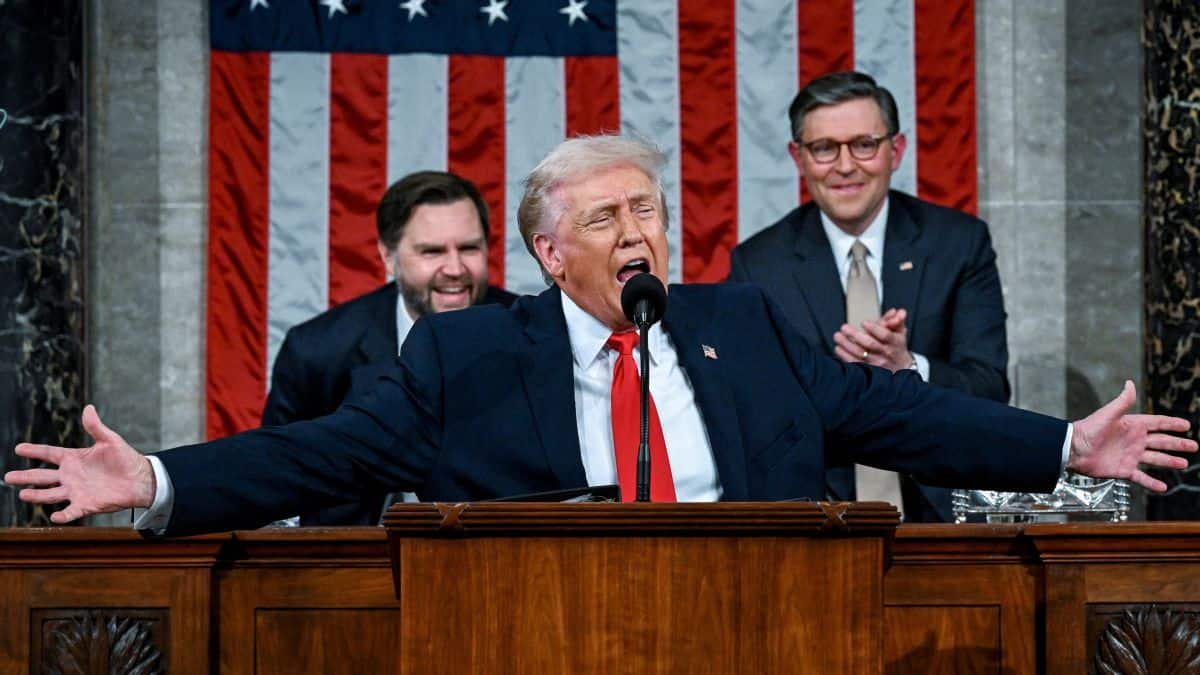
By invoking the International Emergency Economic Powers Act (IEEPA), the White House has moved beyond traditional trade restrictions. The new policy targets the "enablers." If Mexico or any other regional partner sends a tanker of Maya crude to the port of Mariel, they risk retaliatory tariffs on their own exports to the U.S. market. For Mexico, the calculation is simple arithmetic: is the ideological solidarity of supporting Havana worth a 10% or 20% tariff on the billions of dollars in automotive and agricultural goods flowing north?
The answer has been a resounding silence. Mexico has paused shipments. Venezuela, reeling from its own leadership upheavals and U.S. pressure, has seen its "oil-for-doctors" barter system evaporate. This leaves Cuba needing roughly 100,000 barrels of oil per day just to keep the lights on for four hours a night, with almost no one willing to deliver it.
The GAESA Shadow State and the Corruption of Survival
To understand why the Cuban economy hasn't just bent but is actually breaking, one must look at GAESA. The Grupo de Administración Empresarial S.A. is the sprawling, military-run conglomerate that controls everything from luxury hotels and foreign exchange houses to supermarkets and gas stations.
For decades, GAESA acted as a "state within a state," siphoning off hard currency from tourism and remittances while the civilian ministries starved. Investigative reports and financial tracking by groups like Cuba Siglo 21 suggest that while the national power grid was failing due to a lack of maintenance, billions were being funneled into new hotel construction—hotels that now sit mostly empty.
This internal cannibalization has left the civilian government of Miguel Díaz-Canel with no fiscal tools. When the state tried to unify its dual-currency system in 2021, it triggered a spiral of inflation that has never stopped. By the end of 2025, real annual inflation hit an estimated 70%. The official state statistics claim a modest 14%, but anyone standing in a bread line in Centro Habana knows the official rate is a fiction. Wages for doctors and teachers are now worth less than the paper they are printed on, often covering only three or four days of basic food.
The Health System Collapse
The most devastating impact of the energy blockade is found in the one area Cuba used to boast about: its healthcare. The myth of the Cuban "medical superpower" has been dismantled by the lack of diesel.
Hospitals are currently operating in a state of triage that resembles a war zone. Without fuel for generators, surgeons are forced to use cell phone flashlights to finish procedures during unannounced blackouts. The "cold chain" required for vaccines and insulin has failed in multiple provinces. Perhaps most tragic is the situation for the island’s 16,000 cancer patients. Radiotherapy machines require immense, stable power loads that the national grid can no longer provide. Chemotherapy drugs, often sourced through third parties in Europe, are blocked by shipping companies afraid of the new U.S. designations.
It is a humanitarian crisis that the United Nations has labeled a "collapse," but in Washington, it is viewed as a necessary lever. The strategy is to make the cost of maintaining the current regime so high that the military—the men running GAESA—decides that the only way to save their assets is to jettison the Communist Party leadership.
Tourism as a Failed Lifeline
Cuba’s recovery plan always banked on a post-pandemic tourism boom. That boom never arrived. While the Dominican Republic and Cancun saw record-breaking numbers in 2025, Cuba’s visitor count plummeted.
The reasons are three-fold:
- The SST Designation: Being on the State Sponsors of Terrorism list means that any European or Asian traveler who visits Cuba loses their ESTA eligibility for easy entry into the U.S. For many, a week in Varadero isn't worth a lifetime of visa hassles at JFK.
- Infrastructure Decay: Tourists paying $300 a night expect air conditioning and hot water. When the grid fails, even the luxury resorts go dark.
- The Russian Retreat: After years of courting Russian travelers to replace Americans, the flow has dried up. Moscow’s focus is elsewhere, and the logistics of flying to a country that might not have jet fuel for the return leg have made airlines jittery. In early February 2026, the Cuban government was forced to suspend jet fuel provisions for a month, effectively strangling what was left of the winter season.
The Rise of the Informal Private Sector
If there is any sign of life, it is in the Mipymes—the small and medium-sized private enterprises that were legalized in 2021 as a desperate concession. These businesses now import everything from powdered milk to car parts, often at prices five times higher than state-regulated rates.
They represent a profound ideological defeat for the Party. The private sector is now the only entity that can reliably put food on shelves, yet it operates in a legal gray area. The Trump administration has signaled a slight "favorable licensing" policy for oil bound specifically for the private sector, a move designed to drive a wedge between the people and the state. It is a cynical but effective tactic: feed the entrepreneurs, starve the generals.
The Geopolitical Vacuum
In previous decades, Cuba could count on a "Big Brother." First the Soviets, then Hugo Chávez. Today, Vladimir Putin offers rhetorical support but no tankers. China offers infrastructure loans but demands repayment that Havana cannot provide.
This isolation is what makes the 2026 blockade different. The island is an archipelago of disconnected municipalities, each trying to survive on its own. The central government’s "Plan of the Economy" for 2026 is less a strategy and more a prayer for a change in U.S. administration or a sudden miracle in the offshore oil fields—fields that have remained stubbornly dry for twenty years.
The United States is betting that the Cuban people will reach a breaking point similar to the July 11, 2021, protests, but on a scale the security apparatus cannot contain. However, the government has responded by facilitating the largest exodus in the island’s history. Since 2022, nearly 10% of the population has fled, mostly to the U.S. This "demographic venting" removes the very young, angry, and motivated people who would otherwise be on the streets.
What remains is a nation of the elderly and the exhausted, living in a landscape where the only thing growing is the price of an egg. The siege of Havana is not a single event; it is a slow, grinding mechanical failure. When the last generator runs out of diesel, the revolution won't end with a bang or a televised surrender. It will end in total, silent darkness.
Reach out to the Bureau of Industry and Security to track the latest shipping manifests for the Caribbean.