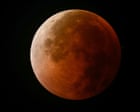
The moon is about to turn a deep, dusty red. On March 3, 2026, the first and only total lunar eclipse of the year will sweep across the Pacific, North America, and Australia. This isn't just another blurry white dot in the sky. It's a full-blown "Blood Moon," and if you miss it, you're waiting until late 2028 for the next one.
You don't need fancy goggles or a degree in astrophysics to see it. Unlike solar eclipses that can fry your retinas, a lunar eclipse is perfectly safe to watch with your bare eyes. It's basically nature’s most dramatic light show, and I’m going to tell you exactly when to look up so you don't stare at an empty sky. Meanwhile, you can read related events here: Why Global Science is Hitting a Wall in 2026.
Where and When the Blood Moon Hits
Location is everything. If you're in Europe or Africa, I have bad news: the moon will be below your horizon the whole time. You're sitting this one out. But for everyone else, the timing depends on where your feet are planted.
In North America, this is an early morning event. If you're on the West Coast—think Los Angeles, Seattle, or Vancouver—you get the best seats. You’ll see the entire thing from start to finish before the sun comes up. If you're on the East Coast, in places like New York or Miami, the moon will be setting right as it gets interesting. You’ll need a clear view of the western horizon to catch the red tint before the moon disappears. To understand the complete picture, we recommend the recent article by Science Magazine.
Australia and New Zealand have it even better. For you, it's a prime-time evening event on the night of March 3 (bleeding into the early hours of March 4 for New Zealand).
Essential Timing for Totality
Totality is the "magic hour" when the moon is completely buried in Earth's darkest shadow. This phase lasts about 58 minutes.
- Honolulu: Totality begins at 1:04 AM, peaking at 1:33 AM.
- Los Angeles/Seattle: Totality starts at 3:04 AM.
- Chicago/Dallas: Look up at 5:04 AM.
- Sydney/Melbourne: Totality kicks off at 10:04 PM.
- Auckland: Totality starts at 12:04 AM (March 4).
Why the Moon Actually Turns Red
It feels like a glitch in the matrix, but it’s just physics. During a total lunar eclipse, the Earth moves directly between the sun and the moon. This cuts off direct sunlight. However, Earth's atmosphere acts like a lens. It bends sunlight and filters out the blue and violet colors (Rayleigh scattering).
Think of it as every sunrise and sunset on Earth being projected onto the moon at the same time. The result is that coppery, orange-red glow. Interestingly, the March 2026 eclipse might look a bit different. Because the moon is skimming the upper edge of Earth's shadow, we might see a rare "blue fringe" or a navy tint near the edge of the red. This happens because of the ozone layer filtering light in the upper stratosphere. It's a high-contrast look that doesn't happen every time.
How to Get the Best View
You don't need equipment, but a little prep goes a long way. If you’ve got a pair of birdwatching binoculars or a dusty telescope in the garage, now's the time to find them. They'll help you see the craters even when the moon is dark.
- Check the clouds. Use an app like Clear Outside or Windy. If it’s cloudy in your backyard, you might need to drive twenty minutes to a clearer patch.
- Find a dark spot. While you can see the eclipse from a city, the colors pop way more if you get away from streetlights.
- The "Moon Illusion." For East Coast viewers, the moon will be low on the horizon during totality. This actually makes it look massive because your brain compares it to trees and buildings. It’s a photographer’s dream.
Don't Fall for the "Supermoon" Hype
You'll probably see some headlines calling this a "Super Blood Moon." Let's be real: while the moon is relatively close to Earth right now, it isn't a true "Supermoon" (that happens later in 2026). It will look plenty big, but don't expect it to take up half the sky.
The Science and the Spirit
Scientists use these 58 minutes of totality to study Earth's atmosphere. By looking at how dark or bright the red is, they can tell how much dust or volcanic ash is floating around in our own air. A darker moon usually means a "dirtier" atmosphere.
Culturally, this eclipse is hitting during a busy week. In India, it coincides with the Holi festival. For those who follow astrology or spiritual practices, a Blood Moon is often seen as a "cosmic reset"—a time to let go of old habits rather than starting new projects. Whether you believe the moon affects your mood or not, there's no denying the vibe gets a little eerie when the sky turns crimson.
Your Next Steps
Don't wait until 3 AM to realize you can't find your coat.
- Tonight: Verify your local moonset or moonrise time.
- Set an alarm: Aim for 20 minutes before totality starts so your eyes can adjust to the dark.
- Look West (Americas) or East (Asia/Australia): Make sure you don't have a giant apartment building blocking your view of the horizon.
Once this eclipse ends, the "lunar drought" begins. We won't see another total lunar eclipse until December 31, 2028. Make this one count.