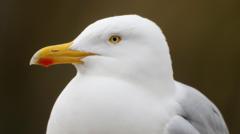
The current discourse around marine strategy is a parade of sentimentalism masquerading as science. We are told by well-meaning charities and government bodies that the "urgent" solution to declining seabird populations is a mix of stricter fishing quotas, offshore wind farm moratoriums, and "action plans" that read like a child’s wish list for the ocean.
They are wrong. They are not just wrong; they are dangerously distracted by the symptoms while the patient dies of a completely different disease.
The lazy consensus suggests that if we simply stop humans from touching the ocean, the kittiwakes and puffins will return to some mythical baseline of the 1950s. This is a fantasy. I have spent years looking at the data from North Sea trawlers and nesting sites on the Farne Islands. The hard truth that nobody wants to put in a fundraising brochure is this: many of our "threatened" seabird populations are actually bloated artifacts of a broken industrial past. We aren’t seeing a collapse; we are seeing a violent, necessary correction.
The Industrial Byproduct Myth
Most people believe seabird populations are naturally occurring at their current levels. They aren’t. Throughout the 20th century, the fishing industry engaged in massive over-exploitation of whitefish. This sounds like a negative—and for the whitefish, it was—but it created an artificial buffet for birds.
When you gut a cod on a deck and throw the offal overboard, you aren't just "discarding waste." You are subsidizing a scavenger class. Northern Fulmars and Great Skuas didn’t reach their record highs because the ocean was healthy; they reached them because we were feeding them "fast food" from the back of boats.
Now that we have—rightfully—implemented discard bans and more efficient fishing gear, that subsidy is gone. The "crisis" charities scream about is often just the inevitable starvation of a population that should never have been that large to begin with. By demanding we "act" to save every individual bird, these organizations are essentially asking us to keep a terminal, artificial ecosystem on life support.
The Problem With Protectionism
The standard "People Also Ask" query is: How can we protect seabirds from offshore wind farms? This is the wrong question. It assumes that the physical presence of a turbine is the primary threat. It isn't. The primary threat is the shifting of the entire thermal structure of the ocean due to climate change, which is moving the sandeels (the primary food source) hundreds of miles north.
If you block a wind farm to "save" a colony of Gannets, you are effectively trading a long-term climate solution for a short-term, localized feeling of moral superiority. You are saving a few hundred birds from a blade strike today so that the entire species can starve in ten years because the water is too warm for their prey to spawn.
The Sandeel Paradox
Let’s talk about the sandeel ban. In early 2024, the UK and Scotland moved to close the North Sea sandeel fishery. The environmental lobby cheered. They claimed this would leave more food for the birds.
On paper, it makes sense. In reality, it’s a localized band-aid on a global hemorrhage.
The ocean is a complex thermodynamic engine. If you stop catching sandeels in one sector but ignore the fact that the North Sea is warming at twice the global average, the birds still lose. We are hyper-focused on direct human competition for food because it’s easy to blame a fishing boat. It’s much harder to admit that the entire North Sea ecosystem is transitioning into a new state where cold-water specialists like the Puffin simply do not fit anymore.
Instead of fighting to keep birds in places they can no longer survive, we should be discussing assisted migration or the managed retreat of certain colonies. But "Managed Retreat" doesn't look good on a tote bag.
Stop Prioritizing "Action" Over Results
Charity manifestos always demand "urgent action." In the world of marine policy, "action" is usually code for "more bureaucracy."
We create Marine Protected Areas (MPAs) that are essentially "paper parks." We draw a line on a map, pat ourselves on the back, and then realize we have no budget for enforcement and no mechanism to stop the water inside that line from warming.
I’ve seen regional governments waste millions on "monitoring programs" that tell us exactly what we already know: the birds are struggling. We don't need more data points on the decline. We need a radical shift in how we value marine life.
The Efficiency Trap
If we want to help seabirds, we have to stop being precious about "naturalness."
- Predator Control: This is the third rail of conservation. If you want to save ground-nesting seabirds, you have to kill rats, minks, and sometimes even larger gulls that have become specialized predators. But many of the same charities calling for "marine action" are terrified of the PR backlash from an active culling program. You cannot have a "hands-off" approach to nature when the environment is already irrevocably altered by human interference.
- Artificial Habitats: We spend billions trying to restore degraded cliffs. Why? A bird doesn't care if its ledge is made of Jurassic limestone or high-density polyethylene. If we are moving offshore wind into their territory, we should be integrating nesting sites into the turbine foundations themselves. We need to stop viewing industrial infrastructure as the enemy and start viewing it as the only viable substrate left.
The Hard Logic of Triage
Conservation is an exercise in resource scarcity. Every dollar spent trying to save a doomed colony of Kittiwakes in a warming southern latitude is a dollar not spent securing a viable colony in the north.
The current "Marine Strategy" touted by NGOs is built on the fallacy that we can save everything. We can't. We are currently in a period of ecological triage.
- The Sentimentalists want to treat every bird as a sacred individual.
- The Realists recognize that species survival often requires letting certain populations fail.
If we keep trying to force the ocean back to its 1900 state, we will fail at both. We will stifle the blue economy, prevent the transition to renewable energy, and still end up with empty cliffs.
Imagine a scenario where we stop viewing the ocean as a pristine wilderness that needs to be "fenced off." Instead, we treat it as a managed workspace. In this scenario, we accept that some species will move, some will shrink, and some will vanish. We stop the "action for action's sake" and start focusing on functional resilience.
This means prioritizing the species that can actually adapt to a 2°C warmer world. It means stopping the obsessive focus on "bycatch" when the real killer is the disappearance of the thermocline.
The Myth of the "Balance of Nature"
The competitor's article likely mentions "restoring the balance." There is no balance. There is only a constant, chaotic flux. The "balance" we think we are protecting was just a snapshot in time—a snapshot taken when the ocean was already heavily influenced by the first industrial revolution.
We are currently obsessed with the "Marine Strategy Framework Directive" and its quest for "Good Environmental Status." This status is defined by arbitrary benchmarks that ignore the reality of a changing planet. You cannot have "Good Environmental Status" based on 1990 data when the 2026 ocean is a different physical entity.
Stop asking for "more action." Start asking for better priorities.
The biggest threat to seabirds isn't a lack of government strategies or the presence of a few fishing trawlers. It is the refusal of the conservation movement to admit that the world they are trying to "save" is already gone.
We need to stop mourning the ghosts of the 20th-century North Sea and start building an ocean that can survive the 21st. That requires less "charity," less "advocacy," and a lot more cold, hard ecological engineering.
If that means some colonies go extinct so that the species can survive elsewhere, that is a price we must be willing to pay. Anything else is just vanity.
Stop trying to save the past. Start engineering the survival of what's left.