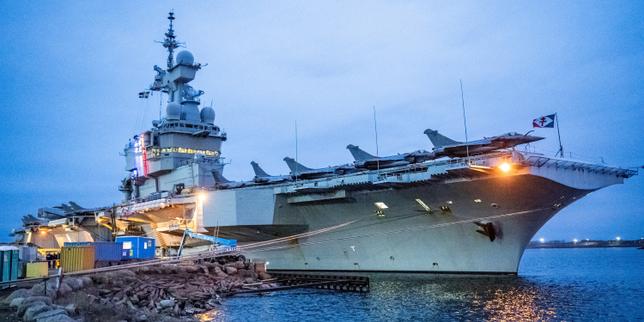
The Swedish Armed Forces just dropped the hammer on a mystery that's been hovering over European naval security for weeks. It's official. The surveillance drone spotted tailing the French aircraft carrier Charles de Gaulle in the Baltic Sea didn't belong to a confused hobbyist or a local tech firm. It was Russian.
Swedish authorities confirmed the origin of the craft after a detailed investigation into the incident, which saw the unmanned aerial vehicle (UAV) shadowing the flagship of the French Navy during its high-stakes mission in northern waters. If you've been following the tension in the Baltics, this isn't exactly a shocker, but the confirmation matters. It changes the conversation from "suspicious activity" to a documented act of military espionage in a region that's basically a powder keg right now.
Why the Baltic Sea is a Surveillance Goldmine
The Charles de Gaulle isn't just a ship. It's a floating piece of French territory and a massive symbol of NATO power. When it sails into the Baltic, it's sending a message. Russia, naturally, wants to read every single syllable of that message.
For the Kremlin, the Baltic Sea has become a "NATO lake" since Finland and Sweden joined the alliance. This puts Russia’s exclave, Kaliningrad, and the port of St. Petersburg in a tight spot. They're using these drones to test response times, gather electronic intelligence, and remind everyone that they’re still watching.
Swedish military officials didn't just guess here. They tracked the flight patterns and analyzed the signature of the craft. While they haven't released the specific model—likely to keep their own tracking capabilities under wraps—the identification as Russian is definitive. It’s a classic move in the "gray zone" of modern conflict. You don't fire a shot, but you make sure the other guy knows you’re there, hovering just outside his perimeter.
The Technical Reality of Shadowing a Carrier Group
You might think a massive carrier group would just swat a drone out of the sky. It's not that simple. Rules of engagement in international waters are incredibly picky. Unless the drone poses an immediate physical threat to the ship or its aircraft, blowing it up is a massive escalation that nobody wants.
Instead, the Charles de Gaulle and its escorts have to play a high-tech game of hide and seek.
- Electronic Warfare (EW): The carrier likely used jamming signals to disrupt the drone’s data link.
- SIGINT (Signals Intelligence): French and Swedish sensors were almost certainly "listening" to the drone as much as it was watching them.
- Visual Identification: Rafale jets or maritime helicopters are often scrambled to get eyes-on the intruder, which is how these IDs often start.
These drones are often launched from merchant vessels or small "fishing" boats that aren't what they seem. Russia has been perfected the art of using civilian-looking infrastructure to support military goals. It makes it much harder for NATO forces to justify an aggressive response.
The Swedish Connection
Sweden’s role in this is huge. Since joining NATO, their intelligence-sharing has become a pillar of Baltic security. They have some of the most sophisticated underwater and aerial monitoring systems in the world. They see things others miss. When the Swedish Armed Forces confirm a Russian origin, the rest of the alliance takes it as gospel. They aren't prone to hyperbole.
Escalation Without the Fireworks
We need to stop thinking of these drone sightings as isolated pranks. They're part of a broader pattern of "hybrid" warfare. We’ve seen GPS jamming over Poland, "ghost ships" near undersea cables, and now persistent UAV surveillance of the pride of the French fleet.
It’s meant to exhaust. It's meant to make us used to the presence of Russian hardware in "our" backyard. If a drone is there every day, the day one carries a payload, the reaction might be a split-second too slow. That’s the nightmare scenario for naval commanders.
The Charles de Gaulle carries a complement of Rafale M fighters and E-2C Hawkeye early warning aircraft. It's a powerhouse. Yet, a relatively cheap Russian drone can still cause a massive headache. The cost-to-disruption ratio is heavily in Russia’s favor here.
What This Means for Future Naval Deployments
Don't expect this to stop. In fact, expect it to get weirder. The confirmation from Sweden is a wake-up call that the Baltic isn't a safe playground for routine exercises anymore. Every deployment is a live-fire environment for intelligence gathering.
Naval forces are now forced to integrate more robust anti-drone tech into their standard "peace-time" operations. This means directed-energy weapons (lasers) and more advanced localized jamming. The goal is to make the "cost" of spying too high for the Russians, either by frying the drone's electronics or simply making the data it collects useless through interference.
If you’re tracking maritime security, watch the upcoming NATO maneuvers in the North Atlantic. The "lessons learned" from this drone incident will be written into the mission parameters. We’re moving into an era where the sky is never empty, and the "enemy" is always recording.
Governments need to be more transparent about these intercepts. The Swedish move to publicly confirm the Russian origin is a good start. It strips away the "plausible deniability" that the Kremlin loves to hide behind. It forces a diplomatic conversation that goes beyond "we saw a weird light in the sky."
The next time a carrier enters these waters, it won't just be looking for submarines. It’ll be looking up. And it better have a plan for when it sees something looking back. Keep an eye on the official reports from the Swedish Ministry of Defence and the French Maritime Command for the next set of policy shifts regarding UAV exclusion zones around carrier strike groups.