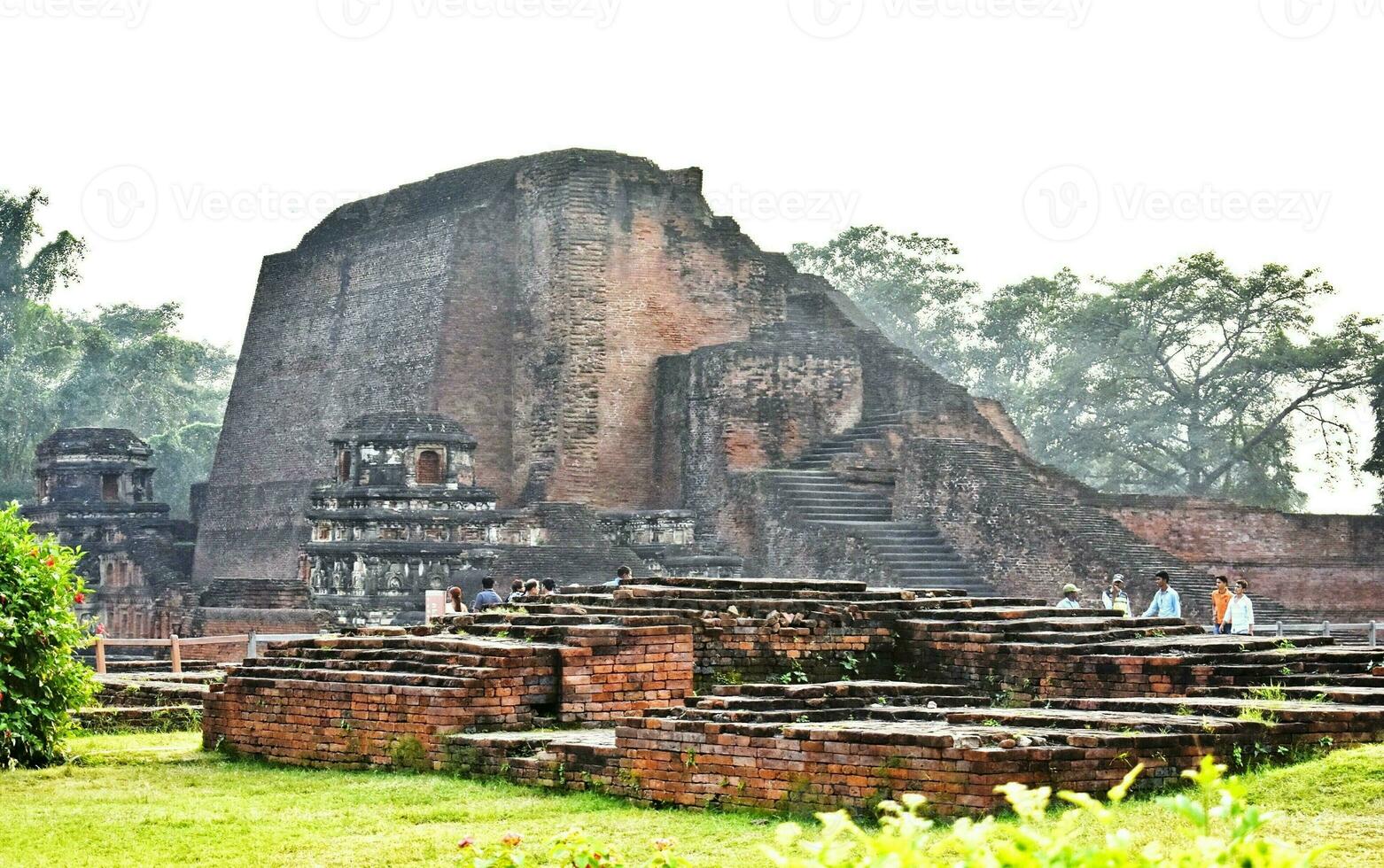
President Droupadi Murmu’s presence at the Nalanda University convocation signals more than a mere diplomatic photo-op or a celebration of academic degrees. It marks the formal attempt to reclaim a historical narrative that was severed eight centuries ago. For India, this isn't just about a new campus in Rajgir; it is a calculated bid to re-establish itself as the intellectual center of the Global South. By invoking the ghost of a fifth-century monastery-university, the government is betting that a multi-national educational project can succeed where traditional diplomacy often stutters.
The Weight of the Ruin
To understand why the President of India is standing on a stage in Bihar, you have to look at the dirt. The original Nalanda wasn't just a school. It was a sprawling, interdisciplinary engine that drove the thought processes of Asia for 800 years. When it was destroyed in the late 12th century, the loss was literal and structural. Libraries burned for months. The link between Indian logic and the rest of the world was cauterized.
The modern incarnation, born from a 2006 proposal by then-President APJ Abdul Kalam and supported by the East Asia Summit, is an attempt to bridge that gap. But the challenge isn't just building classrooms. It is recreating an ecosystem of "knowledge diplomacy." President Murmu’s address highlighted the university's role in "reawakening" the spirit of the ancient site, but the underlying reality is a gritty fight for influence. India is using Nalanda to remind its neighbors—Singapore, Japan, China, and Australia—that their cultural and philosophical DNA has roots in these plains.
Architecture as a Statement of Intent
The new campus is a sprawling 455-acre net-zero facility. It is designed to be a "living laboratory," mirroring the ancient design of water bodies and cooling systems. This isn't just an aesthetic choice. In a region prone to extreme heat and water scarcity, the university is trying to prove that ancient Indian sustainability models can be modernized.
President Murmu pointed out that the university’s revival is a testament to India’s rising stature. However, the architecture serves a darker, more practical purpose. It acts as a physical anchor for the "Act East" policy. By hosting students from over 20 countries, India creates a class of future leaders who are fundamentally "Indo-centric." This is the long game. These graduates will return to their home countries not just with degrees in Ecology or Historical Studies, but with a deep-seated alignment with Indian interests.
The Ghost of Bureaucracy
While the speeches are soaring, the road to this convocation was paved with friction. The university has faced significant hurdles since its inception. Early leadership departures and debates over the autonomy of the institution nearly derailed the project. For a veteran observer, the current stability is a hard-won victory.
The struggle was never about the curriculum. It was about who gets to define what "Nalanda" means in the 21st century. Is it a heritage project? Is it a modern research hub? Or is it a political tool? The answer, as evidenced by the high-profile attendance at the convocation, is all three. The government has tightened its grip on the narrative, ensuring that the university serves as a shining example of "Vishwa Bandhu"—a friend to the world.
Funding and International Stakes
The university is supported by 17 participating countries. This makes it a rare beast in the Indian educational system. It is an international entity governed by its own Act of Parliament. This status provides a layer of prestige, but it also creates a high-pressure environment. If Nalanda fails to produce world-class research, it won't just be an academic failure; it will be a diplomatic embarrassment.
- Singapore: A key early backer, providing significant financial and ideological support.
- China: A complicated partner that shares the historical lineage but competes for the title of Asia’s preeminent educator.
- Australia and Japan: Looking for a stable, democratic center for regional intellectual exchange.
Beyond the Saffron and the Silk
The convocation ceremony, with its traditional attire and solemnity, mask a very modern urgency. President Murmu spoke of "global peace and sustainable development." These are not just buzzwords; they are the requirements for survival in a fractured geopolitical climate.
India is positioning Nalanda as the "alternative" to Western-centric academic models. For decades, the flow of knowledge has been from West to East. Nalanda is a physical attempt to reverse that tide, or at least to create a powerful counter-current. The university specializes in fields like Buddhist Studies, Philosophy, and Comparative Religions, areas where it holds a natural "monopoly" on expertise.
The Recruitment of the Intellectual Elite
The success of this mission depends entirely on the quality of the minds it attracts. A university is only as good as its faculty and the hunger of its students. During the convocation, the President awarded gold medals to students who represent a diverse cross-section of the globe.
This diversity is the university’s shield. By involving the international community, India makes the success of Nalanda a shared responsibility. If a student from Vietnam or Bhutan succeeds here, that success is celebrated in Hanoi or Thimphu. It builds a web of goodwill that is much harder to break than a trade agreement.
The Curriculum of the Future
Nalanda isn't just teaching history. Its schools focus on:
- Historical Studies: Re-examining the Silk Road and maritime trade.
- Ecology and Environment: Using traditional knowledge to fight climate change.
- Buddhist Studies: Leveraging the most potent "soft power" export in Indian history.
These programs are designed to solve modern problems using a mix of ancient wisdom and contemporary science. It’s a risky blend. If it’s too heavy on the "ancient," it becomes a museum. If it’s too "contemporary," it loses its unique selling point.
The Bihar Factor
We cannot ignore the geography. Placing a world-class international university in one of India’s most economically challenged states is a bold move. It is an attempt to spark a "knowledge economy" in a region that has long been defined by migration and stagnation.
The presence of the President and the international diplomatic corps brings a spotlight to Bihar that it desperately needs. It forces the local infrastructure to improve. It creates jobs. It reminds the local population that they are sitting on the ruins of greatness, and that greatness is being rebuilt in their backyard.
The Unspoken Challenge
The real test for Nalanda begins after the dignitaries leave and the marquee is packed away. Can a state-backed institution maintain the intellectual freedom required for a true "renaissance"? The original Nalanda thrived because it was a melting pot of competing ideas—Buddhism, Brahminism, and secular sciences.
Today, the university must navigate the narrow path between being a nationalistic symbol and a global academic powerhouse. If it becomes too insulated or too focused on a single narrative, it will fail to attract the best minds from the West and the rest of Asia. The President’s speech touched on inclusivity, but the implementation of that inclusivity will be the metric of the next decade.
Why This Matters to You
You might think an ancient university in a corner of Bihar is irrelevant to the global markets or the tech race. You would be wrong. The battle for the 21st century is being fought in the minds of the youth. Whoever controls the narrative of history and the frameworks of philosophy will control the future of policy.
Nalanda is India’s bid for the "Moral High Ground." It is an attempt to show that India doesn't just export code and generic drugs, but also the ideas that will govern how we live together on a warming planet. The convocation wasn't just a graduation; it was a launch event for a brand of Indian influence that hasn't been seen in nearly a millennium.
The fire that destroyed the ancient library is out. The question now is whether the new one can generate enough light to be seen from Beijing to Washington. This is the start of a long, expensive, and deeply important experiment in cultural reclamation. Whether it leads to a genuine intellectual explosion or remains a well-funded vanity project will depend on the students who walked across that stage today. They are the frontline of India's new intellectual frontier.
The ruins are finally speaking, but the world is still deciding if it wants to listen.