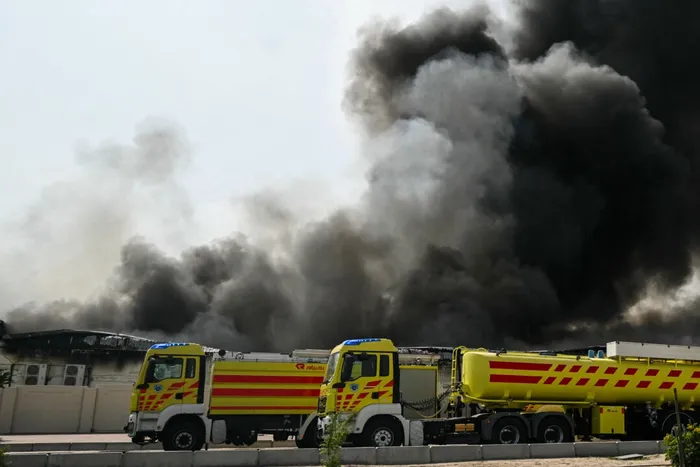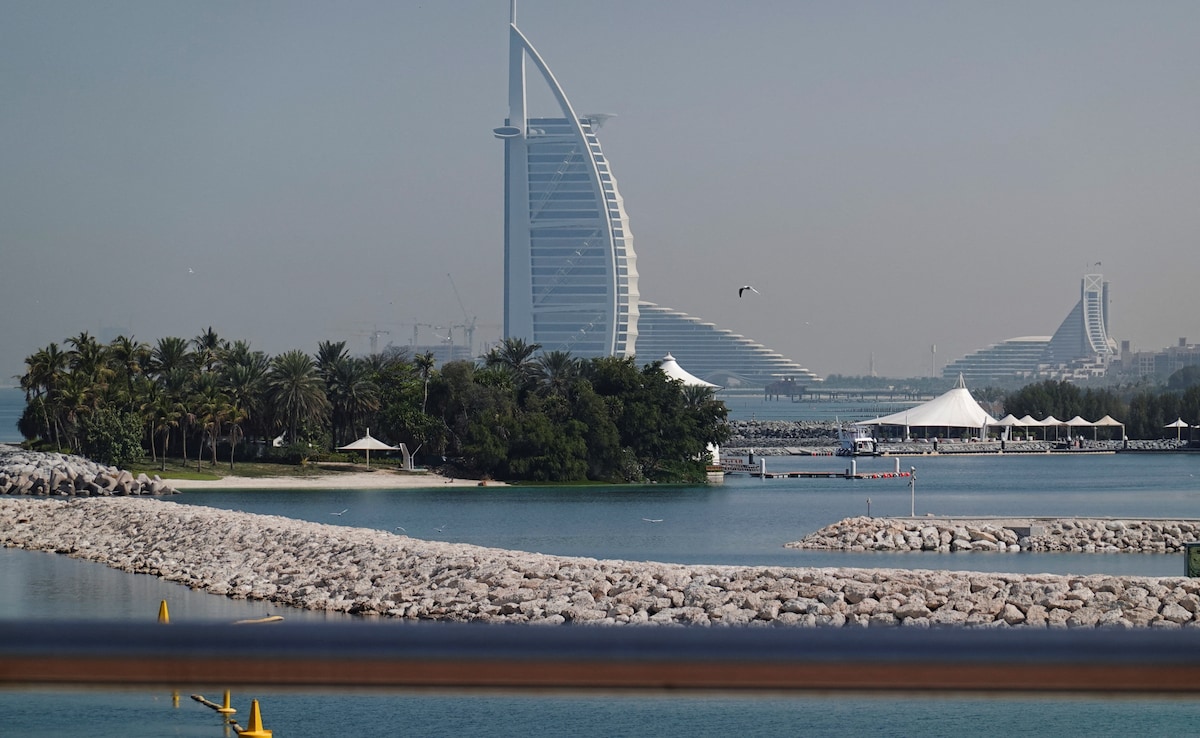
The recent kinetic strikes across Dubai, Abu Dhabi, Doha, and Manama represent more than a localized military exchange; they signal the structural failure of the "Safe Haven" economic model that has defined the Persian Gulf for three decades. For the first time since the 1990-1991 Gulf War, the primary logistical and financial nodes of the global energy supply chain have been simultaneously compromised by precision-guided munitions (PGMs) and unmanned aerial systems (UAS). This escalation shifts the regional risk profile from "contained proxy friction" to "existential infrastructure vulnerability."
To understand the gravity of these events, one must move beyond the headlines of "explosions" and analyze the specific targeted nodes. The strikes did not hit random civilian centers; they targeted the precision intersections of global trade: desalination plants, automated port terminals, and liquid natural gas (LNG) processing facilities. This is a calculated demonstration of asymmetric capability designed to devalue the sovereign credit ratings of the United Arab Emirates, Qatar, and Bahrain in a single operational window.
The Mechanics of Asymmetric Saturation
The primary tactical challenge facing Gulf Cooperation Council (GCC) states is the Cost-Exchange Ratio of modern air defense. Systems like the MIM-104 Patriot and Terminal High Altitude Area Defense (THAAD) are engineered to intercept high-velocity ballistic missiles. However, the recent strikes utilized a "Saturation Layering" approach that exploits the physical limits of these interceptors.
- Low-Slow-Small (LSS) Infiltration: Small, low-cost loitering munitions (drones) fly at altitudes that mimic ground clutter, making them difficult for traditional X-band radars to isolate.
- Electronic Warfare (EW) Suppression: Targeted jamming of GPS and GLONASS frequencies during the terminal phase of the flight degrades the accuracy of point-defense systems.
- Kinetic Overload: By launching fifty $20,000 drones against a $2 billion battery, the attacker forces the defender into a mathematical trap. Even a 95% interception rate allows five units to strike high-value targets.
The objective here is not total destruction but the "Mission Kill." If a drone causes a fire at a Jebel Ali terminal, the physical damage might be $5 million, but the resultant spike in maritime insurance premiums and the suspension of "Just-in-Time" logistics costs the regional economy billions.
The Decoupling of Security and Sovereignty
The strikes in Manama and Doha particularly highlight the vulnerability of Western military basing. While Al Udeid Air Base and the U.S. Navy’s 5th Fleet headquarters possess localized "Hardened Target" status, the surrounding civilian infrastructure—upon which these bases rely for electricity, water, and food logistics—is relatively soft.
The "Picket Line" defense strategy, which relies on detecting launches from Iranian territory and intercepting them over the Persian Gulf waters, has been bypassed by localized launch cells and maritime-based platforms. This creates a Non-Contiguous Battle Space. When explosions occur in downtown Abu Dhabi, the traditional front line ceases to exist. Security becomes a 360-degree, 24/7 requirement that current manpower levels cannot sustain without total societal mobilization.
Economic Shockwaves: The "Stability Premium" Erosion
The GCC economies operate on a "Stability Premium." This is an unwritten agreement where international corporations base their Middle Eastern operations in Dubai or Doha because these cities are perceived as insulated from regional chaos. The recent kinetic activity removes this insulation.
The impact follows a three-stage contagion model:
- Stage 1: Capital Flight and Insurance Spikes. War risk surcharges for shipping through the Strait of Hormuz are redirected toward the cargo owners. This increases the landed cost of every commodity in the region.
- Stage 2: Operational De-risking. Multinational firms begin moving "Mission Critical" personnel to secondary hubs in Singapore, London, or Riyadh (assuming the latter remains outside the immediate strike zone).
- Stage 3: Infrastructure Degradation. In highly arid climates, water security is tied directly to desalination. A successful strike on a desalination plant is not just a utility failure; it is a life-safety crisis that triggers immediate expatriate exodus.
The Intelligence Failure of "Proxy Predictability"
Standard geopolitical analysis often assumes that regional actors will act within a "Rational Actor Framework," where escalation is incremental and predictable. The coordinated nature of these strikes suggests a transition to Total Strategic Desperation.
The intelligence community missed the shift from "Harassment Tactics" (e.g., limpet mines on tankers) to "Infrastructure Neutralization." This suggests a massive blind spot regarding the proliferation of solid-fuel missile technology and the domestic assembly of UAS components within decentralized networks. We are seeing the result of a multi-year "Tehran-to-Manama" logistics chain that has successfully prepositioned kinetic assets despite intensive naval blockades.
Strategic Resilience vs. Fragile Efficiency
The cities of the Gulf are masterpieces of engineering, but they are also models of "Extreme Fragility." They rely on centralized systems—one power grid, one major port, one primary airport. This centralization, while efficient for business, is a nightmare for defense.
A decentralized defense posture would require:
- The deployment of Directed Energy Weapons (DEW) to reset the Cost-Exchange Ratio (lasers do not run out of "bullets" as long as there is power).
- Massive investment in subsurface water storage to decouple water security from immediate desalination output.
- Redundant autonomous logistics that can bypass damaged port berths.
The current trajectory indicates that the traditional "Umbrella" provided by Western alliances is insufficient against modern asymmetric threats. The protection of a carrier strike group is irrelevant against a drone launched from a flatbed truck five miles from a downtown hotel.
The strategic play for stakeholders is a transition from "Growth-First" to "Resilience-First" investment. Organizations must immediately audit their dependency on GCC-based single-source logistics. Sovereigns must pivot from prestige infrastructure projects to subterranean hardening and decentralized energy production. The era of the "Invincible City" in the desert has ended; the era of the "Hardened Node" has begun. Expect a significant reallocation of sovereign wealth funds away from global equity markets and toward domestic civil defense and autonomous interception technologies over the next twenty-four months.