The divergence between digital media narratives and the ground-level operational reality in global financial hubs during kinetic military escalations reveals a systemic failure in risk perception. When missile strikes occur within a regional theater, the standard external assumption is an immediate decay of social and economic order. However, the internal mechanics of a high-functioning technocracy like Dubai demonstrate a "Stability Buffer" that prevents panic through three specific structural pillars: architectural defense depth, information sovereignty, and the decoupling of the resident workforce from local geopolitical sentiment.
The Architecture of Perception versus Kinetic Reality
The dissonance observed by technology professionals residing in the United Arab Emirates during regional volleys is not a result of apathy, but of a calculated risk-mitigation environment. Risk is often calculated as:
$$Risk = Threat \times Vulnerability \times Impact$$
In the Dubai context, the Threat is external and regional, but the Vulnerability is minimized by one of the most sophisticated integrated air defense networks in the Middle East. This technical shield creates a psychological "Hardened Shell." When a resident—specifically one from a high-density data background like a Google engineer—observes "calm," they are witnessing the success of infrastructure over entropy.
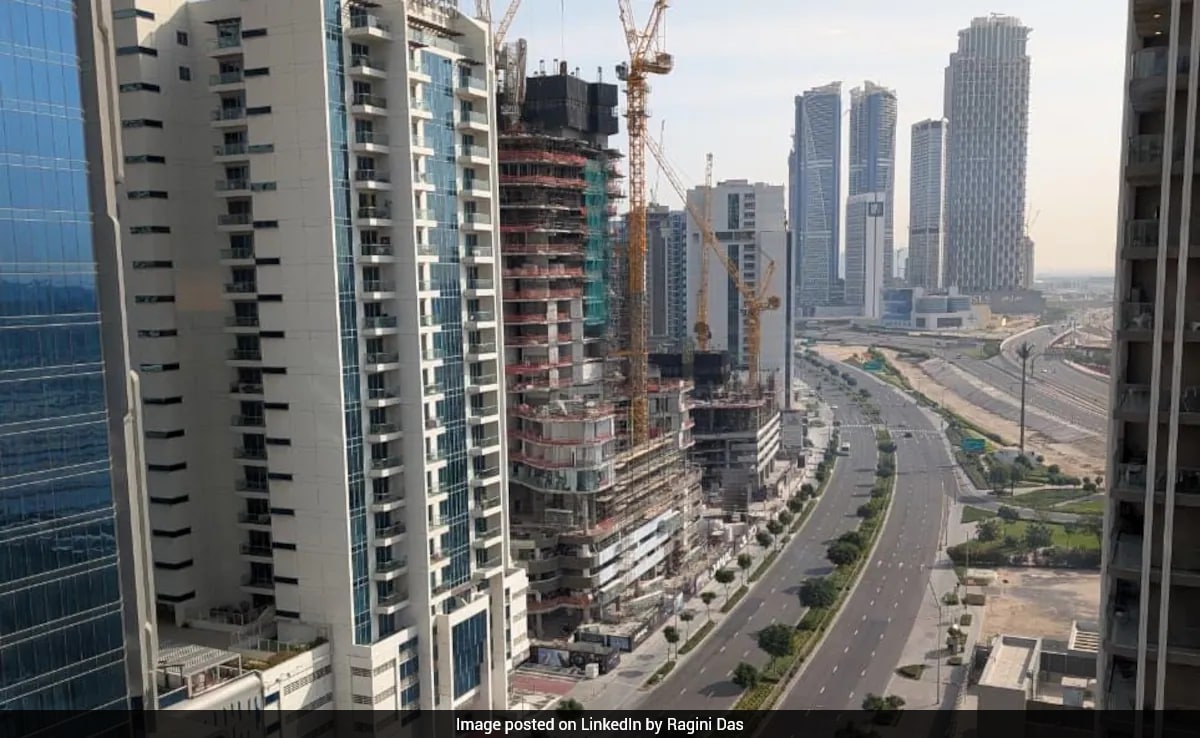
The social order remains intact because the physical environment does not signal distress. There are no sirens, no visible deployment of irregular forces, and no interruption of the cold chain or utility grids. In urban centers where the state maintains a monopoly on high-speed infrastructure, the baseline for "normalcy" is set by the continuity of the Internet of Things (IoT). If the elevators work, the air conditioning remains at 22°C, and the food delivery apps function with sub-30-minute latency, the population defaults to a state of managed compliance rather than flight.
The Information Sovereignty Loop
Chaos in a crisis is rarely caused by the initial event; it is caused by the feedback loop of unverified data. The UAE employs a model of strict information governance that eliminates the "Panic Multiplier." By centralizing crisis communications and penalizing the spread of rumors, the state ensures that the only available narrative is one of controlled response.
This creates a specific logical flow for the resident:
- Event Detection: Sound of interception or social media alert.
- Verification Gap: Lack of local sirens or emergency broadcast signals an "all-clear" by omission.
- Routine Reinforcement: Observation of uninterrupted commercial activity (malls remaining open, transit running).
- Cognitive Alignment: The resident aligns their internal threat level with the external environment's lack of friction.
For an expatriate workforce, particularly those in the technology sector, the decision to remain "calm" is also a function of the Sunk Cost of Residency. When your legal status is tied directly to employment and your economic life is digitized within a specific jurisdiction, the threshold for abandoning that system is significantly higher than in more volatile, less integrated economies.
The Three Pillars of Technocratic Resilience
The "Ground Reality" described by observers is actually the output of three distinct subsystems functioning in unison:
1. The Logistics Continuity Layer
Dubai operates as a "Just-In-Time" city. Its survival depends on the constant flow of goods through Jebel Ali and its aviation hubs. During regional strikes, the immediate priority of the state is not just defense, but the visible continuation of logistics. By ensuring that port operations do not cease, the state signals to the global market—and the local population—that the kinetic event has not reached the level of a systemic disruptor.
2. The Expatriate Buffer Effect
The demographic composition of Dubai acts as a stabilizer. Roughly 90% of the population is non-national. This creates a workforce that is functionally "geopolitically agnostic" in their professional capacity. Unlike a native population that might experience deep-seated emotional or historical triggers during regional conflict, the expatriate professional views the situation through the lens of Contractual Continuity. As long as the salary is deposited and the physical safety of the immediate zone is maintained, their incentive is to maintain the status quo.
3. Predictive Governance and Surveillance
The high density of sensors and AI-driven monitoring in Dubai allows for the preemptive management of crowds. If a kinetic event were to cause a spike in anxiety, the state has the capacity to deploy "Nudges"—localized messaging or visible but non-aggressive police presence—to steer public behavior toward order. The absence of chaos is an engineered outcome, not an accidental one.
Quantifying the Delta of Distrust
There is a measurable gap between Western media reporting of Middle Eastern conflicts and the localized data points available to those on the ground. This "Delta of Distrust" is fueled by:
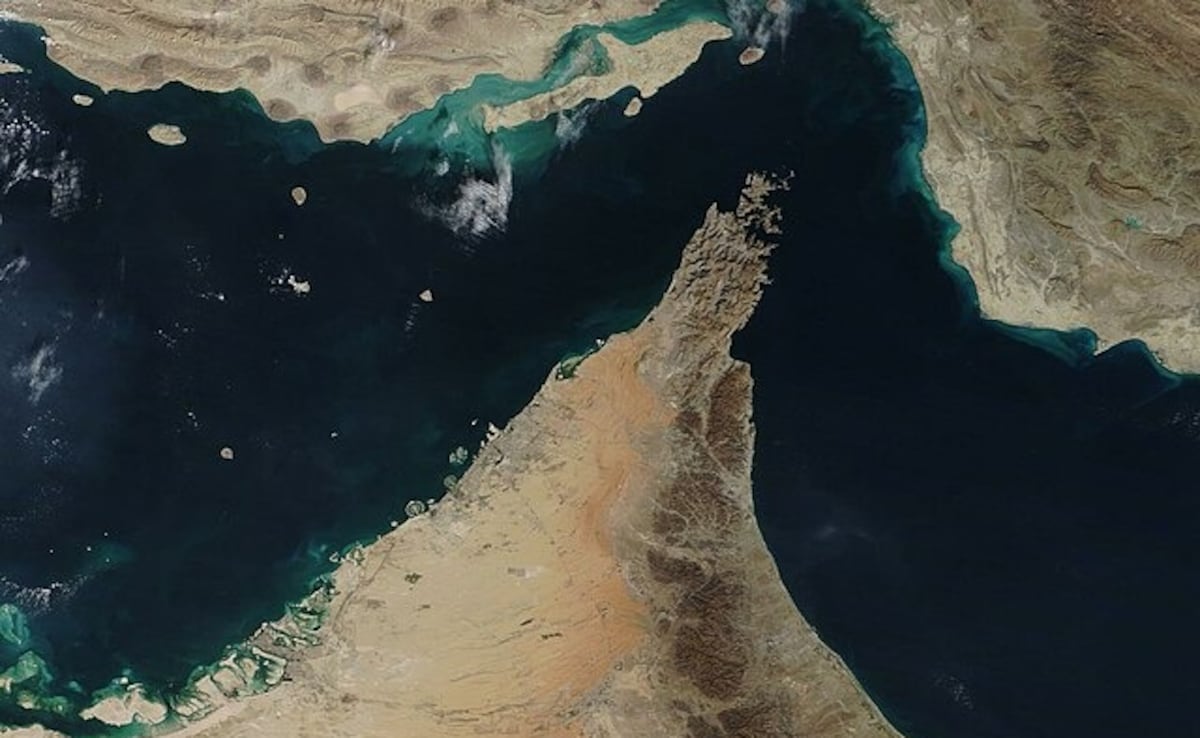
- Geographic Compression: News outlets often treat the Middle East as a monolith. A strike 1,500 kilometers away is reported with the same urgency as a local event.
- Economic Interest: Panic generates clicks; stability is boring.
- Historical Bias: The assumption that any regional fire will inevitably consume the financial centers.
In reality, the UAE has invested decades into the Decoupling Strategy. This involves diversifying the economy away from regional volatility and positioning itself as a "Safe Harbor" (the Switzerland of the Sands). The calm observed by the Google employee is the intended ROI of this multi-billion dollar strategic positioning.
The Risk of Over-Optimization
While the current model facilitates an environment of order during strikes, it carries a latent risk: The Black Swan of Infrastructure Failure. Because the population is conditioned to rely entirely on the state's "hardened shell," a single successful breach of that shell—physical or cyber—could lead to a catastrophic collapse of public confidence.
The current stability is dependent on:
- 100% uptime of the electrical grid (essential for water desalination).
- Uninterrupted access to global financial rails.
- The perceived invincibility of air defense systems (Thaad and Patriot batteries).
If any of these three nodes are compromised, the "Calm and Order" would transition to "Total System Failure" without the intermediate step of "Managed Chaos" seen in less optimized cities.
Strategic Allocation of Confidence
For the global professional or investor, the lesson of the Dubai ground reality is one of Zone-Specific Resilience. You are not betting on the region; you are betting on the specific infrastructure and governance model of the enclave.
The immediate action for any entity operating within this environment is to audit their own internal "Stability Buffer." Do not rely on external news cycles to gauge local risk. Instead, monitor the Friction Indices of the city:
- Utility Stability: Are there fluctuations in power or water delivery?
- Supply Chain Velocity: Are luxury and essential goods still arriving at standard intervals?
- Connectivity Latency: Is the state-managed internet experiencing packet loss or rerouting?
If these three indices remain nominal, the regional kinetic activity is, from a functional perspective, noise rather than signal. The "Ground Reality" is that in a high-tech autocracy, stability is a service provided to the residents, and as long as the subscription to that service is maintained by the state, the local economy will continue to operate regardless of the horizon's glow.
Identify the critical dependencies of your local operations. If your presence in the region is based on the "Safe Harbor" premise, your primary risk is no longer the missile; it is the potential degradation of the infrastructure that makes the missile irrelevant. Maintain a diversified liquidity position outside the immediate jurisdiction to hedge against a systemic "Hardened Shell" failure, but continue operational expansion as long as the state’s logistical and defensive KPIs remain within the 99th percentile of performance.