The dust in Antananarivo has a specific weight. It is laterite—fine, rust-colored, and persistent. It settles on the shoulders of the men selling phone cards by the roadside and coats the stacks of newspapers piled high in the stalls of Analakely market. For the seventeen million people living on the edge of the world’s fourth-largest island, that dust is the backdrop to a life lived in a perpetual state of "maybe."
In the high-ceilinged offices of the Independent National Electoral Commission (CENI), the "maybe" finally found a boundary. The date has been etched into the calendar: November 2027.
To a distant observer, this is a dry administrative update. A scheduled rotation of power. A box checked in the manual of democratic governance. But to a mother in the drought-stricken south, or a young entrepreneur in the capital trying to hedge against the next currency crash, 2027 isn’t just a date. It is a horizon. It is the distance they must travel through the dark before the next flickering light of a promised change appears.
The Clock in the Square
Madagascar does not run on the same time as the rest of the world. Here, the past is never quite finished, and the future is always behind schedule.
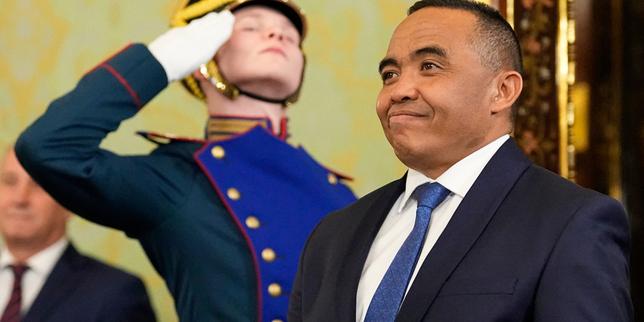
President Andry Rajoelina, currently serving his second term after a contentious 2023 re-election, sits at the center of this temporal loop. His current mandate is a heavy coat. The announcement from the CENI ensures that the next presidential cycle will conclude no later than November 2027, aligning with the constitutional requirement that the vote happens thirty to sixty days before the end of the current term.
Think of it like a long-haul flight where the captain has just announced a three-year delay before the next scheduled landing. The passengers are already tired. The snacks ran out hours ago. Some are pacing the aisles, while others have simply closed their eyes, trying to sleep through the turbulence.
This isn't just about ballots and boxes. It is about the fundamental rhythm of a nation. When an election date is set this far out, it dictates everything from international aid flows to the price of a bag of rice. Investors hate shadows, and an election year is the longest shadow of all.
The Invisible Stakes of the High Plateaus
Imagine a man named Jean. He isn't real, but he is every man I’ve spoken to in the cafes of Isoraka. Jean runs a small textile workshop. For him, the CENI’s announcement is a signal to keep his savings in a mattress rather than expanding his floor space.
"If the vote is in 2027," Jean might say, tapping a cigarette against a wooden table, "then 2026 is for shouting, and 2025 is for worrying. That means I have one year to breathe."
This is the psychological tax of Malagasy politics. The transition of power in this country has rarely been a quiet affair. From the 2009 crisis to the heated disputes of last year, the path to the palace at Iavoloha is often paved with protests and paralyzed streets. By fixing the date now, the government is attempting to project a sense of order. They are trying to tell the world—and the citizens—that the tracks are laid, the train is moving, and there will be no sudden detours.
But order is a fragile thing when the cost of living continues to climb like a mountain path. The facts tell us that Madagascar remains one of the poorest countries on earth, with over 75% of the population living on less than $1.90 a day. When you are hungry, a date three years away feels like a lifetime. It feels like an insult.
The Geography of Doubt
The logistical mountain the CENI must climb is staggering. Madagascar is a continent masquerading as an island. There are villages in the north accessible only by boat or by trekking through rainforests for days. There are regions in the south where "roads" are merely suggestions made by ox-carts in the sand.
To hold an election in November—the start of the rainy season—is a gamble with the elements. The heavens open, the red earth turns to slick, impassable clay, and the "Great Island" becomes a series of disconnected archipelagos.
Why November? Because the constitution demands it. The law is a rigid master, even when the clouds don't care about the law.
The CENI has hinted at the need for a revised electoral census. They need to find the millions of people who have moved, who have come of age, or who have simply slipped through the cracks of a crumbling civil registry. This is the "boring" work that determines who actually holds power. If a thousand people in a rural district can't get their ID cards because the local office ran out of ink, a presidency can pivot.
The Silence Between the Shouts
Right now, the opposition is relatively quiet. The fire of the 2023 protests hasn't gone out; it has just moved underground, smoldering in the charcoal pits and the crowded taxi-be buses.
They are looking at 2027 and calculating. Who has the stamina for a three-year climb? In politics, three years is enough time for a hero to become a villain and for a ghost to return to life. The current administration has the advantage of the megaphone, but the opposition has the advantage of the grievance.
There is a specific kind of fatigue that sets in when a country is constantly "in transition." People stop looking at the posters. They stop listening to the radio broadcasts. They turn inward, focusing on the immediate: the harvest, the school fees, the price of vanilla.
The danger of a date set so far in the future is apathy. If the people believe that the outcome is a foregone conclusion, or that the process is a game played by elites in the capital, they check out. And a democracy without participants is just a theater with an empty audience.
The Weight of the Paper
I remember watching an old woman in a village near Antsirabe during a previous vote. She held her ballot with both hands, as if it were a fragile bird. She didn't care about the macroeconomic projections or the diplomatic cables from Paris or Washington. She cared that for one minute, inside a wooden booth draped in a cloth, her voice was exactly as loud as the President’s.
That is the emotional core of November 2027. It is the next time that woman gets to hold the bird.
The 2027 date is more than a deadline. It is a pressure valve. It gives the simmering frustrations of the populace a place to go. It says: Wait. Your turn is coming. But waiting is an exhausting business. It requires a level of faith that has been tested to the breaking point by decades of broken promises. The red dust of Madagascar covers everything—the houses, the cars, the dreams of the young. It takes a lot of work to keep things clean. It takes even more work to keep believing that a mark on a piece of paper in 2027 will finally wash the dust away.
The sun sets early in the central highlands. The shadows of the jacaranda trees stretch long across the pavement. In the distance, the lights of the city begin to flicker on, powered by a grid that fails as often as it functions. People head home, stepping over the puddles, eyes on the ground, carrying the weight of the next three years like a heavy sack of grain.
November 2027 is coming. It is a fixed point in a shifting sea. Whether it represents a destination or just another shipwreck remains to be seen, but for now, the island waits. It has become very good at waiting.