The Houthi movement in Yemen has issued a direct challenge to the incoming Trump administration, asserting that no superpower can force the reopening of the Bab al-Mandeb Strait. This is not merely a regional skirmish or a war of words between a rebel group and a superpower. It is a fundamental shift in how non-state actors leverage global trade routes to dictate terms to the West. The Houthis have spent years refining their drone and missile capabilities, transforming one of the world's most vital maritime arteries into a high-risk zone that has already forced global shipping giants to reroute around the Cape of Good Hope.
Donald Trump’s return to the White House brings with it a promise of "maximum pressure" on Iranian proxies. However, the Houthis are betting that the cost of an all-out naval confrontation is higher than the United States is willing to pay. They are signaling that the strategies used during Trump’s first term—sanctions and limited strikes—will no longer suffice to clear the waters of the Red Sea.
The Geography of Defiance
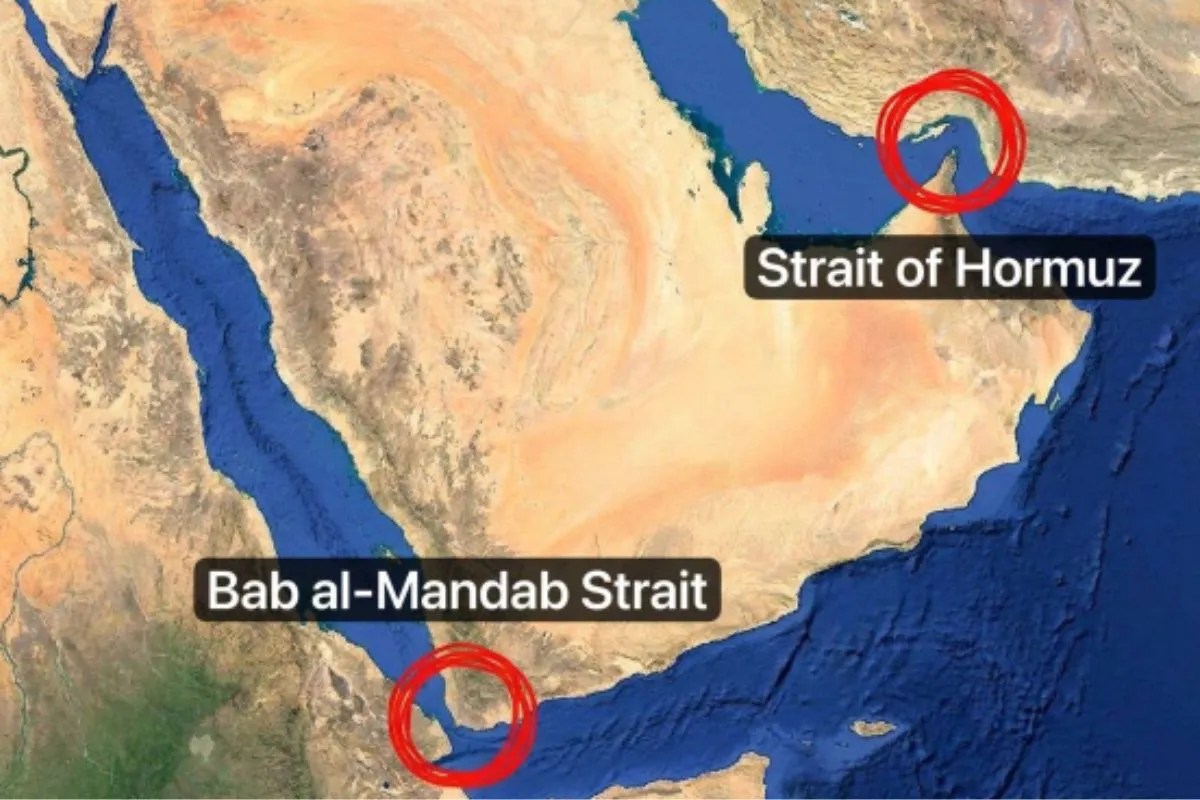
The Bab al-Mandeb is a narrow neck of water, barely 18 miles wide at its tightest point. It acts as the gateway to the Suez Canal. For the Houthis, this geography is their greatest weapon. They do not need a conventional navy to shut down the strait; they only need a steady supply of low-cost loitering munitions and mobile coastal batteries.
The group's recent statements targeting Trump specifically are designed to test the resolve of the new administration before it even takes office. By claiming that "no superpower" can reopen the route, the Houthi leadership is leaning into a narrative of asymmetric victory. They have watched the U.S.-led "Operation Prosperity Guardian" struggle to provide a 100% safety guarantee for commercial vessels. Even with the world’s most advanced Aegis combat systems patrolling the area, the threat of a $20,000 drone hitting a billion-dollar tanker remains high enough to keep insurance premiums in the stratosphere.
Reassessing the Maximum Pressure Model
During his first term, Trump’s Middle East policy centered on isolating Tehran. The Houthis were designated as a Foreign Terrorist Organization (FTO) in the final days of his presidency, a move the Biden administration later reversed citing humanitarian concerns. It is almost certain that the FTO designation will return. But the Houthis of 2026 are not the Houthis of 2017.
They have matured. They have integrated into a "Resistance Axis" that shares intelligence and technology in real-time. The assumption that a more aggressive posture from Washington will lead to an immediate Houthi retreat ignores the internal logic of the movement. For the Houthi leadership, a direct confrontation with the United States is a legitimizing force. It elevates them from a domestic rebel faction to a global player standing up to the "Great Satan."
The economic reality is equally grim. The disruption in the Red Sea has effectively slapped a tax on every container moving from Asia to Europe. If Trump intends to fix the American economy and lower inflation, he cannot ignore the Red Sea. Yet, the traditional military options are fraught with risk.
The Limits of Naval Power
Carrier Strike Groups are impressive, but they are built for blue-water naval battles against peer competitors. They are less effective at playing "whack-a-mole" with mobile launchers hidden in the rugged mountains of North Yemen.
- The Cost Ratio: A single interceptor missile used by a U.S. destroyer can cost upwards of $2 million. The Houthi drone it destroys might cost $15,000. This is an unsustainable attrition model.
- Intelligence Gaps: Decades of war in Yemen have shown that air strikes alone cannot eliminate the Houthi threat. The group has moved much of its assembly and storage underground.
- Regional Fallout: Any significant escalation by the U.S. risks pulling Saudi Arabia and the UAE back into a conflict they have been desperately trying to exit through a fragile peace process.
The Iranian Factor
One cannot discuss Houthi audacity without looking at Tehran. The Houthis provide Iran with a "kill switch" for global trade that provides plausible deniability. Trump’s strategy will likely involve cutting off the flow of parts and funding from Iran to Yemen. However, the Houthis have achieved a level of domestic manufacturing capability that makes a total blockade difficult. They are no longer just importing finished missiles; they are importing high-end components and assembling the frames locally.
The Houthi threat to Trump is a message to the world that the old rules of maritime security are dead. They are betting that the American public has no appetite for another ground war in the Middle East and that naval strikes will remain indecisive.
The Commercial Fallout
Shipping companies like Maersk and Hapag-Lloyd have already signaled that they view the Red Sea as a long-term risk. Even if the U.S. Navy begins escorting every single vessel, the logistical delays of forming convoys would still cripple the "just-in-time" supply chains the modern world relies on.
The Houthis are aware that their leverage increases the longer the disruption lasts. They are using the Bab al-Mandeb as a bargaining chip not just for Yemeni interests, but as a tool to force shifts in Western policy regarding Gaza and broader regional alliances. By naming Trump, they are attempting to bypass the State Department and speak directly to the man who prides himself on being a "deal-maker."
But what kind of deal can be made with a group that views its mission as a divine mandate?
Tactical Evolution on the Coastline
We are seeing a move toward more sophisticated maritime harassment. This includes the use of unmanned surface vessels (USVs)—essentially remote-controlled boat bombs—that are difficult to detect in choppy waters. The Houthis have also demonstrated an ability to use AIS (Automatic Identification System) data to specifically target ships with links to the U.S., UK, or Israel, showing a level of electronic surveillance that was previously underestimated.
If the Trump administration chooses to respond with force, it will have to go beyond the "proportional" strikes of the past. It would require a sustained campaign against Houthi leadership and infrastructure that would almost certainly lead to a humanitarian catastrophe in a country already on the brink. This is the trap the Houthis have set. They are inviting an overreaction that would turn global opinion against the U.S. while proving their own resilience.
The Bab al-Mandeb is a 20-mile wide choke point that has become the center of the geopolitical universe. The Houthis have realized that in the modern era, you don’t need to be a superpower to hold the world’s economy hostage. You just need to be willing to break things and stay in the fight longer than the other side.
The incoming administration faces a choice between a costly, grinding naval war or a diplomatic maneuver that would require recognizing the Houthis as a permanent fixture of the Middle Eastern power structure. Neither option is palatable. The Houthis are counting on that paralysis. They have spent years in the caves of Saada preparing for this moment, and they believe they have already won by simply forcing the world to acknowledge their grip on the strait.
The weapons may be drones and missiles, but the real battle is one of endurance. The Houthis have survived years of bombardment by a regional coalition backed by Western intelligence. They are not intimidated by the prospect of a four-year term in Washington. They are playing a much longer game, one where the geography of the Red Sea remains their most loyal ally.
If the U.S. cannot find a way to neutralize the Houthi threat without setting the entire region on fire, the "unopenable" strait will remain a monument to the limits of traditional military dominance. The world is watching to see if the deal-maker can find a third way, or if the Bab al-Mandeb will become the graveyard of the next era of American foreign policy.
The reality on the water is that the Houthis have achieved what many thought impossible: they have made the world's most powerful navies look like spectators. Every day a tanker diverts to the Cape of Good Hope, the Houthi claim of a "closed" strait becomes a self-fulfilling prophecy. This isn't just about Trump. It's about whether the global order can still protect the arteries of commerce when a determined actor decides to sever them.