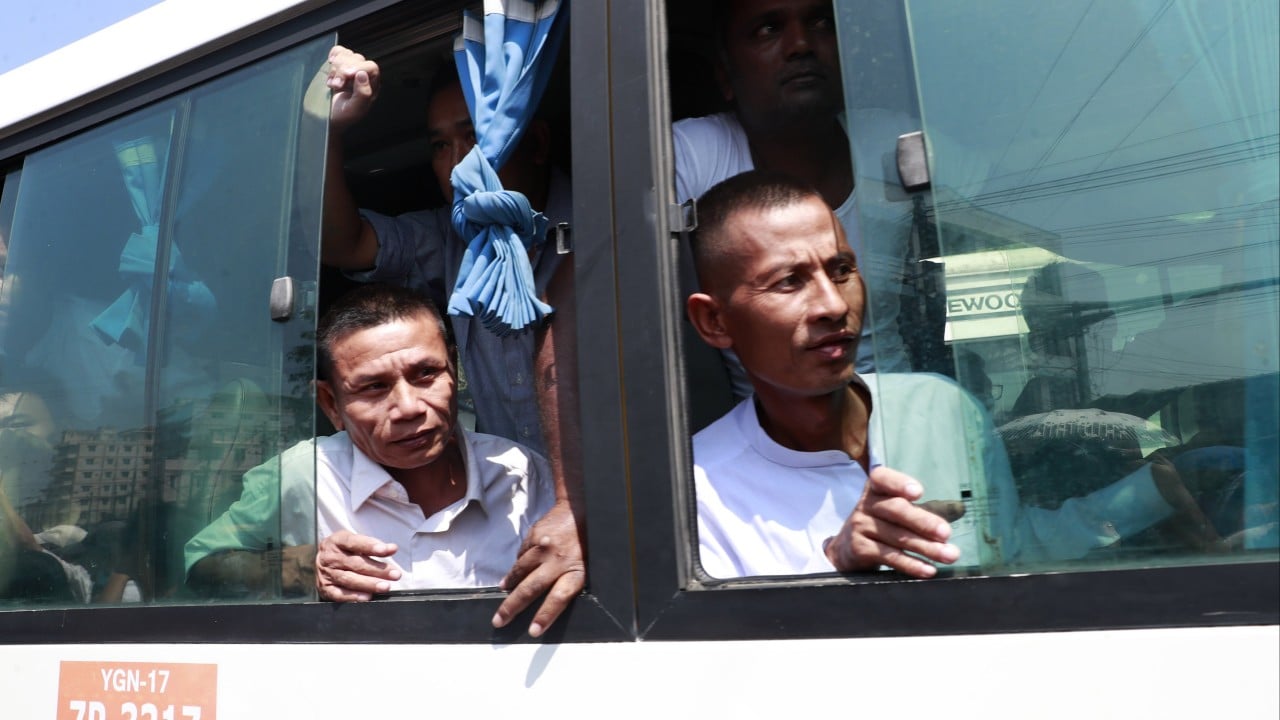
Don't let the headlines about "humanitarian gestures" fool you. When the Myanmar junta announced on March 2, 2026, that it would release over 10,000 prisoners to mark Peasants’ Day, it wasn't a change of heart. It was a calculated PR move by a regime that's effectively boxed into a corner.
For years, the military has used the Counter-Terrorism Law as a catch-all net to silience anyone who dared to support the pro-democracy movement. Now, they're suddenly opening the gates for thousands of people they previously labeled as "terrorists." If you're looking for the real story, look at the timing. This comes right after a series of staged, multi-phase elections and a brutal civil war that isn't going the military's way.
The Numbers Behind the Gates
The scale of this amnesty is massive on paper. According to state-run media, the National Defense and Security Council (NDSC) pardoned:
- 7,337 prisoners specifically convicted under the Counter-Terrorism Law.
- 2,825 domestic prisoners held for other offenses.
- 10 foreign prisoners who were promptly ordered for deportation.
- 12,487 individuals who had pending charges under the same terrorism legislation.
Think about that for a second. That’s nearly 12,500 people who were living in the shadows, facing trial for simply existing in opposition to the coup, who suddenly had their cases dropped. While families are rightfully celebrating outside the walls of Insein Prison, the reality is that these people should never have been in those cells to begin with.
Why Terrorists are Suddenly Citizens Again
The junta’s branding is hilarious if it weren't so tragic. They’ve spent five years telling the world that anyone supporting the National Unity Government (NUG) or the People’s Defense Forces (PDF) is a violent extremist. By releasing them now, the military is trying to signal a "return to normalcy" to the international community.
They want you to think they're transitioning to a civilian government. After the January elections—which were essentially a one-horse race for the military-backed Union Solidarity and Development Party (USDP)—the generals need to look like they're playing fair. Dropping terrorism charges is the easiest way to scrub the ledger without actually giving up power.
It’s a revolving door. Human rights groups like the Assistance Association for Political Prisoners (AAPP) have seen this before. You release 10,000 today; you arrest 500 tomorrow. It keeps the international critics busy while the core machinery of the coup stays exactly where it is.
Life Inside the Black Hole
We can't talk about these releases without talking about what these people are leaving behind. Reports from those who have survived the junta’s interrogation centers describe a literal hell. We're talking about suspension from ceilings, being forced to crawl on glass, and the use of insects or snakes to break people’s spirits.
The AAPP recently noted that at least 1,853 people have died in custody since 2021. Many of those being "freed" today are walking out with permanent physical and psychological scars. They’re being released on the condition that if they "reoffend"—which in Myanmar just means disagreeing with a soldier—they’ll have to serve their old sentence plus whatever new one the junta dreams up. It’s not freedom. It’s a leash.
What This Means for the Resistance
Does this mean the civil war is ending? Absolutely not. If anything, the junta is more desperate. They’ve lost huge swaths of territory in the North and along the borders to ethnic armed organizations and the PDF.
The military is spread thin. By clearing out the prisons and dropping cases against 12,000 people, they’re also clearing out administrative backlogs and trying to reduce the friction in areas they still control. It’s a tactical retreat on the legal front so they can focus their resources on the actual front lines, where they’re increasingly relying on drone strikes and paramotors to hit civilian targets because their ground troops are failing.
Reality Check on the "Elections"
The junta claims these releases are to ensure "peace of mind" for the public during the election cycle. But the elections themselves were a joke. The National League for Democracy (NLD), the party that actually won the 2020 vote, was dissolved. Aung San Suu Kyi remains in a 27-year prison sentence.
You can't have a "transition to democracy" while the person the country actually voted for is locked in a room and the military is bombing the very people it claims to be representing. This amnesty is a thin coat of paint on a crumbling house.
What to Watch for Next
If you're following this, don't just count the number of people walking out of Insein. Watch what happens to them in the next three months.
- Check for re-arrests: The junta often uses these amnesties to identify who is still active in the resistance.
- International Reaction: See if ASEAN or Western governments use this as an excuse to soften sanctions. If they do, the junta’s gamble worked.
- The Foreigners: Watch which 10 foreigners were released. Usually, these are bargaining chips used to smooth over relations with neighbors like Thailand or China.
This isn't a victory for human rights. It’s a survival tactic from a regime that knows its time is running out. If you want to support the people of Myanmar, keep the pressure on. Support the organizations that actually track these detainees, because once the cameras leave the prison gates, the real struggle for those "freed" prisoners begins all over again.
Stay informed by following updates from the AAPP and independent news outlets like Myanmar Now or The Irrawaddy. Don't take the junta's press releases at face value.