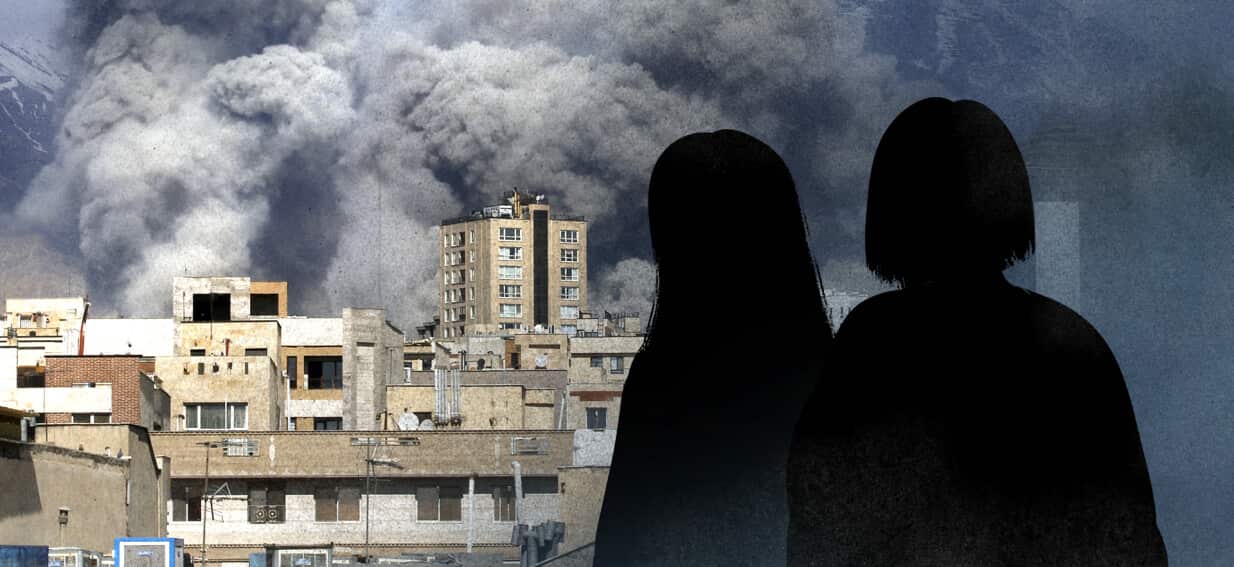
Ordinary Iranians are currently experts in a field they never wanted to study. They’re experts in the sound of distant explosions and the specific way the currency devalues overnight. While the world watches satellite feeds of missile trajectories and high-level diplomatic posturing, people on the ground in Tehran, Isfahan, and Tabriz are calculating the literal cost of survival. This isn't just about geopolitics. It’s about the crushing weight of waiting for a shoe to drop that has been hovering mid-air for decades.
Living in the shadow of war means your life is dictated by a "shadow economy" and "shadow politics." You don’t plan for next year. You barely plan for next month. When you talk to someone in Tehran today, they don't lead with ideology. They lead with the price of red meat. They talk about the fact that a simple grocery run now feels like a financial heist.
The Financial Frontline inside Iran
War doesn't always start with a siren. Sometimes it starts with a notification from a banking app. Every time tensions spike between Iran and its neighbors or the West, the rial takes another hit. This isn't abstract. For a middle-class family, it means their savings just evaporated by 10% while they were eating breakfast.
Imagine working a full-time job and watching your purchasing power disappear in real-time. It creates a frantic, high-stress environment where people rush to convert whatever liquid cash they have into gold, iPhones, or hard currency. Anything but the rial. This constant state of economic panic is a form of psychological warfare that the Iranian people have endured for years.
The "price of change" that many activists talk about is often paid in these daily, grueling increments. It’s not just about the risk of a strike on a military base. It’s about the fact that medicine for your parents is suddenly out of stock because the supply chains are choked by sanctions and the looming threat of closed borders.
The Mental Toll of Constant Escalation
Psychological fatigue is real. You can only stay at "High Alert" for so long before your brain just shuts down or starts to normalize the absurd. People in Iran have developed a dark, cynical humor to cope. They’ve seen the headlines before. They’ve heard the threats.
But this time feels different to many. There’s a sense that the buffer zones are gone. In previous years, there was always a feeling that some backchannel or diplomatic maneuver would pull the region back from the brink. Now, those backchannels seem frayed.
Social media plays a massive role here. In the "shadows of war," Information is both a lifeline and a weapon. People spend hours scrolling through Telegram channels, trying to decipher which "breaking news" alert is state propaganda, which is foreign psyops, and which is a genuine warning of an incoming strike. It’s an exhausting way to live.
What the West Often Misses
Western media tends to frame the situation in Iran through two lenses. Either the people are all revolutionary firebrands or they’re all helpless victims. Neither is true. Most are just trying to navigate a system that’s increasingly detached from their reality.
There’s a massive gap between the official state rhetoric and what you hear in the shared taxis of Tehran. While the billboards might show military strength, the conversations in the streets are about the lack of jobs and the frustration of being isolated from the global community. Many young Iranians are incredibly tech-savvy and globally connected via VPNs. They see how the rest of the world lives. That contrast creates a specific kind of resentment that is just as explosive as any missile.
The Double Bind of Sanctions and State Control
Sanctions are meant to pressure the government, but they often end up crushing the people who have the least power to change things. It’s a bitter irony. The people who want reform the most are the ones struggling to afford the internet access they need to organize. Meanwhile, those with ties to the power structures always find ways to bypass the restrictions.
It’s a lopsided struggle. You have a population that is highly educated and eager for engagement, trapped between a domestic policy that prioritizes ideology over the economy and an international policy that uses broad-spectrum economic pain as a primary tool.
The Resilience of the Iranian People
Despite everything, life continues in ways that would surprise outsiders. People still go to cafes. They still celebrate weddings. They still find ways to create art and music, often underground. This resilience isn't a sign that "everything is fine." It’s a survival mechanism.
If you want to understand what's actually happening, look at the art coming out of the country. Look at the films that manage to get past the censors. They tell the story of a society that is incredibly vibrant but physically and mentally exhausted by the "shadow of war."
The Cost of Silence and Speaking Out
Speaking from the shadows is dangerous. When eyewitnesses talk to international journalists, they're often risking their freedom. The state's grip on dissent has tightened significantly since the 2022 protests. The "price" of change now includes a very real risk of imprisonment or worse for even minor acts of defiance.
Yet, people still talk. They use encrypted apps. They meet in private homes. They find ways to signal their discontent. This internal pressure is a slow-motion earthquake. You don't always see the movement on the surface, but the pressure is building underneath.
How to Support the People Not the Politics
If you’re watching this from the outside, it’s easy to feel helpless or to treat it like a spectator sport. Don't. Start by diversifying where you get your news. Follow independent Iranian journalists and researchers who have skin in the game. Stop looking at the country as just a square on a geopolitical chessboard.
Understand that "change" for an Iranian isn't just a political buzzword. It's a matter of whether they can afford a house, whether they can travel, and whether they can speak without looking over their shoulder. The price has already been paid many times over by the average citizen.
Keep your eyes on the human rights reports from organizations like Amnesty International or the Center for Human Rights in Iran. These groups document the specific cases of those who pay the ultimate price for speaking from the shadows. Awareness is the first step toward any kind of meaningful global solidarity.
Pay attention to the stories that don't make the front page. The story of the teacher who can't afford rent. The student who can't study abroad because of visa bans. These are the true eyewitnesses to the cost of conflict. They are the ones living the reality while the rest of the world debates the theory.