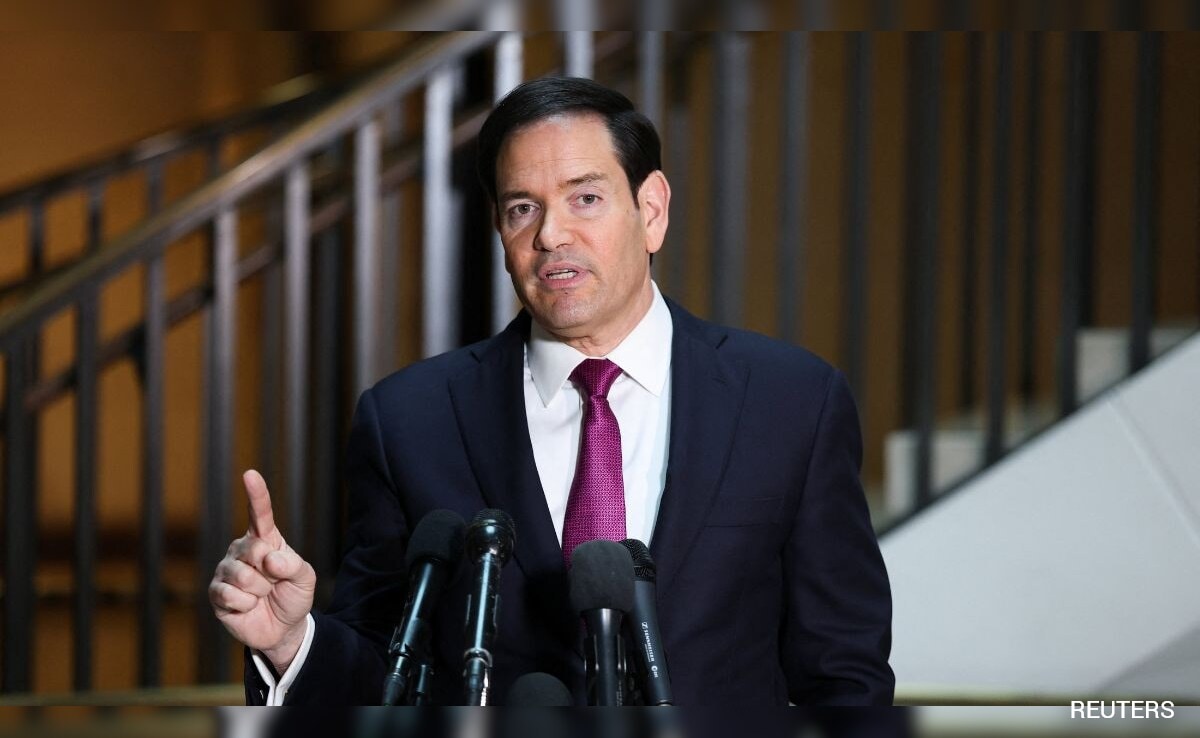
The four words were delivered with the clipped, ominous brevity of a man who has already authorized the flight paths. "You will find out soon," Donald Trump told reporters on Tuesday, March 3, 2026, responding to an Iranian drone strike that breached the perimeter of the United States Embassy in Riyadh. This was not a standard diplomatic warning. It was a verbal placeholder for a massive kinetic escalation already in motion.
While initial reports focused on the "soon" warning, the reality on the ground is far more volatile than a single soundbite suggests. Two Iranian drones struck the Riyadh compound early Tuesday morning, sparking fires and forcing American personnel into hardened shelters. This strike was not an isolated act of desperation; it was a calibrated response to "Operation Epic Fury," the joint U.S.-Israeli offensive that successfully targeted and killed Iran's Supreme Leader, Ayatollah Ali Khamenei, just days prior.
The Failure of Traditional Deterrence
For decades, the "red line" for American intervention in the Middle East was the direct targeting of sovereign diplomatic soil. The strike in Riyadh proves that the old rulebook has been incinerated. By hitting an embassy in the heart of Saudi Arabia—a key American ally—Tehran is signaling that no corner of the Arabian Peninsula is safe from its reach, even as its internal command structure collapses.
The "why" behind this specific escalation is clear: Iran is attempting to force a ceasefire by targeting the "lifeblood" of the global economy and the safety of American diplomats. Following the strike, Saudi Aramco was forced to shutter the Ras Tanura refinery near Dammam after similar drone incursions. This isn't just a spat over embassy walls. It is a systematic attempt to make the cost of the U.S.-Israeli campaign too high for the West to bear.
A War of Choice or Necessity
Donald Trump’s current strategy differs fundamentally from his first term. In 2020, the strike on Qasem Soleimani was a "one-off" aimed at disrupting specific tactical operations. Today, we are witnessing a full-scale dismantling of the Iranian state’s military capacity. Trump has projected a four-to-five-week window for "major combat operations," but his willingness to go "far longer" suggests a commitment to total regime transition that previous administrations avoided at all costs.
Critics argue this is a "war of choice" being waged on behalf of regional allies. Iranian Foreign Minister Abbas Araghchi echoed this sentiment from an undisclosed location, claiming that the "shedding of both American and Iranian blood is on Israel Firsters." However, the intelligence community points to a different "how." The CIA and Mossad reportedly spent months tracking the movements of the senior leadership council, culminating in the strikes that decapitated the regime's top tier.
The Riyadh Breach and the New Front Lines
The attack in Riyadh is particularly galling for the Pentagon because of where it happened. Saudi air defenses, bolstered by American Patriot batteries, reportedly intercepted four other drones targeting the diplomatic quarter. The two that got through exposed a critical vulnerability in "point defense" systems against low-flying, slow-moving suicide UAVs.
Key Casualties and Costs So Far:
- American Personnel: 6 service members confirmed dead since the start of operations.
- Iranian Leadership: Ayatollah Ali Khamenei and approximately 40 senior officials killed.
- Regional Impact: At least 555 people dead in Iran; dozens more in Lebanon and Israel.
- Economic Blow: Saudi Aramco's Ras Tanura refinery remains offline, capacity over 500,000 barrels per day.
This is no longer a "maximum pressure" campaign; it's a "maximum disruption" strategy. The U.S. Embassy in Baghdad is also under a Level 4 "Do Not Travel" advisory after hundreds of Iraqi protesters attempted to storm the Green Zone. We are seeing a synchronized, multi-front Iranian counter-offensive that seeks to drown the region in chaos before the American military can "finish the job" as Trump promised.
The Nuclear Gamble
The "how" of the current American offensive is centered on eliminating Iran's nuclear and naval capacities. Trump confirmed that U.S. forces have already "knocked out" 10 ships and are systematically destroying missile production sites. This is a pre-emptive strike against a regime that has spent the last year racing toward a weaponizable nuclear device.
The "why" is more complex. Trump’s 2025 "maximum pressure" 2.0 did not bring Iran to the negotiating table. Instead, it pushed them into a corner from which their only escape was a full-scale regional confrontation. This isn't just about drones and embassies; it's about whether the United States can actually "end the threat" or if it's merely opening a new chapter of a forever war.
The Looming Retaliation
"You'll find out soon" is the kind of rhetoric that leaves zero room for de-escalation. By the time that sentence was uttered, B-52 bombers were likely being fueled and carrier-based F/A-18s were already over the Arabian Sea. The target for this "soon" retaliation is not just the drone launch sites. It is the remainder of the IRGC command and the infrastructure that supports the "Axis of Resistance" across Yemen, Syria, and Iraq.
The true test of the Trump administration's "Peace Through Strength" doctrine will not be the first week of strikes. It will be the fifth week, when the initial "ahead of schedule" optimism meets the reality of a headless but still heavily-armed Iranian military. If the goal is a "prosperous and glorious future" for the Iranian people, as Trump told them on Truth Social, then the coming days will decide whether that future is built on the ruins of the Middle East or something more stable.
The Riyadh attack was a clear signal: the Iranian regime is prepared to burn the house down on its way out.