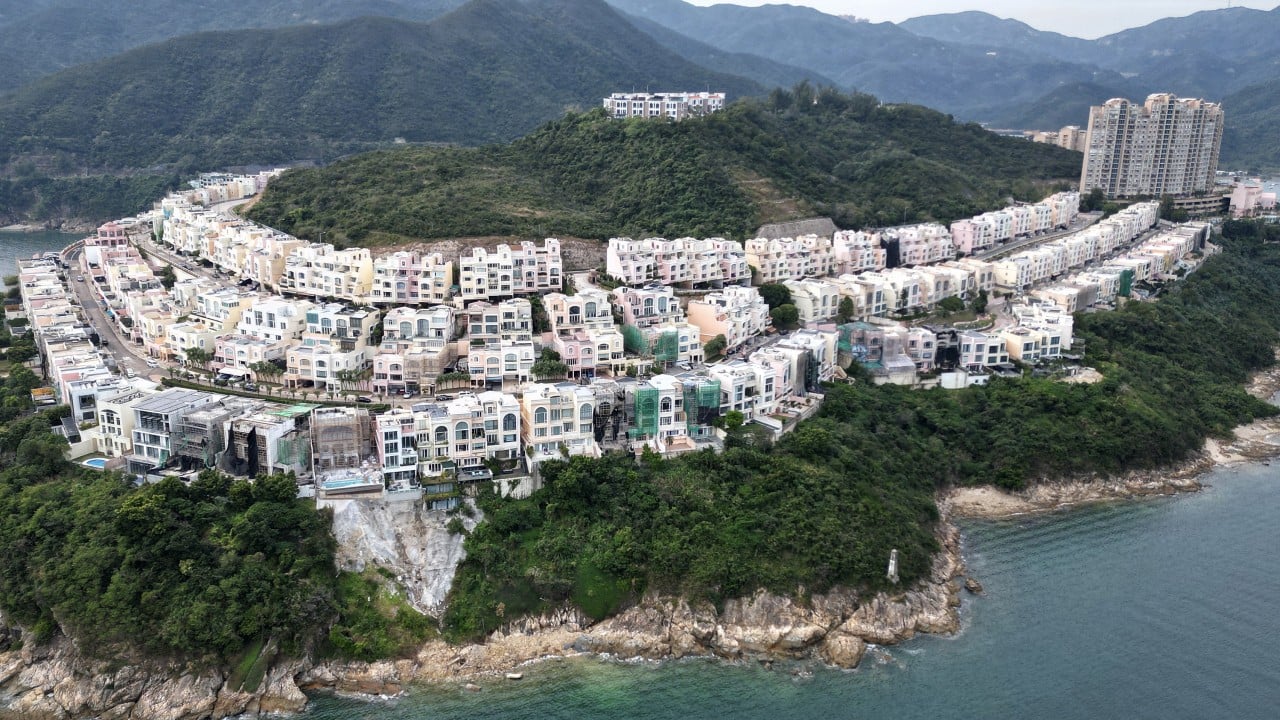
A fine of HK$110,000 for illegal construction at a luxury Redhill Peninsula home serves as a stark reminder that for Hong Kong’s ultra-wealthy, the law is often viewed as a line item rather than a boundary. This specific penalty, handed down to an owner for unauthorized building works and an illegal swimming pool, highlights a systemic failure in the city’s land management. While the Buildings Department celebrates these convictions as proof of enforcement, the math suggests otherwise. For a property valued in the hundreds of millions, a six-figure fine is not a deterrent. It is a rounding error.
The investigation into the Redhill Peninsula started not with a proactive audit, but with a landslide during a record-breaking rainstorm. Nature stripped away the foliage and the excuses, revealing that several luxury villas had carved out massive basements and extensions into the hillside, compromising the very stability of the slope. This is the reality of Hong Kong’s high-end property market: a frantic, hidden scramble for square footage that exists entirely off the books.
The Cost of Doing Business on the Hillside
To understand why a homeowner would risk a criminal record for an extra basement or a pool, you have to look at the price per square foot. In areas like Tai Tam or the Peak, usable space is the ultimate currency. If an owner can illegally add 1,000 square feet to a villa, they have effectively added tens of millions of dollars to the property's market value.
The HK$110,000 fine is a pittance in this context.
When the Buildings Department issues an order to demolish an illegal structure, the owner usually enters a long, drawn-out process of appeals, technical delays, and requests for extensions. During this time, they continue to enjoy the space. Even if the case reaches the courts, the fines are rarely set at the maximum allowed by the Buildings Ordinance. This creates a perverse incentive structure. If the "tax" for stealing land from the public or the environment is lower than the profit gained from the theft, people will keep stealing.
Engineering Risks and Public Safety
The Redhill Peninsula incident was more than a zoning violation. It was a geological gamble.
When you excavate a hillside to create a "hidden" basement, you change the drainage patterns of the slope. Hong Kong is a city built on weathered granite and volcanic rock, prone to saturation during typhoons. Professional engineers spend years calculating the exact retaining force needed to keep these hills from collapsing. Illegal contractors, working under the cover of night or behind high fences, rarely follow these protocols.
They bypass the vetting process of the Buildings Department. They skip the soil tests. They ignore the potential for "piping"—where water carves out underground channels that eventually lead to catastrophic failure. When the slope gave way at Redhill, it wasn't just the owner’s pool that hung over the abyss; it was the safety of the entire community and the public infrastructure below.
The Blind Spots in Enforcement
The current enforcement regime is reactive. The Buildings Department largely relies on reports from the public or visual cues from the street. However, the most egregious violations happen in gated communities where drones are discouraged and high walls block any view of the ground level.
There is also a significant backlog. Thousands of removal orders remain unexecuted across the territory. The department often prioritizes "high-risk" structures in older urban areas where crumbling concrete poses an immediate threat to pedestrians. This is a logical use of resources, but it has allowed a culture of entitlement to fester in the luxury sector. Owners assume that if they are quiet and their neighbors don't complain, the government will never knock on their door.
The Shell Company Shield
Accountability is further muddied by the way these properties are held. Many of Hong Kong’s most expensive homes are owned via offshore shell companies or complex trust structures. When a building order is issued, identifying the "person" responsible can be a legal marathon.
In the case of the recent fines, the prosecution targeted the registered owners, but the process took months of investigation. For many high-net-worth individuals, having their name on a court summons is more painful than the fine itself. Yet, the legal system often treats these as minor regulatory infractions rather than what they are: a deliberate subversion of the city’s safety standards for personal profit.
The Role of Professionals
No major illegal structure is built by a lone homeowner with a shovel. These are complex projects requiring heavy machinery and skilled labor.
- Architects and Engineers: Any registered professional who participates in or turns a blind eye to unauthorized work risks their license. Yet, the pressure to "maximize" a client’s investment often leads to a "don't ask, don't tell" policy regarding renovations.
- Estate Agents: There is a gray area in how these properties are marketed. While agents are legally required to disclose known issues, the "added value" of a large basement is often used as a quiet selling point, whispered to potential buyers as a feature that simply hasn't been "formalized."
- Contractors: The "grey market" for luxury renovations is booming. These firms specialize in working fast and keeping a low profile, often using noise-reduction blankets and sealed trucks to move debris without alerting the neighborhood.
A Systemic Change is Required
If Hong Kong wants to stop the hillsides from being hollowed out, the penalty must exceed the profit.
The most effective tool is not the fine, but the "tilling" of the property title. If a building order is registered against a property (a process known as "dinging"), the owner cannot sell or refinance the home until the illegal structure is removed and the site is restored. This hits where it hurts: liquidity.
However, even this has its limits. If an owner intends to live in the home for twenty years, a title encumbrance is a minor inconvenience. The government needs to move toward more aggressive physical interventions. In cases where the structure poses a risk to the slope, the Buildings Department has the power to send in its own contractors to demolish the work and bill the owner for the cost—plus an administrative surcharge.
Increasing the frequency of these "government-led" demolitions would send a much stronger signal than a HK$110,000 fine ever could.
The Land Policy Paradox
This issue touches on the broader tension in Hong Kong’s land policy. The government is the sole landlord of almost all land in the city, leasing it out for 50-year terms. When an owner builds an illegal basement, they are effectively squatting on government land. In a city where thousands of families live in subdivided flats smaller than the illegal swimming pool in Redhill, the optics of these violations are disastrous.
The disparity in enforcement is visible. A street hawker face immediate fines for obstructing a sidewalk, yet a billionaire can excavate a mountain for a private cinema and take years to face a court. This erosion of the "equal before the law" principle is arguably more damaging to Hong Kong’s social fabric than the physical damage to the hillsides.
Environmental Impact of Luxury Expansion
The ecological cost is rarely calculated in these court cases. Illegal structures often involve the destruction of protected trees and the disruption of local flora that provide natural slope stability. When an owner paves over a garden to install a pool, they increase the surface runoff during storms. This water has to go somewhere, and it usually ends up putting more pressure on the public drainage systems or the slopes of the properties located further down the hill.
The HK$110,000 fine doesn't go toward reforestation or slope stabilization. It goes into the general government coffers, leaving the environmental damage unaddressed unless the owner is specifically ordered to remediate the site.
The Future of the Peninsula
Redhill Peninsula is now under a microscope. The Buildings Department has announced a large-scale inspection of similar luxury developments. Satellite imagery and drone technology are finally being used to compare the "as-built" reality with the original approved plans.
This will likely lead to a surge in prosecutions, but the outcome will depend on the judiciary. If the courts continue to view these as "technical" breaches of the building code, nothing will change. Only when the penalties reflect the market value of the stolen space and the cost of the risk imposed on the public will the luxury construction boom finally slow down.
The landslide of 2023 was a warning. The city can either tighten its grip on the hillside or wait for the next storm to do the enforcement for them.
The burden now lies with the Lands Department to move beyond simple fines and toward a policy of total restoration. Every cubic meter of earth moved illegally must be replaced. Every illegal pool must be filled with concrete. Until the physical gain is erased, the legal loss will remain nothing more than a minor inconvenience for the elite.
Stop treating the building code as an optional suggestion for the wealthy. Require mandatory structural audits for any luxury property transaction over a certain value. If a buyer knows they are inheriting a legal and physical liability that could result in the immediate forfeiture of the property’s use, the market for "modified" villas will evaporate overnight. Change the math, and you change the behavior.