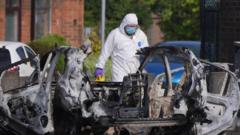
More boots on the ground is the oldest lie in the book.
Every time a car bomb rattles a city or a dissident group makes a move, the machinery of optics kicks into high gear. The statement is always the same: "Police are stepping up patrols to counter the threat." It sounds decisive. It feels comforting. It is almost entirely useless.
If you believe that a few extra cruisers circling the block at 20 mph will deter a motivated cell of dissidents, you are falling for security theater. You are watching a performance designed to manage your anxiety, not to dismantle a terror network.
The Myth of Visibility as Prevention
The central argument for increased patrols rests on the idea of the "visible deterrent." The logic suggests that if an attacker sees a police officer, they will pack up their explosives and go home. This works for shoplifting. it does not work for organized political violence.
Dissidents are not opportunistic petty criminals. They are calculated. They observe. They wait. When the police surge ends—and it always ends, because budgets are finite and officers get tired—the gap opens back up. By telegraphing exactly where your resources are, you are essentially providing a roadmap of where the dissidents should not strike today, while confirming exactly where they can strike tomorrow.
Reactive surges are a logistical nightmare that yields diminishing returns. When you pull officers from investigative units to stand on street corners, you aren't increasing safety. You are sacrificing the quiet, grueling work of intelligence gathering for the sake of a photo op. You are trading the cure for a cough drop.
Intelligence Is Not Found on a Street Corner
I have seen departments burn through their annual overtime budget in three weeks of "increased visibility" following a threat. What did they get for it? A few dozen traffic tickets and a exhausted workforce. Meanwhile, the actual threat remained untouched because the people capable of tracking digital footprints and informant leads were stuck directing traffic near a town square.
Counter-terrorism is a game of whispers and data. It happens in windowless rooms, not under the flashing blue lights of a patrol car.
- Human Intelligence (HUMINT): Building rapport with communities to find out who is buying high-octane fuel or fertilizer.
- Signal Intelligence (SIGINT): Monitoring encrypted communications and tracking the movement of funds.
- Logistical Interdiction: Identifying the supply chain of the components used in the car bomb.
A patrol officer cannot see a detonator hidden in a trunk from the sidewalk. They cannot hear the conversation happening in a basement three miles away. To suggest that "stepping up patrols" is a counter-measure to a car bomb is like trying to stop a computer virus by hiring more security guards for the office building.
The High Cost of the "Quick Fix"
There is a dark side to these surges that the official press releases never mention. High-intensity policing in response to dissident activity often alienates the very communities whose cooperation is vital.
When a neighborhood is flooded with police who are on high alert and looking for a fight, the friction between the public and the law increases. Stop-and-search numbers spike. Tensions boil. For a dissident group, this is a gift. They thrive on the narrative that the state is an occupying force. Every heavy-handed patrol is a recruitment tool for the people who planted the bomb in the first place.
Imagine a scenario where a police force decides to skip the patrols and instead spends that same money on deep-cover operations or community outreach programs that actually identify radicalization at the source. The public would scream. They would claim the police are doing nothing. Why? Because you can’t see an undercover operation from your front window.
We have been conditioned to demand the visual over the effective. We want the "show of force" because we are too impatient for the "work of force."
Following the Money Instead of the Siren
Let’s look at the numbers. The cost of maintaining a 24/7 "high visibility" presence in a sensitive area can run into the hundreds of thousands of dollars per week.
| Activity | Cost Level | Long-term Impact | Visibility |
|---|---|---|---|
| Increased Patrols | Very High | Low/Temporary | Extreme |
| Intelligence Ops | Moderate | High/Permanent | Zero |
| Community Liaison | Low | High/Preventative | Moderate |
If the goal is truly to stop the next bomb, the money should be flowing toward forensic accountants and technical surveillance. Car bombs require money. They require precursors. They require a safe house. None of those things are visible from a passing patrol car.
The "dissident threat" is a sophisticated problem. It is a network of ideology and logistics. Meeting that network with a 1950s-style "cop on the beat" strategy is not just outdated; it is a dereliction of duty. It signals to the dissidents that the state is out of ideas and is resorting to bluster.
The Hard Truth About Security
We need to stop asking "Where are the police?" and start asking "What are they finding?"
If we continue to reward the police for "stepping up patrols," we are incentivizing a cycle of reactive, shallow policing. We are telling them that we value the feeling of being safe more than the reality of being safe.
Real security is boring. It doesn't make for a good headline. It doesn't involve sirens or tactical gear. It involves hours of staring at spreadsheets and months of building trust in hostile neighborhoods.
The next time you see a news report about "increased patrols" after an attack, don't feel comforted. Feel concerned. It means the people in charge are more interested in managing your perception than they are in catching the people behind the trigger.
Stop looking at the street corner. The threat isn't standing there, and neither is the solution.


