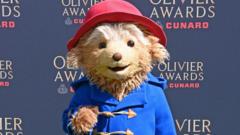
The Olivier Awards just handed a marmalade sandwich to a dying industry and called it a feast. While the trades gush over the "unprecedented sweep" of the Paddington musical, they are missing the autopsy report hidden in the glitter. We aren’t celebrating the pinnacle of British theater; we are witnessing the final surrender of the West End to the safe, the sanitized, and the intellectual property (IP) machine.
The "lazy consensus" among critics is that this win represents a "triumph of family storytelling" or a "much-needed boost for tourism." That is a lie. This isn't a triumph. It’s a retreat. When a brand-name bear dominates the highest honors in the land, it signals that risk is dead and the spreadsheet has officially replaced the script.
The Myth of the Family Savior
The industry loves the narrative that big-budget family musicals "fund the risky stuff." I have sat in the rooms where these seasons are programmed. The logic is always the same: "We’ll run the bear for three years so we can afford a six-week run of a new Pinter-esque drama in the studio."
It never happens.
Success like this doesn't fund innovation; it breeds imitation. The "Paddington Effect" ensures that every producer with twenty million pounds is currently scouring the bargain bin of 1990s children's literature rather than looking at original manuscripts. We are trading our cultural edge for a high-fructose corn syrup version of "heritage."
The Olivier Awards used to be a barometer for artistic evolution. By crowning a production that leans so heavily on pre-existing affection for a global brand, the panel has effectively told creators: "Don't bother with original characters. Just find a mascot people already recognize."
The Death of the Triple Threat
Let’s talk about the craft. The Paddington sweep hides a disturbing trend in musical theater: the shift from performance to production value.
In the 1980s and 90s, the "Mega-Musical" era of Lloyd Webber and Mackintosh relied on massive sets, but it still required performers to carry the emotional weight of original scores. Today, we are seeing the rise of the "Hologram Aesthetic." The set is a technical marvel. The puppetry is world-class. The projection mapping is flawless. But the human element—the raw, unpredictable energy of live performance—is being squeezed out by the requirements of the IP.
The actors in these productions aren't characters; they are stewards of a brand. They are required to hit marks with a precision that mimics a film reel because the brand cannot afford a "bad night" or a "different interpretation." The Olivier Awards just gave a standing ovation to a well-oiled assembly line.
The Tourism Trap
The argument that these shows are vital for the London economy is a hollow one. Yes, the box office numbers are massive. Yes, the hotels are full. But what are we exporting?
If the West End becomes a theme park of familiar faces, it loses its status as a global creative capital. You can see a high-budget brand adaptation in Vegas, Tokyo, or Hamburg. People used to come to London to see what was next. Now they come to see what they’ve already seen on Netflix, just three-dimensional and significantly more expensive.
We are cannibalizing our own prestige. By prioritizing the tourist-friendly spectacle over the challenging work that defined the London stage for a century, we are turning the West End into a museum of safe choices.
The Data the Awards Ignore
Look at the fallout. For every "Paddington" that sweeps the awards, three original plays close early because they couldn't find a foothold in a market obsessed with "recognizability."
- Original work investment is down significantly compared to ten years ago.
- Ticket prices for these "event" musicals have outpaced inflation by 40%, pricing out the local audience that actually sustains a theater culture.
- The talent drain to television and film is accelerating because the theater no longer offers the same space for creative risk.
The Olivier committee isn't rewarding excellence; they are rewarding market dominance. They are validating a system where the marketing budget is more important than the book or the lyrics.
The "Artistic Merit" Fallacy
"But the show is actually good!" the critics cry.
Of course it’s good. If you spend that much money and hire the best technicians in the world, the result will be polished. It will be "delightful." It will be "charming." But polish isn't progress.
A $20 million production of a beloved bear should be the bare minimum of entertainment. It shouldn't be the standard by which we measure the health of our dramatic arts. We have confused "professionalism" with "art." One is a business requirement; the other is a soul-shaking necessity.
The Cost of the Smile
I've watched the atmosphere in the West End shift. The grit is gone. The danger is gone. We are left with a series of polished surfaces that reflect nothing back at us but our own nostalgia.
When we celebrate a brand as the pinnacle of achievement, we tell young playwrights that their voices don't matter unless they can be attached to a toy line. We tell composers that melody is secondary to "brand synergy." We tell the audience that theater is just a very expensive way to revisit their childhood.
The Olivier Awards didn't celebrate the best of British theater tonight. They signed the death warrant for the West End's relevance.
The bear didn't win. The boardroom did.
Stop clapping. You’re cheering for your own obsolescence.