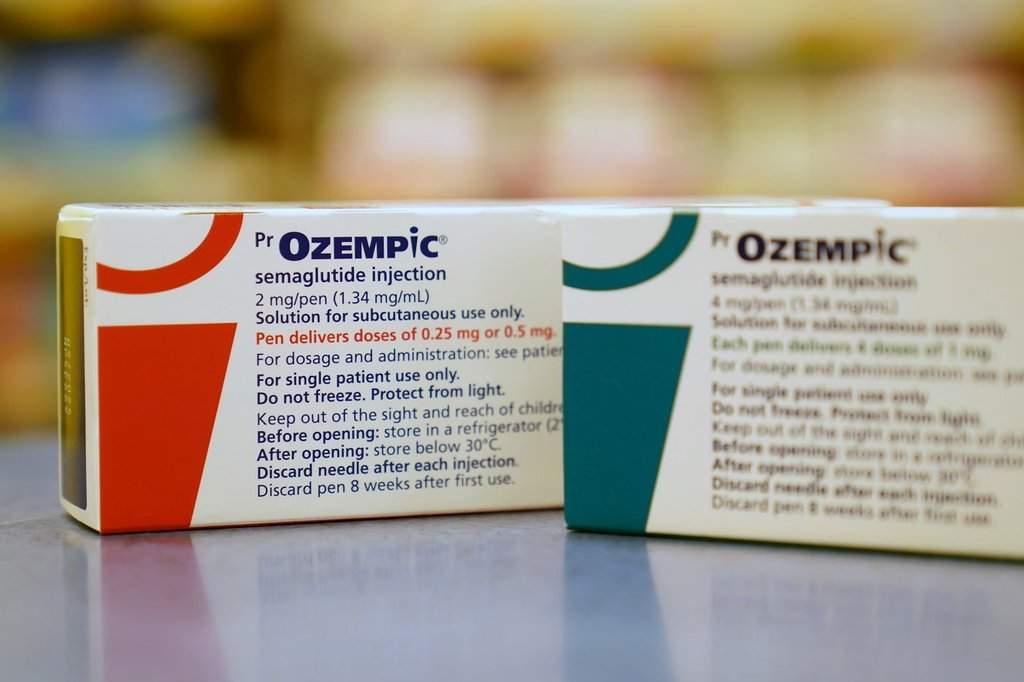
The headlines are screaming about a revolution in Canadian healthcare because Health Canada finally greenlit the first generic version of semaglutide. Every mid-tier news outlet is churning out the same tired narrative: "Competition is here, prices will crater, and the supply crisis is over."
They are wrong. They are fundamentally, mathematically, and biologically wrong. For an alternative look, check out: this related article.
Approval is not availability. Availability is not affordability. And in the complex, murky world of biologic manufacturing and patent litigation, a "generic" is often just a ghost in the machine designed to pacify the public while the real players keep the margins fat. If you think your local pharmacy is about to start handing out cut-rate semaglutide like it’s ibuprofen, you haven’t been paying attention to how the pharmaceutical industrial complex actually functions.
The Patent Wall You Can’t See
The media is treating this Health Canada approval like a finish line. In reality, it’s just the sound of a starter pistol for a legal marathon that could last years. Further analysis on this matter has been published by National Institutes of Health.
Novo Nordisk, the titan behind Ozempic and Wegovy, didn't spend billions on R&D just to let a generic manufacturer walk through the front door because they got a stamp from a federal regulator. Most people don't realize that a drug like semaglutide isn't protected by a single patent. It is protected by a "patent thicket"—a dense forest of intellectual property covering everything from the specific peptide sequence to the mechanical design of the delivery pen.
When a generic gets approved, it usually triggers a "Notice of Compliance" battle. We’ve seen this play out a thousand times in the Canadian courts under the Patented Medicines (Notice of Compliance) Regulations. The brand-name manufacturer sues the generic entrant, triggering an automatic stay that can prevent the generic from actually hitting shelves for up to 24 months.
I’ve watched companies burn through fifty million dollars in legal fees just to delay a competitor by eighteen months. Why? Because eighteen months of Ozempic dominance in the Canadian market is worth ten times that. The approval is a piece of paper. The product is a hostage.
The Manufacturing Myth
Let’s assume for a moment the lawyers take a day off. We still have a physics problem.
Semaglutide is not a small-molecule drug. You don't just mix chemicals in a vat and press them into a pill. It is a complex peptide that requires sophisticated bio-fermentation and precise purification processes. The "generic" label implies a carbon copy, but with biologics and complex peptides, we are talking about "biosimilars" or highly complex synthetic replicas.
The global supply chain for GLP-1 agonists is already redlining. Novo Nordisk and Eli Lilly have struggled for three years to keep up with demand, despite owning some of the most advanced fill-finish facilities on the planet. To think that a generic manufacturer can suddenly spin up a high-volume, high-quality production line that meets Health Canada’s stringent stability requirements is a fantasy.
The bottleneck isn't just the active ingredient. It’s the pen.
The mechanical injector pen is a marvel of engineering. It ensures a precise dose every time. If the generic manufacturer can't replicate that delivery system without infringing on Novo’s hardware patents, they have to invent their own. That adds cost. That adds failure points. That adds time. You aren't buying a drug; you’re buying a delivery system. And the delivery system is currently the hardest thing on earth to manufacture at scale.
The Price-Drop Delusion
There is a "lazy consensus" that generic entry equals a 70% price drop. That’s true for blood pressure meds that cost six cents to make. It is not true for GLP-1s.
In the Canadian landscape, the Patented Medicine Prices Review Board (PMPRB) already caps what Novo Nordisk can charge. Because the "ceiling" is already lower than it is in the United States, the margin for a generic to undercut the brand name while still turning a profit is razor-thin.
Generic companies are not charities. They are looking for high-margin opportunities. If the cost of manufacturing remains high due to the complexity of the peptide, and the legal fees remain astronomical, the "generic discount" will likely be a measly 15% to 20% initially. For a patient paying out-of-pocket, $200 a month instead of $250 isn't a revolution. It's a rounding error.
The Real Winner Is Still Big Pharma
Here is the counter-intuitive truth: Big Pharma loves a certain kind of generic competition.
It allows them to pivot. While everyone is fighting over the "old" generic Ozempic, Novo Nordisk is already moving the goalposts. They are shifting the market toward Wegovy (higher dose, different indication) or CagriSema (a next-gen combination therapy). By the time a generic version of 1.0mg Ozempic is actually sitting on a shelf in Moose Jaw, the clinical standard of care will have moved on to a more effective, brand-name-only alternative.
They will "evergreen" their portfolio, making the generic version obsolete before it’s even accessible. It’s a classic bait-and-switch. You’re being offered a discount on last year’s technology while the future of metabolic health remains behind a new, even more expensive paywall.
The Safety Gap Nobody Wants to Discuss
We need to talk about "equivalence." Health Canada says a generic must be bioequivalent. In plain English, that means it has to work the same way in the body.
But with peptides, "close enough" can lead to different side-effect profiles. Small changes in the manufacturing process can lead to different impurities. I’ve spoken with clinicians who have seen patients stable on a brand-name biologic suddenly develop injection-site reactions or decreased efficacy when switched to a "generic" or biosimilar version.
While the regulatory bar is high, the real-world data on generic GLP-1s is non-existent. We are essentially embarking on a mass-scale clinical trial where the Canadian public is the test group. The "lazy consensus" says it’s the same drug. The molecular reality says it’s a sibling, not a twin.
The Grey Market Will Not Be Undercut
People asking "When can I get the generic?" are often the same people currently buying "compounded" semaglutide from sketchy online pharmacies or wellness clinics.
Here’s a hard truth: A regulated generic will never be as cheap as the unregulated grey-market stuff. The grey market ignores patents, ignores sterile manufacturing protocols, and ignores the PMPRB. If you are looking for the "bottom" of the price floor, a Health Canada-approved generic isn't it. The generic version has to pay for insurance, pharmacovigilance, and legal compliance.
If you think a generic approval is going to kill the black market, you don't understand the economics of desperation. The black market thrives on the gap between "approved" and "available." As long as the patent litigation drags on, the grey market wins.
Why Your Doctor Might Say No
Don't expect your physician to jump for joy. Doctors are creatures of habit and risk mitigation.
When a patient is finally losing weight, finally seeing their A1C drop, and finally managing their chronic disease after years of failure, the last thing a responsible doctor wants to do is switch the medication. "If it ain't broke, don't fix it" is a powerful clinical directive.
Generic substitution in Canada is often handled at the pharmacy level, but many specialists will start writing "No Substitution" on Ozempic scripts to avoid the variables of a new manufacturer. The "generic revolution" dies on the pharmacist’s counter when the software flags a lack of long-term data for the generic substitute.
The Insurance Trap
Public and private insurers in Canada are the only ones who actually stand to benefit here. They will use the generic approval as a cudgel to force patients off the brand name.
They will implement "step therapy" or "mandatory generic substitution." You will be told that your insurance will only cover the generic version. If that generic version isn't actually available in your province due to the aforementioned legal stays, you are left in a "coverage gap." You can't get the cheap version because it doesn't exist yet, and you can't get the brand-name version because the insurance won't pay for it anymore.
This isn't a hypothetical. I’ve seen this happen with specialty drugs for rheumatoid arthritis and Crohn’s disease. The generic approval becomes a tool for insurers to deny claims, not a tool for patients to save money.
The Supply Chain Reality Check
A generic approval does not magically create more raw ingredients. The world is currently short on the specialized lipids and amino acids required to synthesize these peptides.
One generic manufacturer entering the Canadian market doesn't change the global scarcity. If anything, it complicates it. Now, instead of one company (Novo) managing a centralized supply chain, you have multiple companies fighting for the same raw materials. This fragmentation often leads to more shortages, not fewer.
We are watching a classic "Preston Curve" of pharmaceutical expectations. The hype peaks at approval, then crashes into the "Trough of Disillusionment" when patients realize nothing has actually changed at the pharmacy.
Stop Waiting For the Generic
The obsession with the "first generic" is a distraction from the real issue: our healthcare system is fundamentally unprepared for the GLP-1 era.
We are trying to apply 1990s "cheap generic" logic to 2020s "complex biologic" technology. It doesn't work. The price of these drugs won't come down through simple competition; it will only come down when the underlying manufacturing technology shifts or when the patents naturally expire in a decade.
Until then, this "approval" is nothing more than a legal milestone in a war between two corporate entities. It is a battle over who gets to collect your money, not a plan to save it.
If you are waiting for the generic to solve your access problems, you are waiting for a train that hasn't even been built yet, running on tracks that are currently being blocked by a dozen lawsuits. Stop looking at the generic approval as a victory for the patient. It’s a victory for the lawyers and a convenient talking point for a government that wants to look like it’s doing something about drug prices without actually doing anything at all.
The real price of Ozempic isn't going anywhere. Get used to it.